
For How Long… : A Conversation with Turi Park
For How Long… is Turi Park’s selling exhibition at Webb’s Wellington, marking a compelling return to painting with a deeply reflective body of work exploring landscape, memory, and inherited histories.
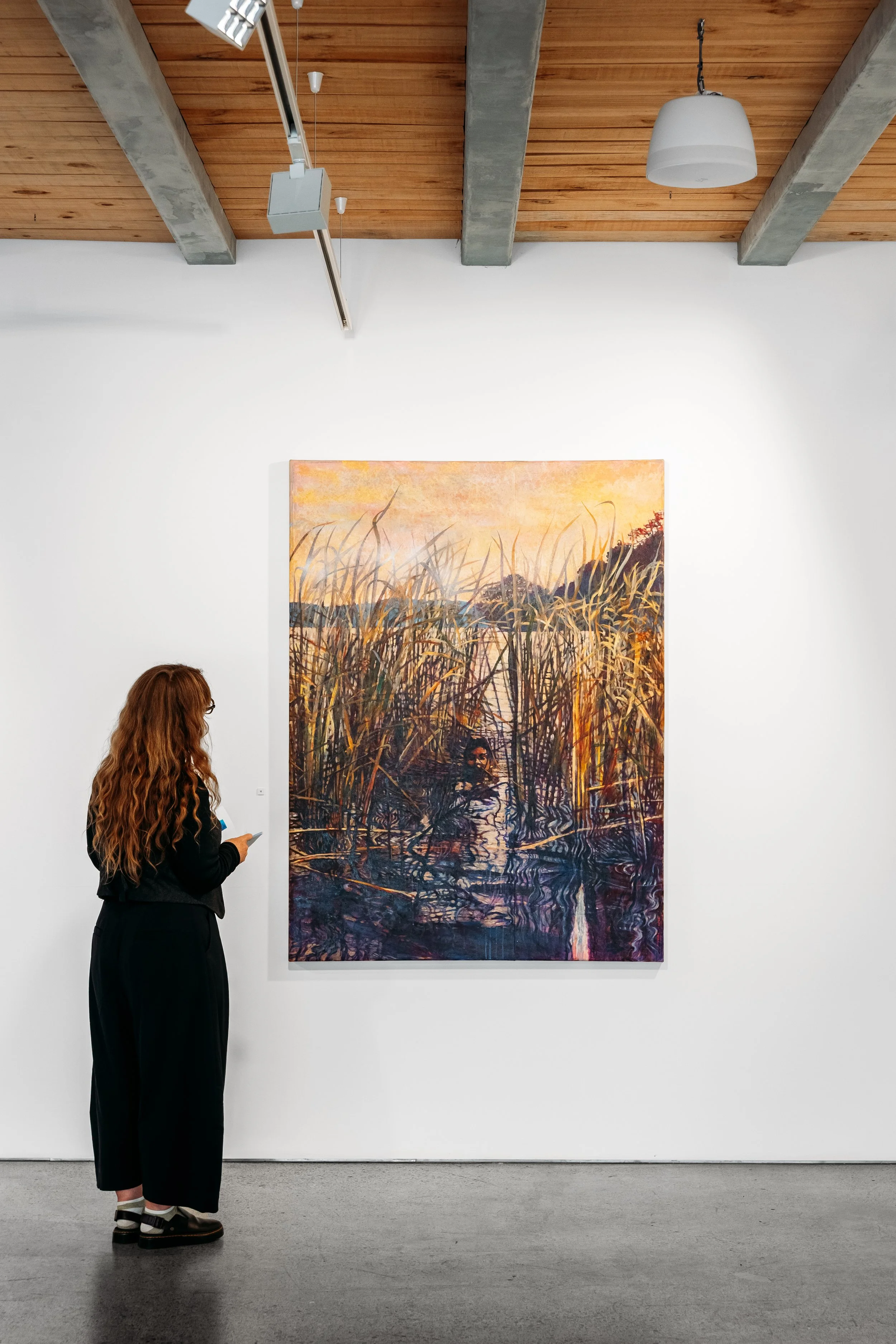
The exhibition brings together traditional canvases alongside an ambitious installation of thirteen paintings on reclaimed blinds. Drawing on both personal and national narratives to invite viewers to reconsider how familiar environments in Aotearoa are seen, framed, and understood. Park’s use of repurposed materials—fabric, and vintage blinds—adds layered material histories that reinforce themes of belonging and the complexity of place.
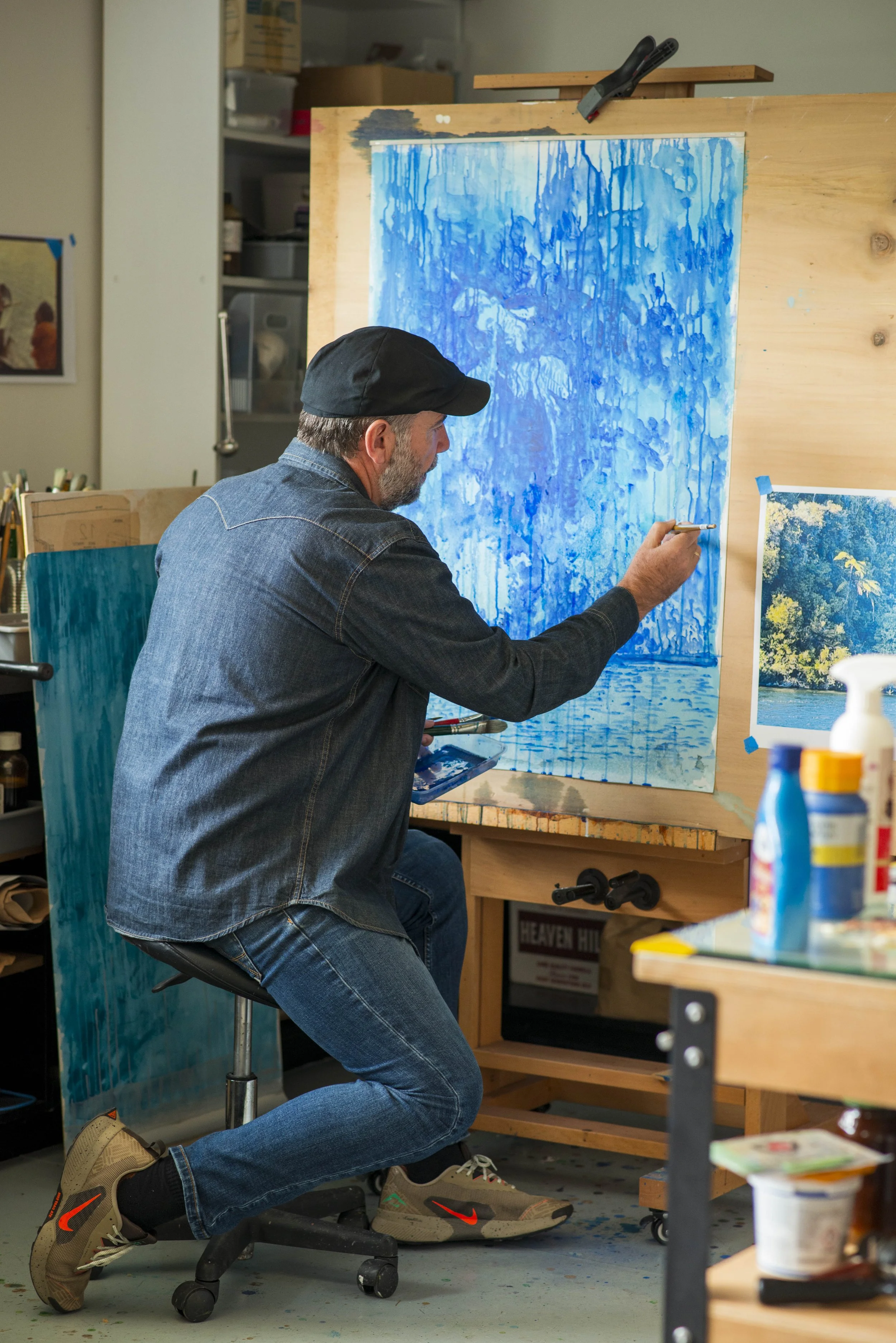
Turi Park in his Studio
For someone encountering your work for the first time, what can they expect to see when they walk into the exhibition?
I hope people encounter places that feel both familiar and recognisably ‘at home’ in Aotearoa New Zealand. Not many will know the particular locations at Rotoiti, but hopefully the way they are painted, and the scenes depicted, still hold a sense of recognition.
There’s also a sense, I think, that the way these works are painted—an intentionally Pākehā approach to capturing moments of beauty in the landscape—begins to intrigue. Enough, perhaps, to draw people in to wonder at what stories these works are trying to transmit.
That our ways of seeing, and being in places like these, are not neutral. And can easily be unsettled—and unsettling.
Many of the works use unprimed oilskin and reclaimed fabric, with the structure of the painting left visible. Why was it important for the materials and their construction to remain apparent?
My grandparents were exceptionally hardworking and frugal. As grandchildren, everything was bought to last, patched, and fixed with make-do repairs. Clothes were hand-me-down, food was often what was on special, grown, found, or caught. The bach, like many others, was an old fibro- lite shed, added to over time. Carpet, paint, curtains, tools, furniture—all reused and repurposed. It began to feel that our ways of living here—of settling and calling this place home—are also not quite resolved. Our stories of connection, and of wanting to belong, like these materials, are often assembled, provisional, and held together over time.
It’s also important that the materials themselves are already rich with stories—just as the place is. The selection and collection of these materials—old blinds (a house lot from Remuera, found on Trademe), canvas tents, camp stretchers, curtains—speak to temporality, and to the makeshift cultural quirks carried along in the ways of seeing that we too bring with us to this place.
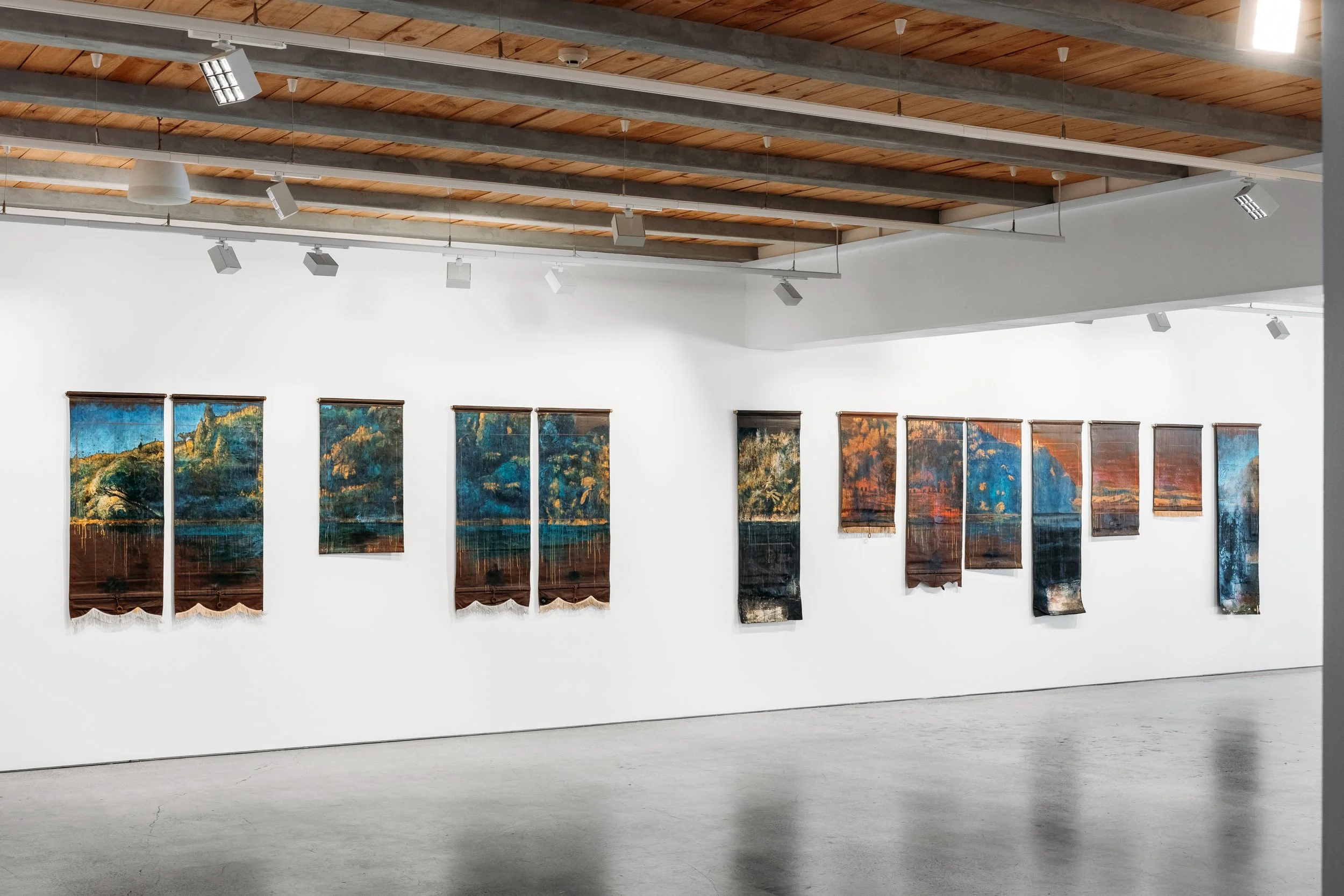
Lot 1. Turi Park, The Blinds Drawn (Shadelands), 2025, oil, acrylic and enamel on vintage japara (oilskin) roller blinds, with wooden rollers and brackets, 8800 x 1520 x 50mm. Price. $19,900
The exhibition takes as its starting point the 1920 incident of Prince Edward’s royal train. What first caught your attention about the image of the drawn blinds, and why did it become central to the work?
What struck me was the gesture of the blinds being drawn at the exact moment of encounter. It is such a quiet but loaded action—one that speaks to avoidance, control, and the ability not to see.
That image stayed with me because it felt less like a historical detail and more like an ongoing condition. A way of describing how certain perspectives are maintained, and how others are obscured. It became central to the work because it holds that tension so succinctly.
In Shadelands, the viewer is positioned inside the train carriage rather than outside it. What do you hope shifts for people when they realise where they are standing?
This artwork is essentially a visual response to a key realisation that emerged through my MFA study on landscape and identity in Aotearoa New Zealand. Although my own father essentially ‘wrote the book’ (Theatre Country, Geoff Park, VUP 2006) on how European visual culture informs the way we see and live with this place, I too was shaped by a settler upbringing that framed it in particular ways.
It was easy to experience this place as if time began with us—when my grandparents secured the section, and our family began returning here each summer. Although we knew of pā sites, of rua kūmara (food caves), and fragments of earlier histories, we still inhabited it as if it were an Arcadian pastoral—an easy, empty (terra nullius) playground.
Although this now feels naïve, that realisation came slowly through study and reflection. Of course, like any place, the narratives held here are plural, layered, and complex—just like the sediment at the bottom of the lake.
By placing the viewer inside the carriage, the work invites a realisation. And a sense of this complicity too. A recognition that we all see from within particular cultural frames. And that what we are shown, and choose to see—historically and culturally—shapes how we understand both place and ourselves within it.
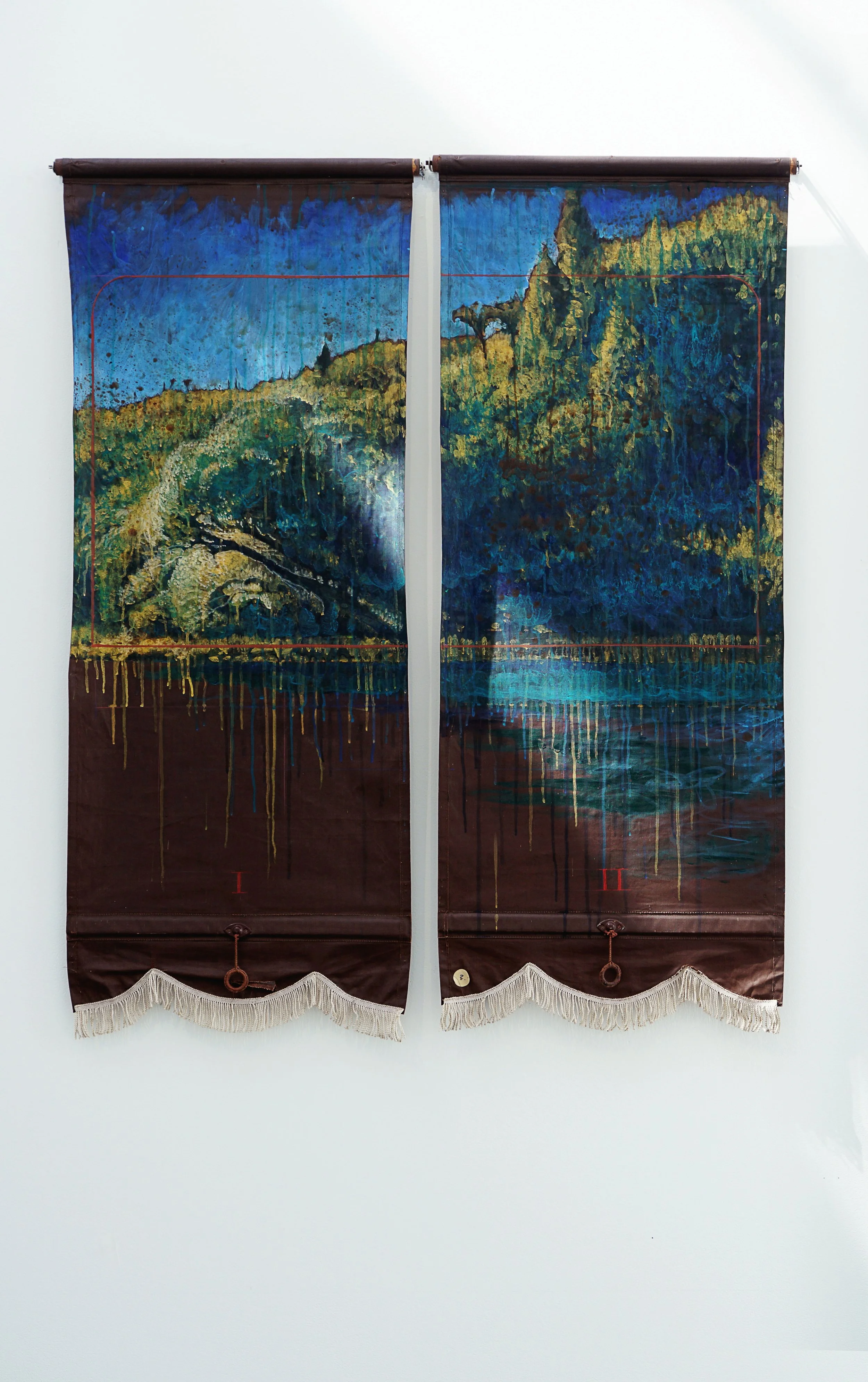
Installation View. Lot 1. Turi Park, The Blinds Drawn (Shadelands), 2025, oil, acrylic and enamel on vintage japara (oilskin) roller blinds, with wooden rollers and brackets, 8800 x 1520 x 50mm. Price. $19,900
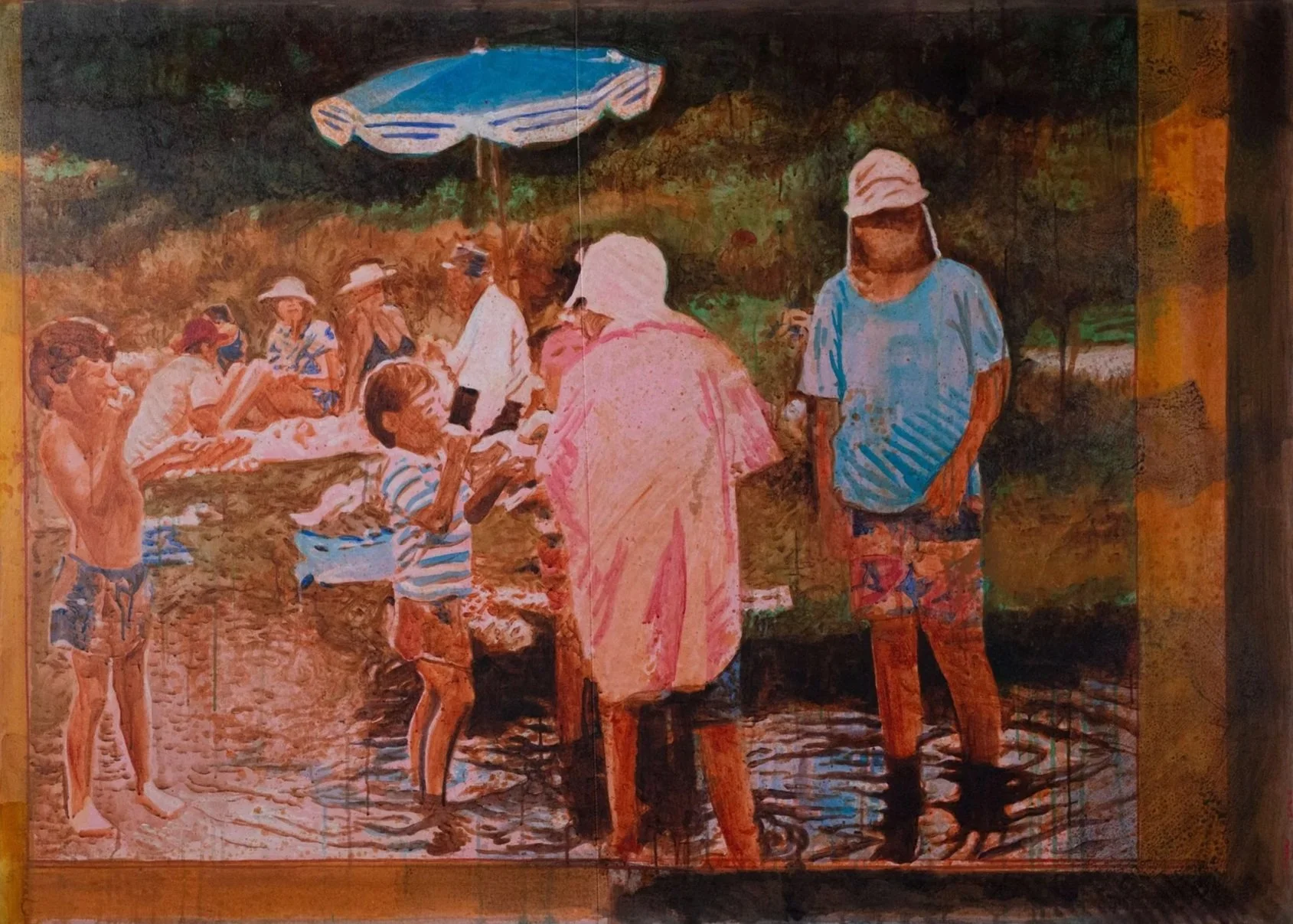
Lot 16. Turi Park, Vaudeville & Luncheons III, 2026, oil and acrylic on cotton and polyester blend canvas. 1005 x 1420mm.
Price. $4,500
The picnic scenes in Vaudeville & Luncheons feel intimate and familiar alongside the scale of The Blinds Drawn (Shadelands). How do these intimate family moments sit alongside the more confronting work in the show?
These three works come from a shared moment—a family picnic at a favourite spot on the lake. They are more personal, and in some ways, more exposing. But I also want this to be any family, lunching in and at the edge of any special place. There’s a lot going on—energy, humour, a sense of activity. But also the tension of expectations. Parents and grandparents not quite agreeing on how things should be done—the place, the timing, the meal, the setup. It’s subtle, but present.
The picnic itself becomes a kind of performance. A ritual of carrying food into a place, setting up, and inhabiting it temporarily. Taking only pictures and leaving only footprints. The setting becomes part of the scene—almost like a backdrop to the action unfolding on the foreground of the stage.
The place could be any place—it becomes another ingredient in the scene. And as children, caught up in the immediacy of play, we didn’t think to question any of it. We just wanted our fair share.
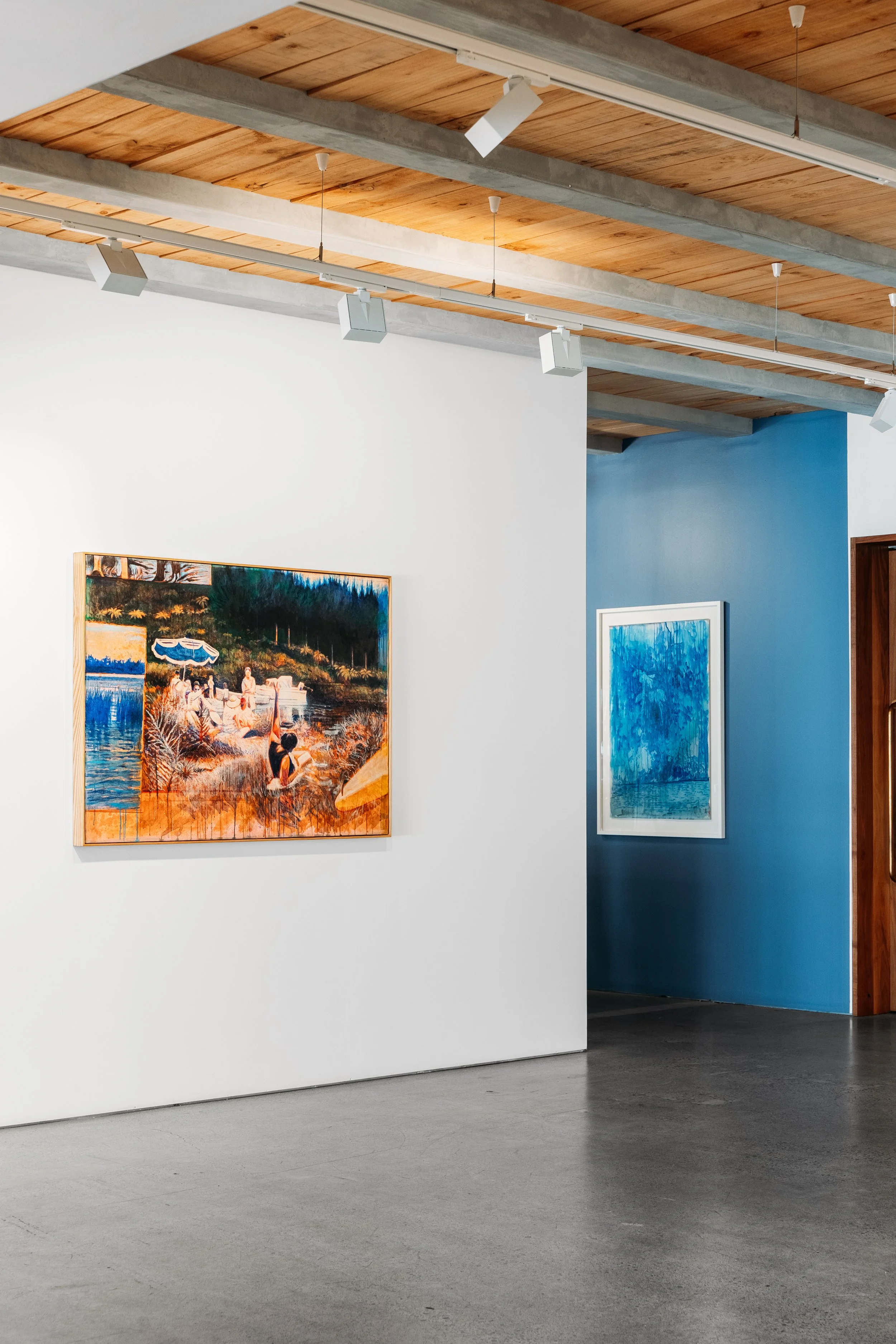
Left to Right, Lot 15. Turi Park, Vaudeville & Luncheons II, 2026, oil and acrylic on cotton and polyester blend canvas, 1005 x 1420mm. Price. $5,800
Lot 3. Turi Park, Notes From Beyond The Scene #002, 2026, acrylic and enamel on recailmed polyester blind fabric
1050 x 705mm. Price. $3,600
Much of the exhibition is grounded in places tied to family memory and inheritance. How has it felt to look at familiar landscapes through a more questioning lens?
Returning to painting through the MFA was driven by a desire for the work to hold more—to transmit deeper, more complex, and more useful stories. But this kind of looking is not easy. It becomes personal very quickly. It can be uncomfortable, to be honest.
There is a shift in recognising that what once felt natural or given is shaped by particular histories and assumptions. But that discomfort has also been necessary. It has opened the work toward something more honest.
Now the paintings sit somewhere between attachment and questioning—holding both at once rather than resolving them. So, with my painting practice, I’m seeking to better understand, play with, and subvert the notions of “regard for pristine loveliness” (Henry Wright, qtd. in Geoff Park, Theatre Country, 2006) at the heart of what and how we see ourselves here in this hauntingly beautiful place.
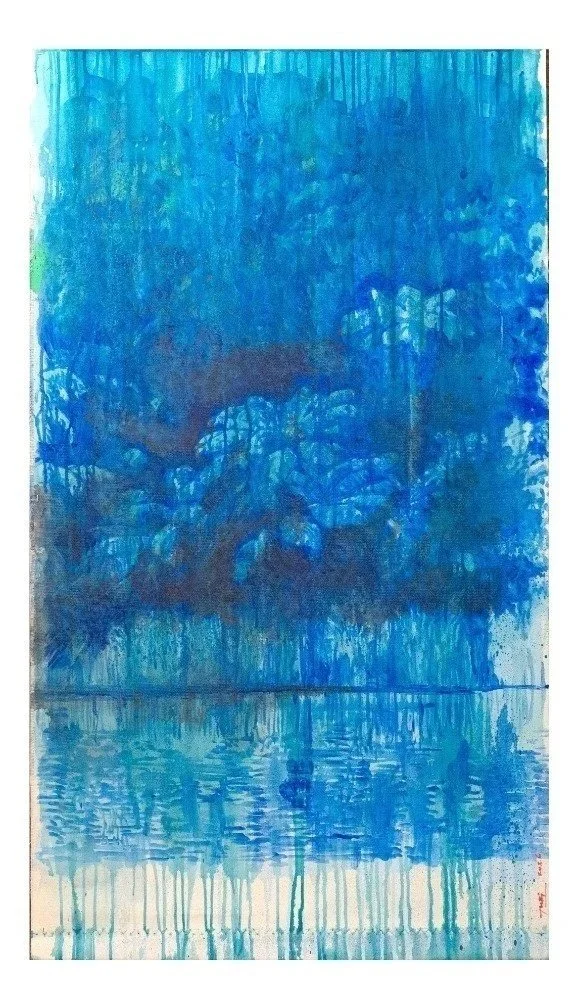
Lot 2. Turi Park, Notes From Beyond The Scene #001, 2026, acrylic and enamel on recailmed polyester blind fabric, 1070 x 610mm.
Price.$2,400
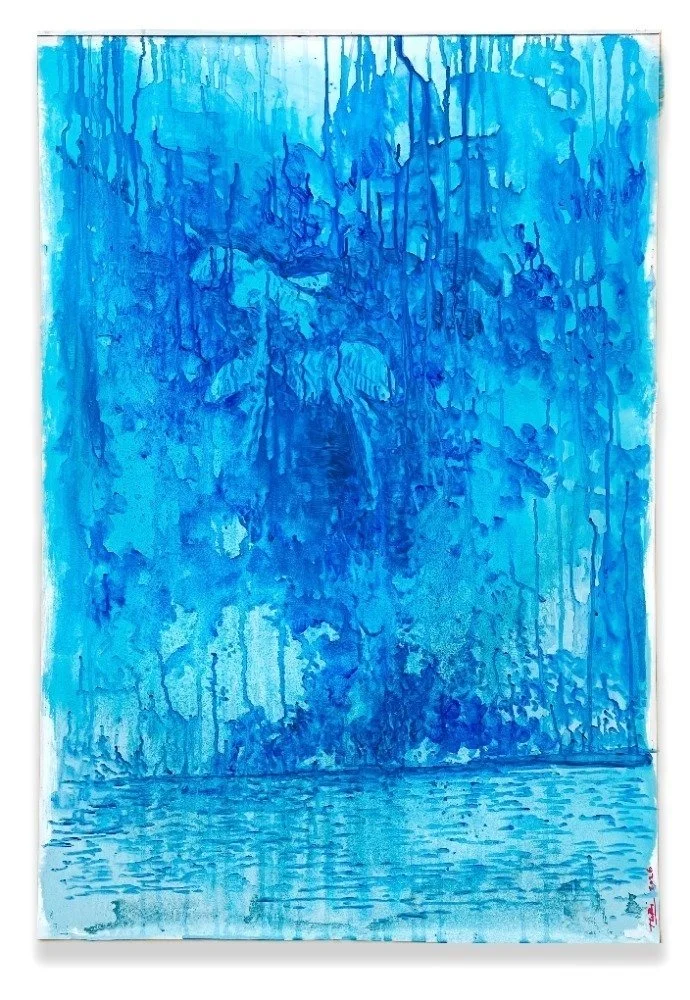
Lot 3. Turi Park, Notes From Beyond The Scene #002, 2026, acrylic and enamel on recailmed polyester blind fabric, 1050 x 705mm.
Price. $3,600
Your father, Geoff Park, wrote about the idea of ‘Theatre Country’. How has growing up with that thinking shaped your approach to landscape in this exhibition?
A generation later, the conversation that my father opened so succinctly has continued to move and evolve, becoming more nuanced, as these things do.
That thinking has been present for a long time, even before I had the language for it. The idea that landscape is composed, staged, and framed was something I grew up around, but only later came to understand more fully. Even with that upbringing, I didn’t fully see it—I too was shapedby those same ways of looking, assuming a kind of neutrality in how I understood myself in relation to place.
Through returning to painting, that awareness has become more active in the work. In this exhibition, landscape operates as a kind of theatre—where scenes are composed, inhabited, and repeated. Contemporary artists like the Los Angeles–based painter Emma Webster have sharpened that understanding for me: that the pastoral was never neutral, but historically constructed—less a direct observation than a kind of fabricated backdrop, assembled to carry sentiment and support narrative.
But the work also begins to question that staging: who it is for, and what it leaves out. So the work sits both within that legacy and alongside it—acknowledging its influence while also testing its limits.
__
Katie White, “A Para-Pastoral Movement Is Taking Root in Art. It’s Anything but Idyllic: Why Contemporary Artists Are Co-opting the Romantic Language of Pastoral Painting and Bringing It to an Uncanny New Dimension,” Artnet News, July 11, 2025,
https://news.artnet.com/art-world/beyond-paradise-para-pastoral-2666209
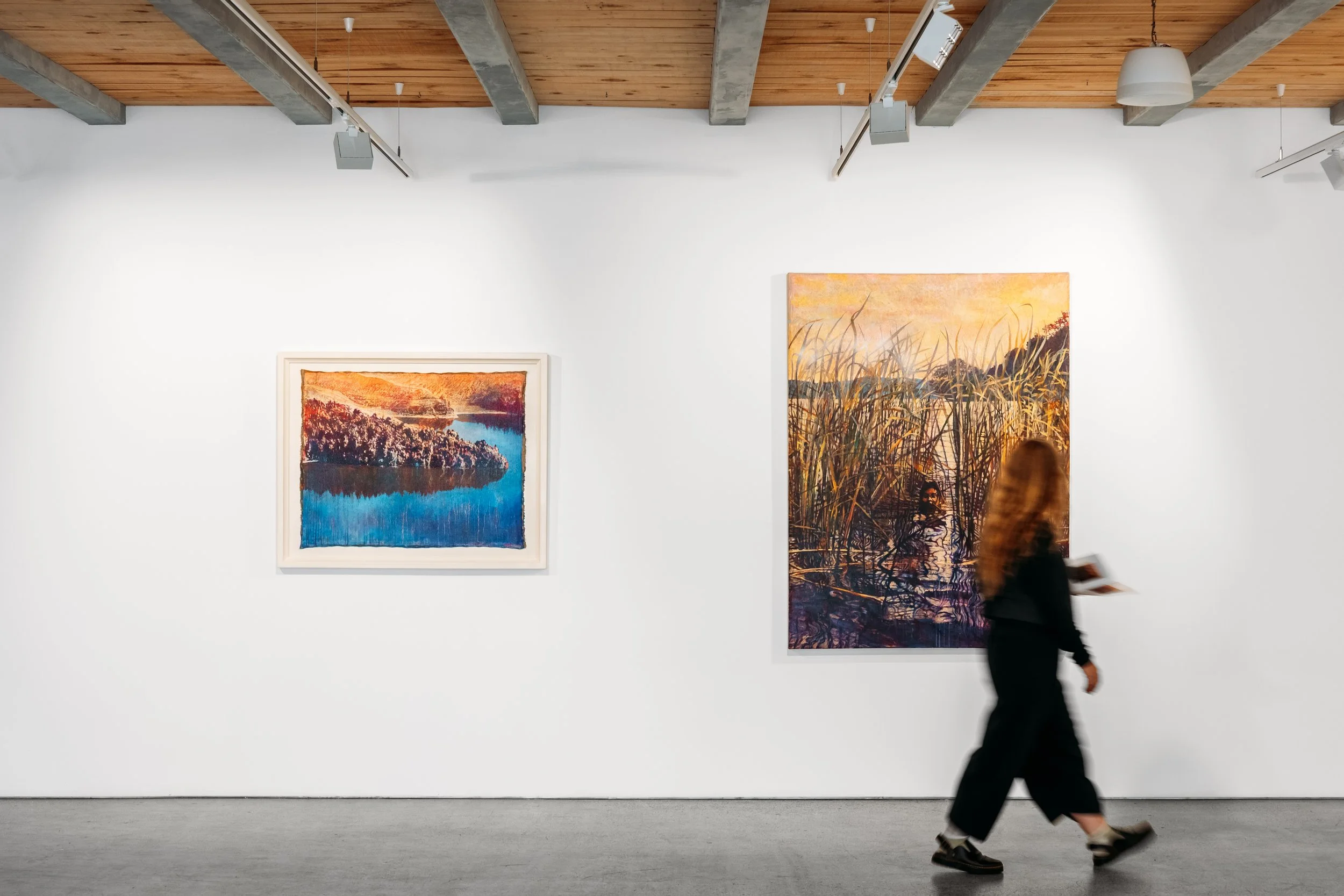
Lot 12. Turi Park,Time & Whenua (100 years ago), 2026, oil and acrylic on cotton canvas, 1630 x 1220mm. SOLD
Lot 6. Turi Park, I Remember Your Smile, 2026, oil, acrylic and enamel on linen, 930 x 1170mm framed. SOLD
After a decade away from painting, what feels different about how you work now—in terms of pace, confidence, doubt, or what you’re willing to leave unresolved?
There is more willingness now to not resolve things too quickly. Previously, I was more focused on arriving at an image—bringing something to a point of completion. Now, I’m more interested in what happens if that resolution is held back.
The pace has slowed, but the attention has deepened. There is more space for uncertainty, and for the materials to guide the work. Importantly, I’m more comfortable allowing doubt to remain visible—rather than trying to smooth it over.
You’ve described this exhibition as aiming for a pause rather than an answer. As a Pākehā artist, what kind of pause are you hoping viewers carry with them after seeing the show?
Not a dramatic pause—something quieter than that. More a slight shift in how one looks. A moment of noticing that what feels familiar might also be layered, contingent, and shaped by particular histories.
As a Pākehā artist, I’m not trying to resolve those complexities. But I do feel a responsibility to sit with them more attentively.
So if the work offers anything, I hope it creates space to pause within that awareness—to hold both attachment and uncertainty together, without needing to settle it too quickly.
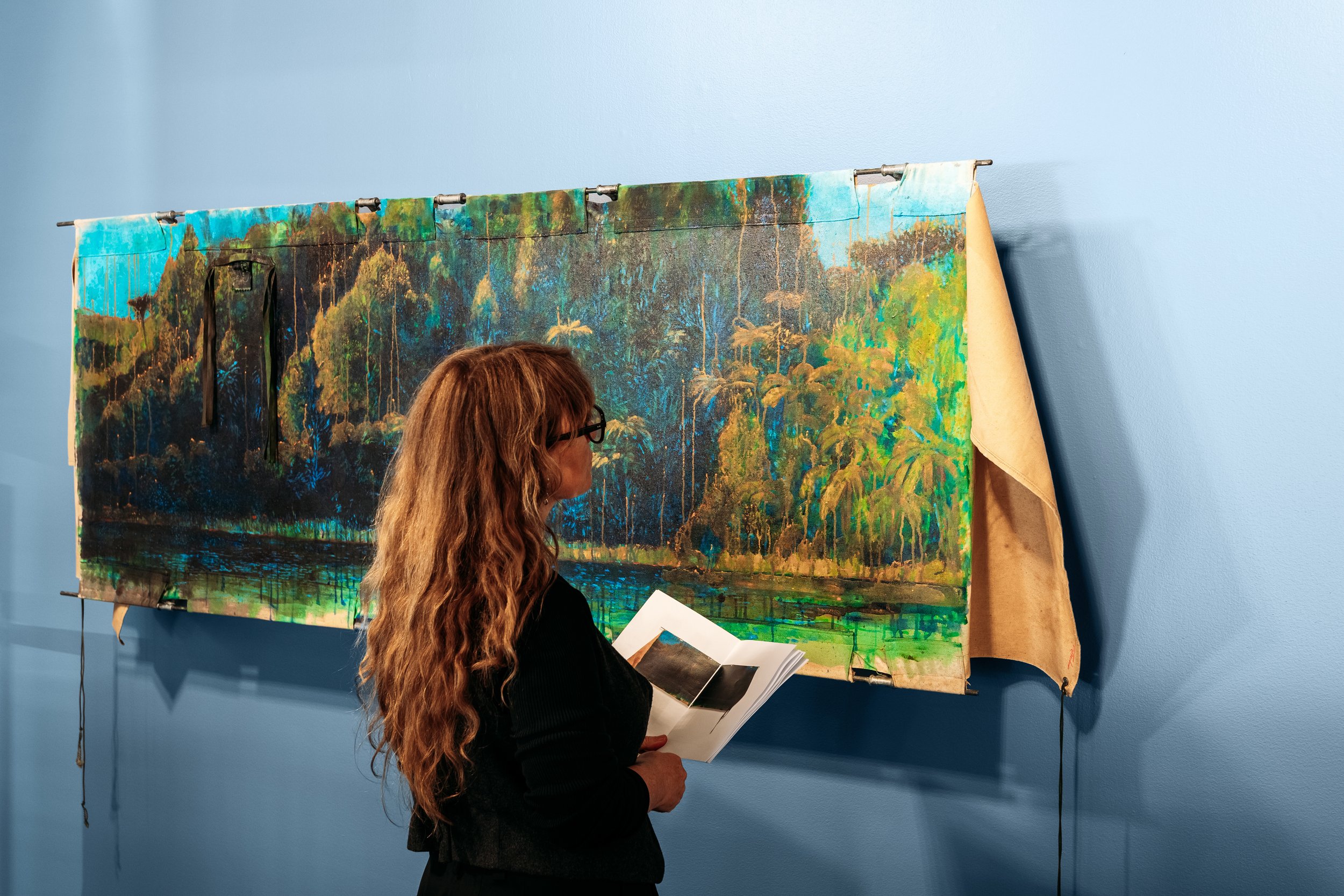
Lot 7. Turi Park, Leave Only Footprints and Take Only Photos, 2026, artists oil, acrylic and enamel on vintage canvas 'Safari' vintage camp stretcher with bars, 730 x 1980 x 200mm. SOLD
Turi Park (Pākehā) is a visual artist based in Te Whanganui-a-Tara, Wellington. He works across painting, drawing, photography, and writing. His practice engages unsettled ways of seeing, moving between landscape and memory, identity and representation, where inherited histories are brought into tension and carried forward. Park holds a Diploma in Visual Communication Design from Wellington Polytechnic and a Master of Fine Arts with Hons (1st Class) from Toi Rauwhārangi, Massey University.
Webb’s Wellington Gallery presents a programme of selling exhibitions complementary to its touring auction previews, allowing collectors to purchase works immediately online or in person.
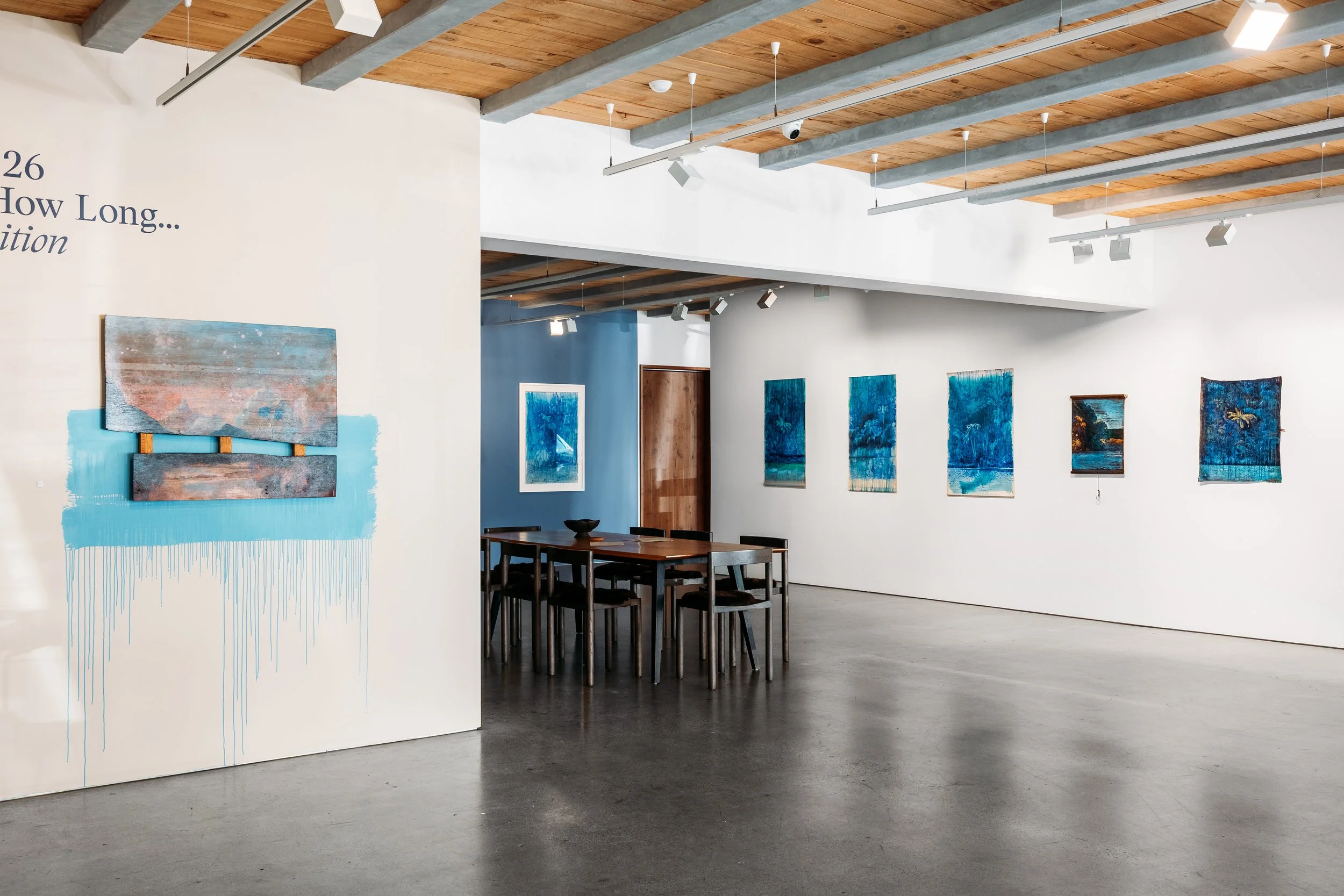
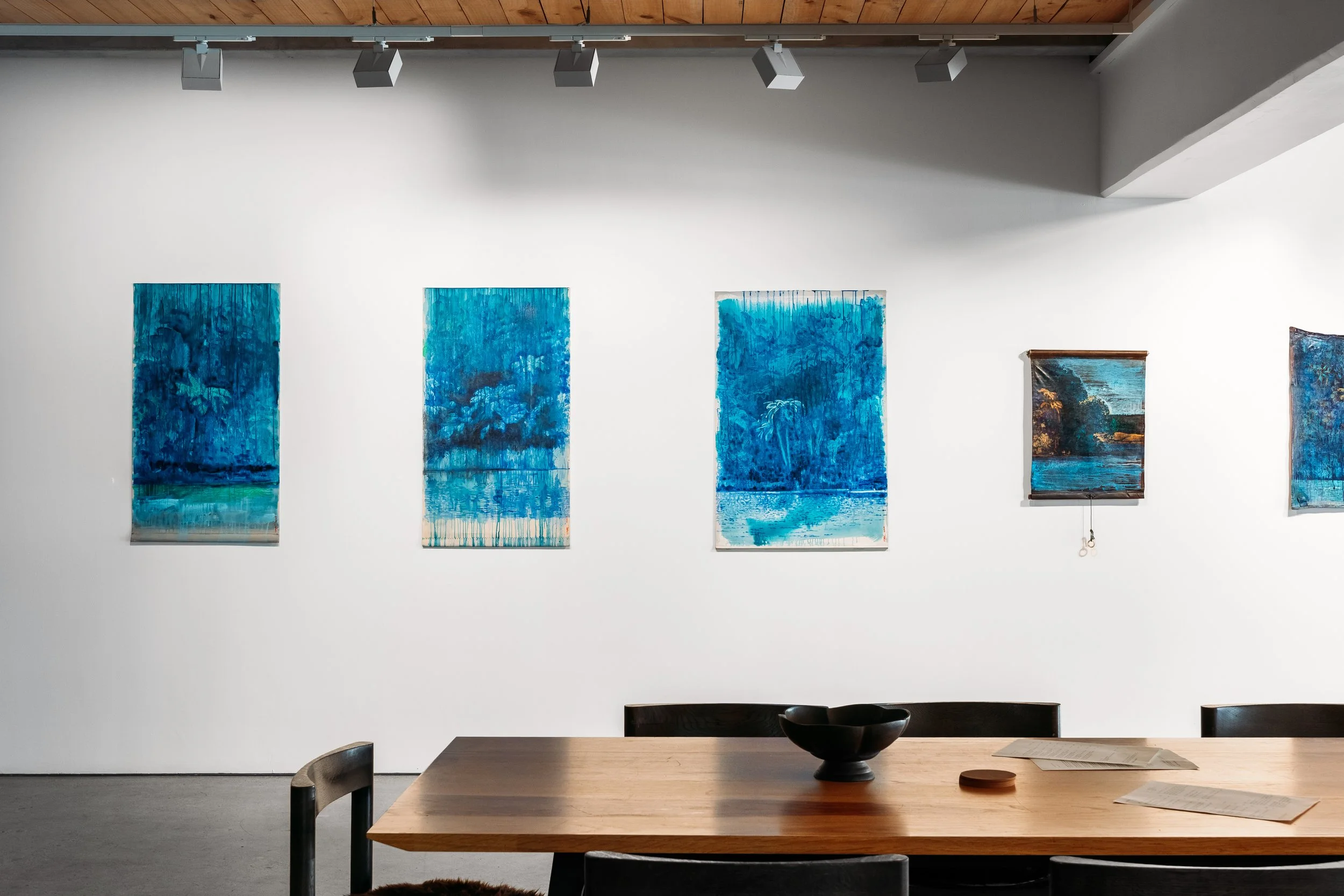
Installation in Webb's Wellington.
14.04.26—09.05.26
Turi Park: For How long
—A Selling Exhibition
On View, Wellington | 23 Marion St, Te Aro
Purchase Online | webbs.co.nz
Contact
Virginia Woods-Jack | Exhibitions Manager
[email protected] | +64 22 679 8664