
Future Relics: A Conversation with Levi Hawken
From graffiti murals to architecture: Levi Hawken discusses the multitude of influential threads that have come to inform his sculptural work ahead of his selling exhibition at Webb’s Wellington.
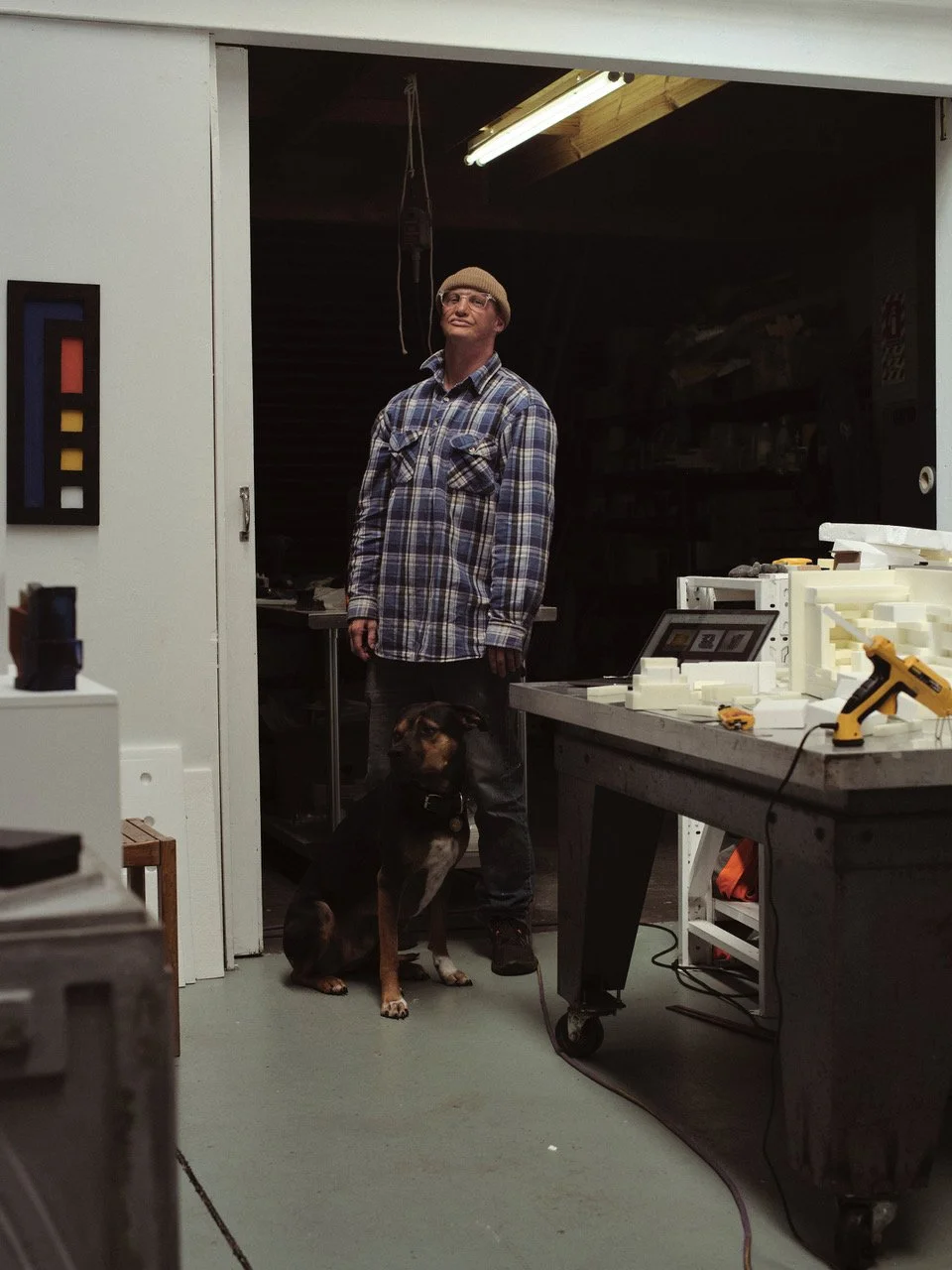
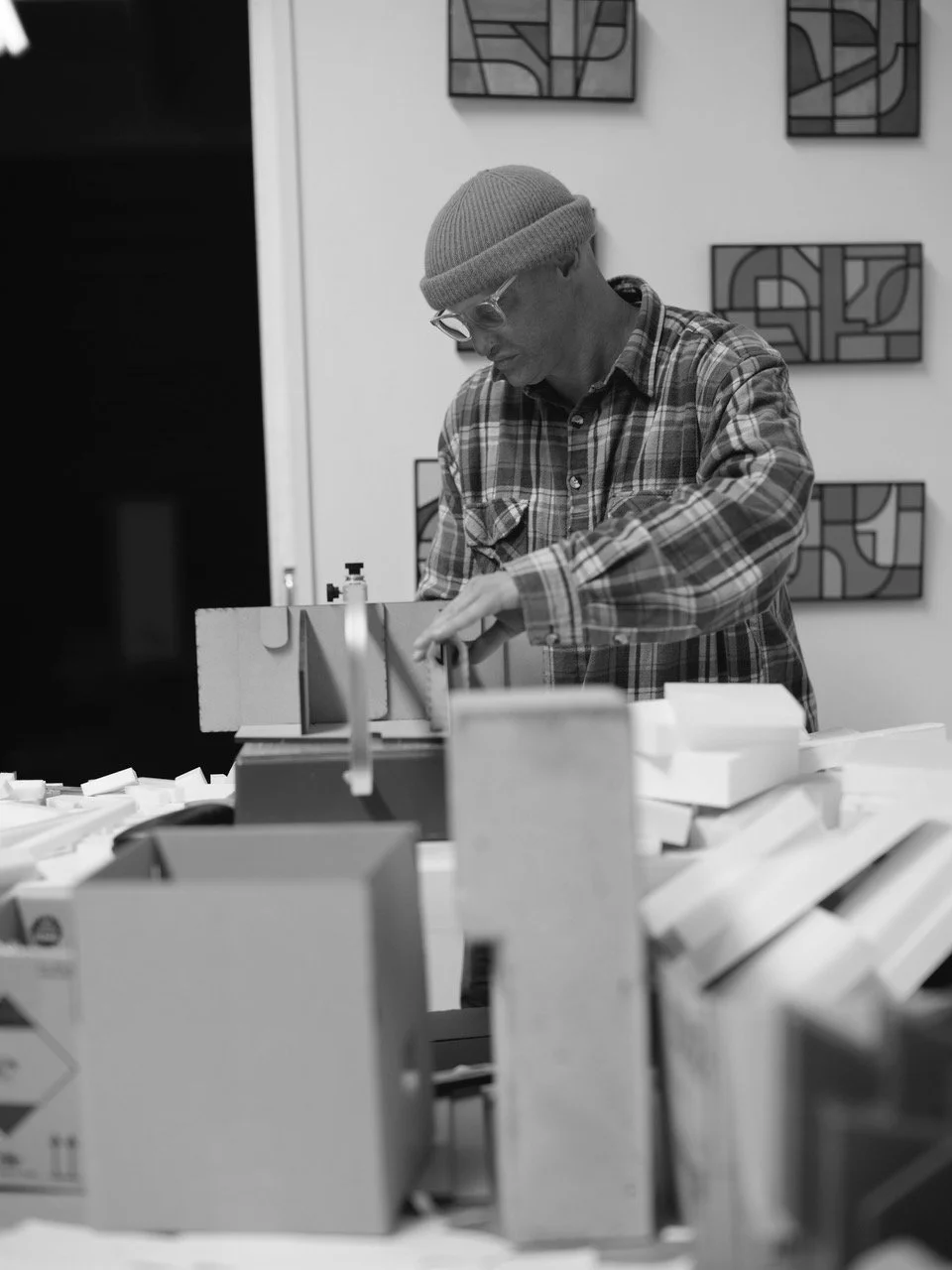
Levi Hawken in Studio.
On Skateboarding and How it Influenced His Early Works
Skateboarding was a massive influence on who I am and what I do. It was an escape, a balance between learning at school, like art history, and actually experiencing things in the real world.
The wider skateboarding culture, and how it was physically shaped by its environment, has always stayed with me.
I absorbed so much of that world that I eventually came full circle and started making the kinds of objects that created the culture: concrete landscapes, architecture, sculpture.
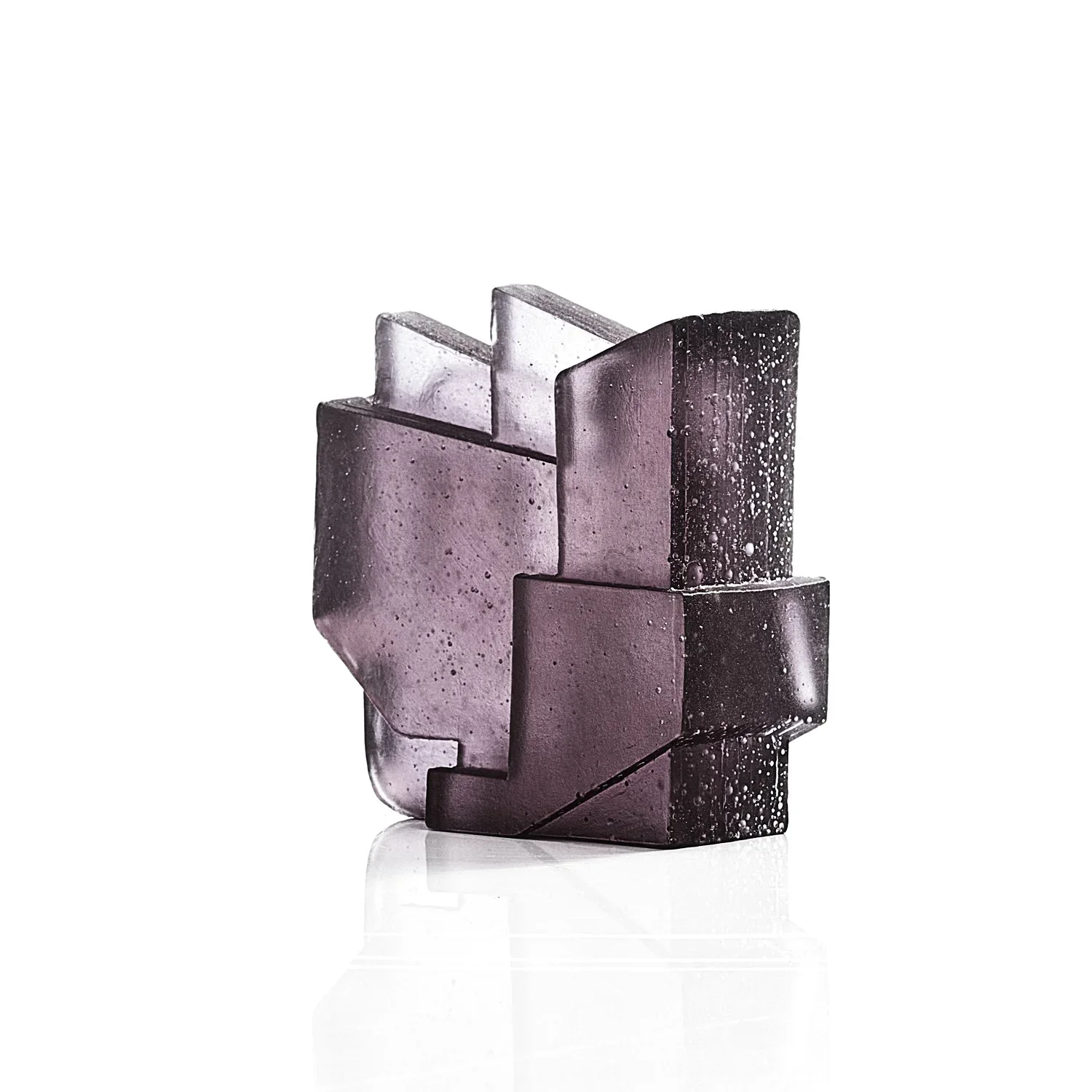
Lot 3. Levi Hawken, Solv 4 (Purple), 2025, cast glass, sandblasted, editon 2/4, no signature, 125 x 120 x 55mm. $1,190
On Moving from Graffiti to Sculpture
Traditional graffiti appealed to me because it felt outside the institutional rules of art. But as I developed my style, I realised there were still rules, parameters set by the movement itself. I wanted to break those. Instead of being at war with the wall, I wanted to become at one with it. Graffiti felt oppositional; I became more interested in asking, “What is the wall?”
When I was in Dunedin, looking at the old city and its architecture, I started imagining designs that worked with the buildings rather than against them. Instead of placing a rough New York–style throw-up on a historic façade, I wanted the work to belong to the environment. Graffiti is often defined as making a mark on a wall. The transition felt like a natural next step. Once I made peace with the wall, I started creating the wall.
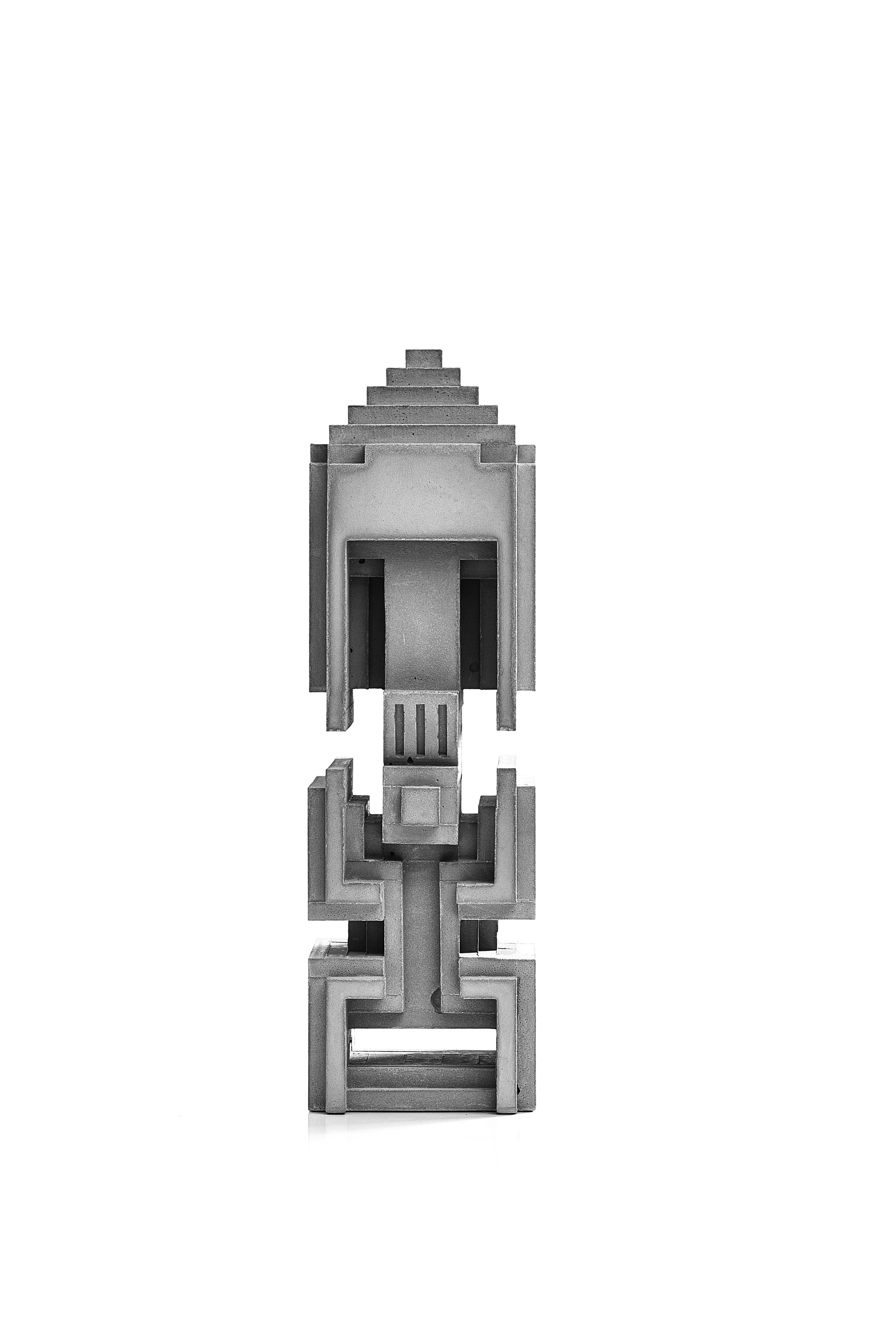
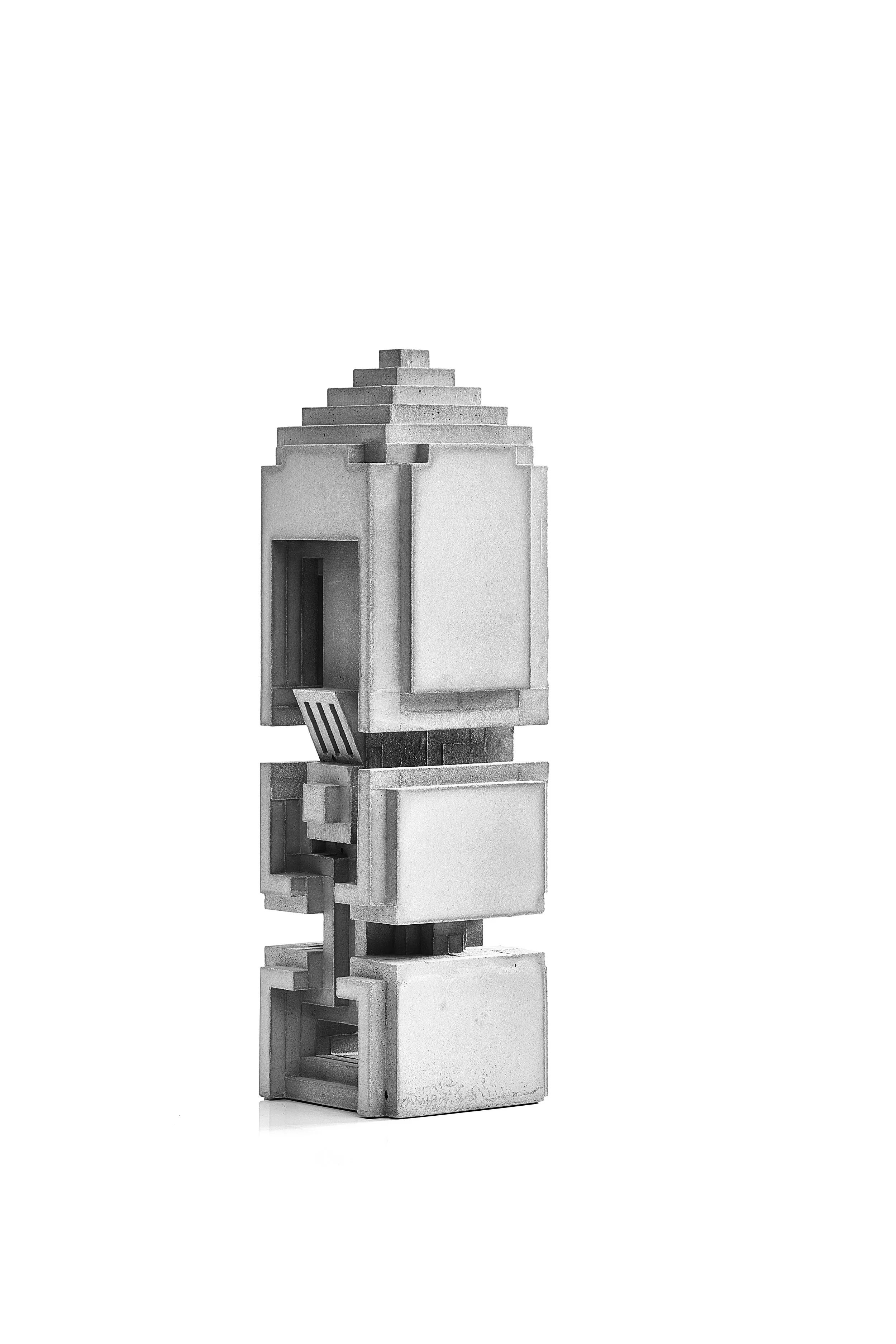
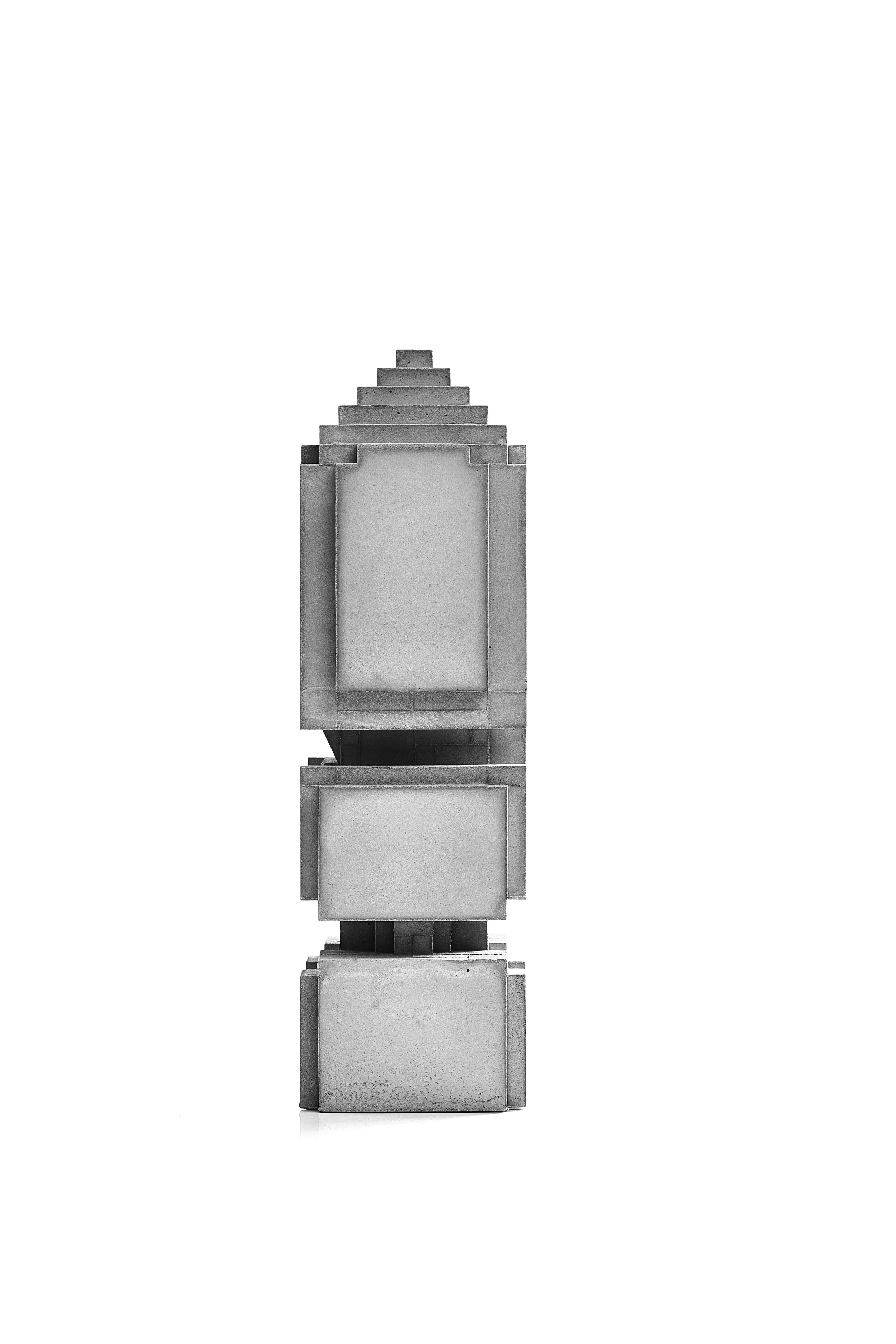
Lot 9. Levi Hawken ,Lost Gods 5, 2024, cast high performance micro concrete, edition 1/3, signature on underside, 600 x 180 x 180mm. $3,690
On Maturity and Learning
It was definitely a form of growing up.
I often struggled with how things were taught at school, but once I experienced them in the real world, they made sense.
It took time to find what I loved and where I belonged. The shift wasn’t just maturity, it was finding the right way for me to learn.
On Early Influences
Early on, I was influenced by local artists, especially Aaron B, whose angular style with curves reflected his time in Melbourne. New Zealand didn’t feel like it had its own strong style at the time, so that was important. His work felt almost cubist to me, and I loved Cubism.
We relied on magazines then, since there was no internet. Artists like Murder and Duel from Melbourne were creating sculptural, three-dimensional graffiti. While German artists such as Daim, Delta, and Loomit are often credited with 3D graffiti, I believe the Australians were instrumental, and that exchange of ideas went both ways.
I was always drawn to modernist movements, German Expressionism and Russian Art Nouveau, and to angular, geometric forms. Growing up, the places we skated were largely brutalist: university buildings, medical schools, training colleges, Aotea Square. I already had a fondness for that architecture and even fantasised about designing skate parks with brutalist monuments you could ride.
When I began working in concrete, the similarities became obvious. Brutalism offered solutions for realising objects in concrete. Certain shapes work better, and forms need to connect in specific ways. The process of moulding and forming naturally guides the direction of the work. I was also influenced by spomenik sculptures in Bosnia and Eastern Europe, and by architects like Carlo Scarpa.
Interestingly, I arrived at some formal similarities independently. I was making stepped concrete cubes before I knew much about Frank Lloyd Wright’s blocks. When someone pointed out the connection, I looked it up and realised we had approached similar ideas differently. The stepping in my work often emerged naturally from structural necessity rather than reference.
On the Connection Between his Sculptures and Architecture (Modernism and Brutalism)
My wall work was heavily influenced by architectural shapes, so they adapted to being reliefs really well. My first concrete sculptures were cubes with reliefs around the sides. Then I started cutting right through the cube or brick. The more I explored, the deeper I cut. In doing so, I was shedding weight and mass. As I made the blocks lighter, I also made them weaker. Then I started adding structural supports. I had unwittingly found an understanding of the definition of brutalism. Not just an angular, blocky concrete object, but a sculptural form that shows its structural strength on the outside.
At the same time I was researching a lot of brutalist buildings and sculptures, which gave me inspiration to draw from, new things to try.
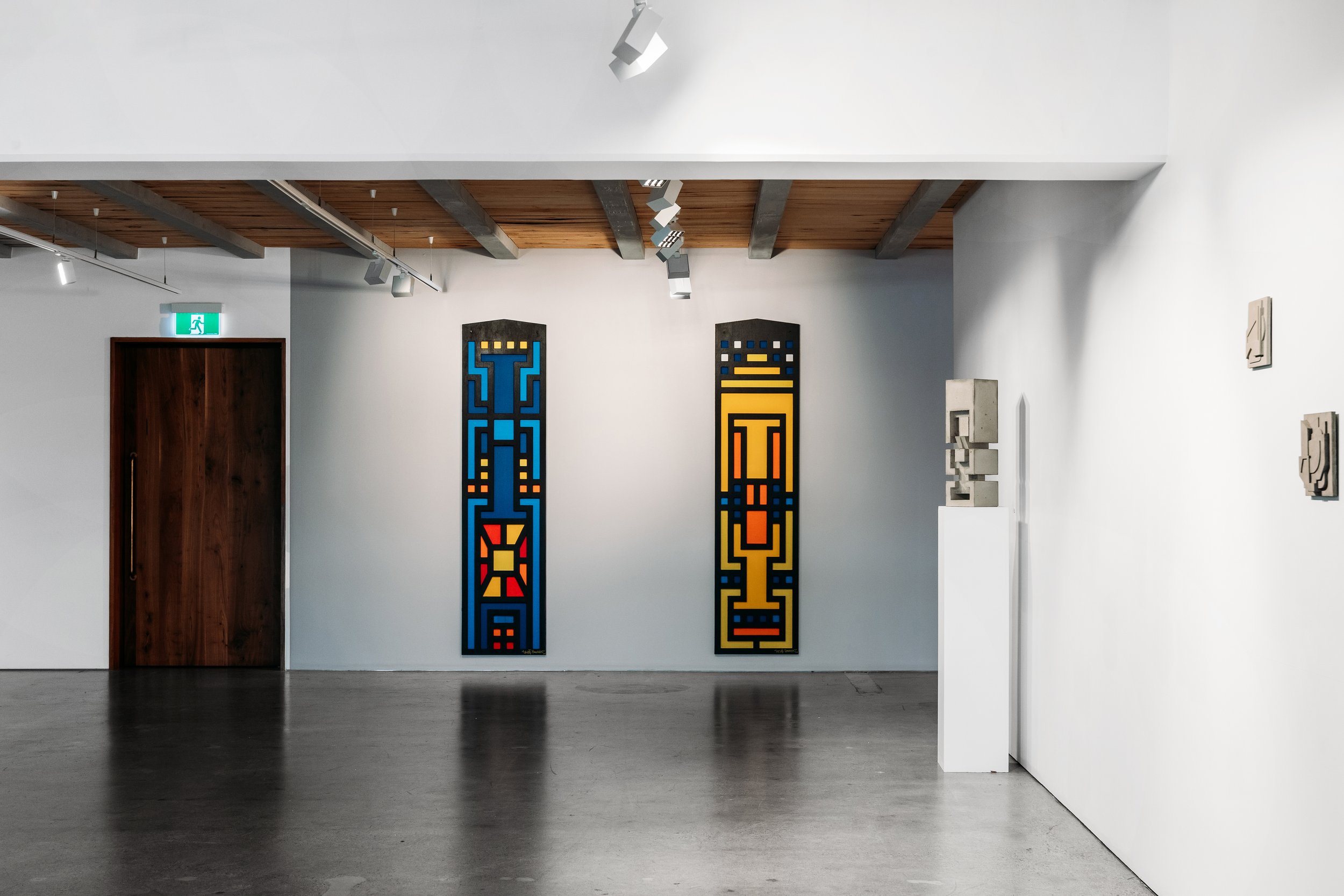
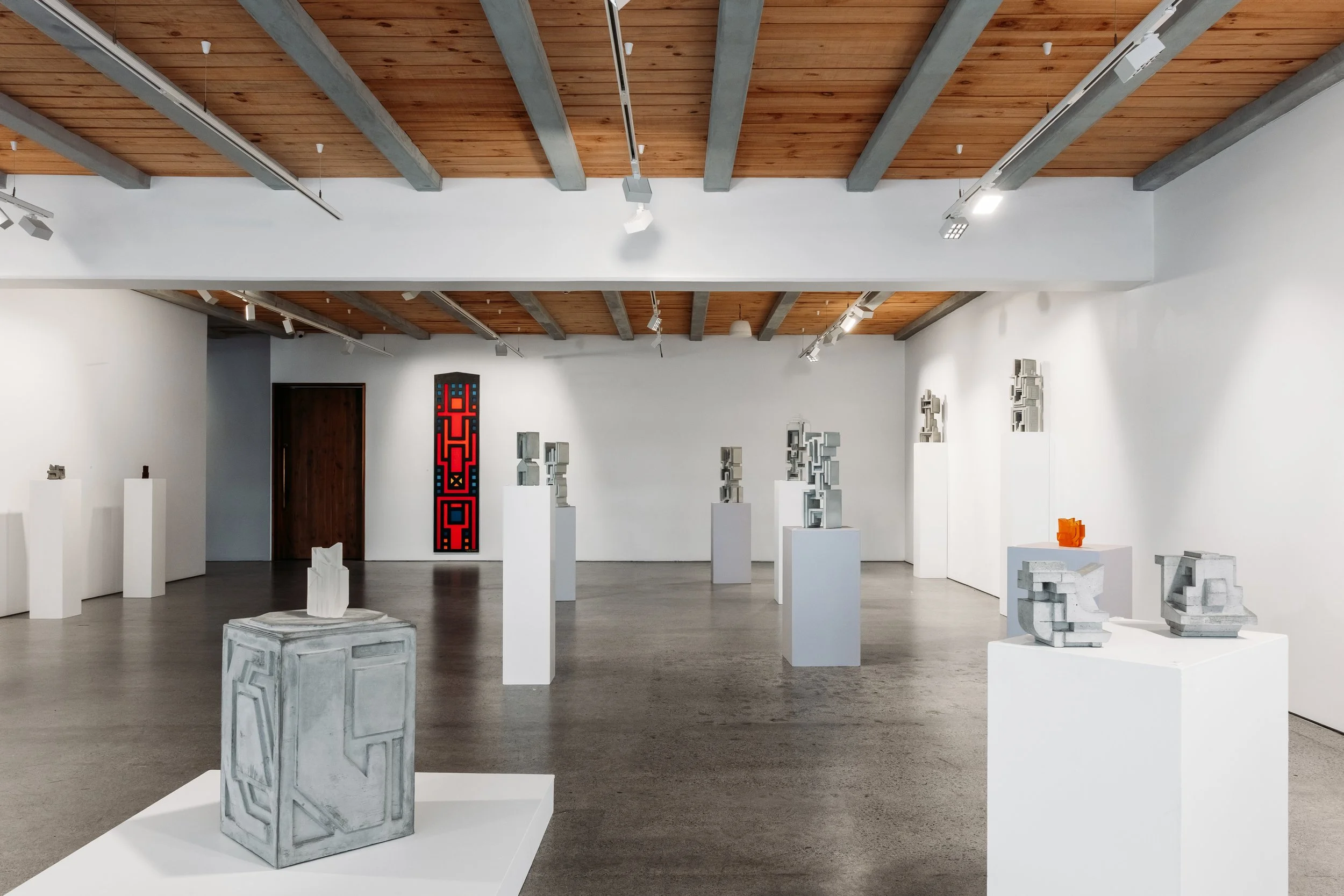
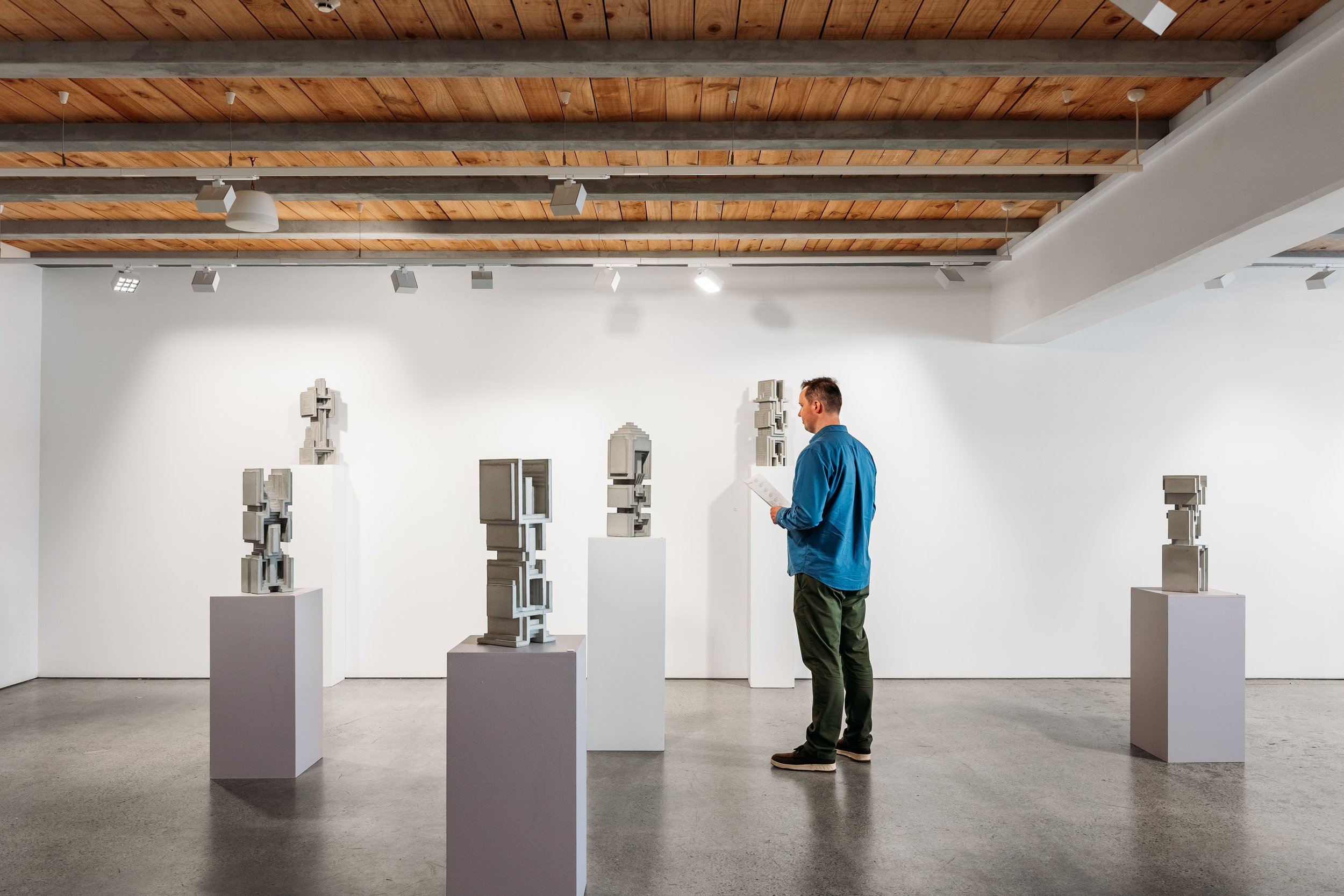
Installation in Webb's Wellington.
On Scale and Material
Even when I was painting murals, I was thinking beyond the flat wall, painting around corners, onto doors, using architecture as part of the composition. Rather than painting a three-dimensional object onto a building, I treated the building as the object.
With sculpture, especially larger works, I want viewers to keep discovering new details. Hand-assembling moulds inside out and backwards is extremely challenging. Getting the concrete mix right, casting, then discovering an error after demoulding can be devastating when you’re striving for precision.
Casting glass taught me even more. I made multiple versions of the same form in different types of crystal: dark, light, opaque. Each had its own life. Thickness changes affect colour and light; glass darkens or lightens depending on depth. But glass wants to be round. It resists right angles, so translating my angular language into glass has been a technical challenge.
Bronze, on the other hand, allows brush marks, patinas, splatters of green, bringing painterly qualities back into otherwise monochrome forms.
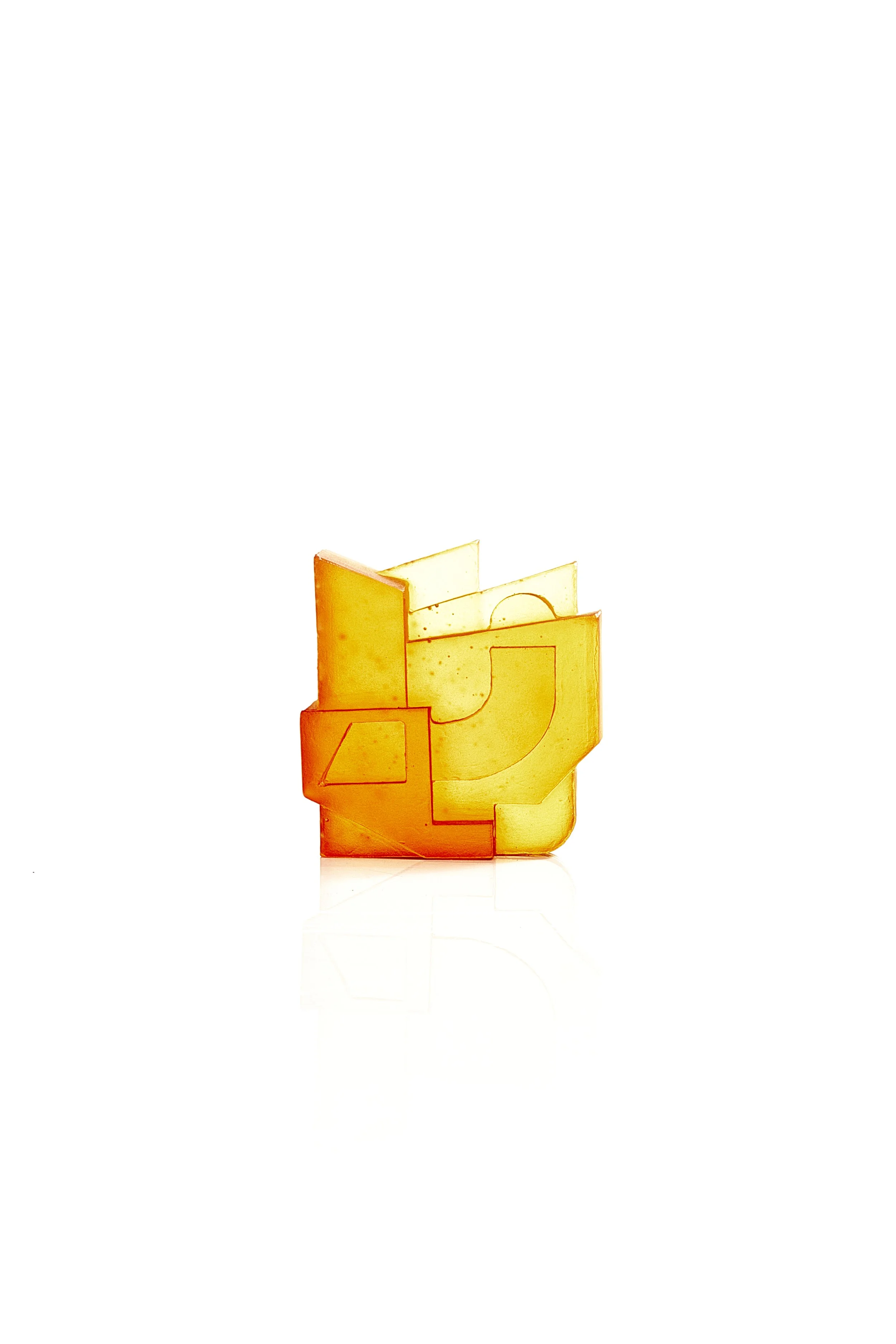
Lot 1. Levi Hawken, Solv 4 (Yellow), 2025, cast glass, sandblasted, edition 4/4, no signature, 125 x 120 x 55mm. $1,190
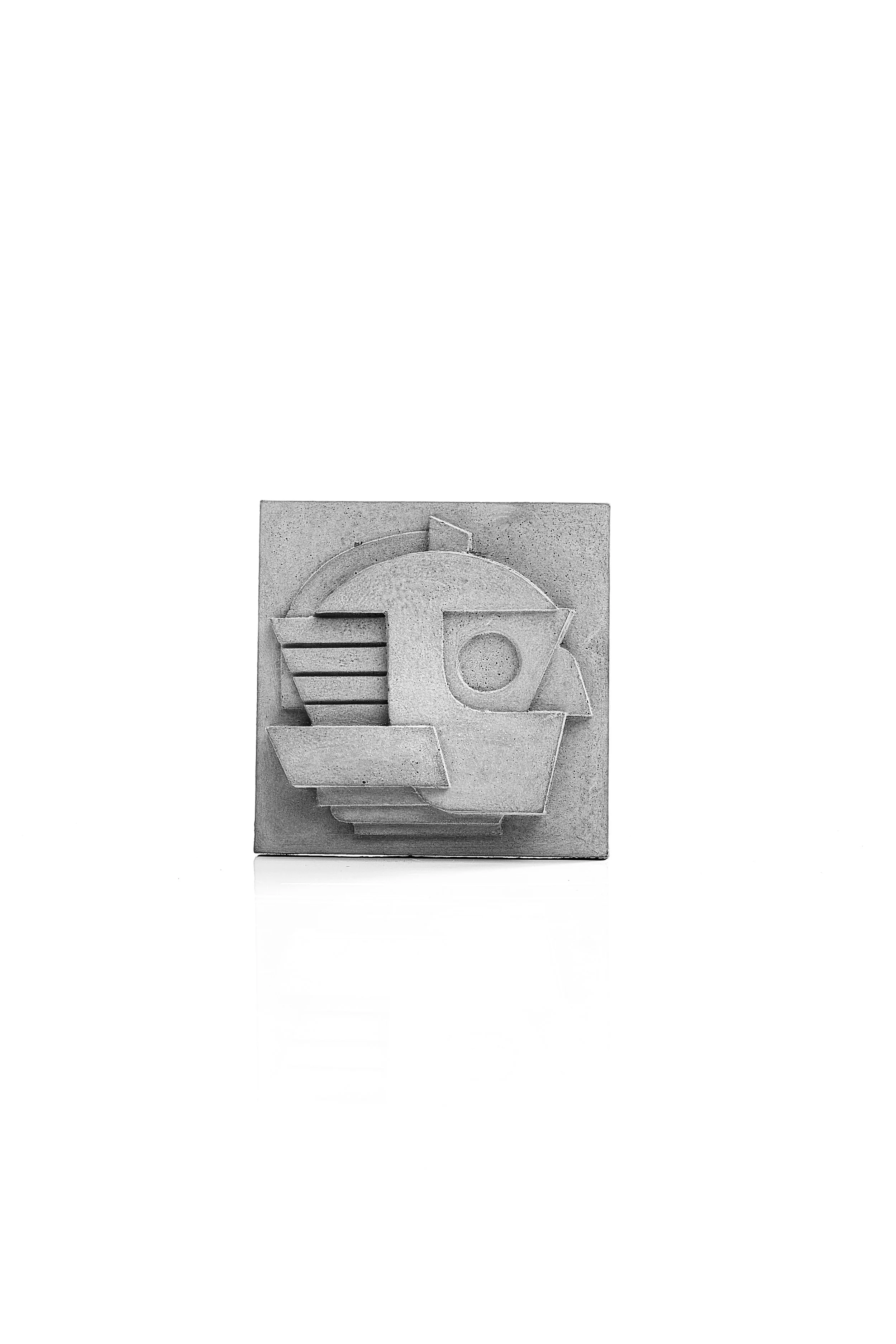
Lot 24. Levi Hawken, Tiles Horus 3, 2020, cast concrete, wall hanging, edition 19/30, signature on underside, 140 x 140 x 30mm. $300
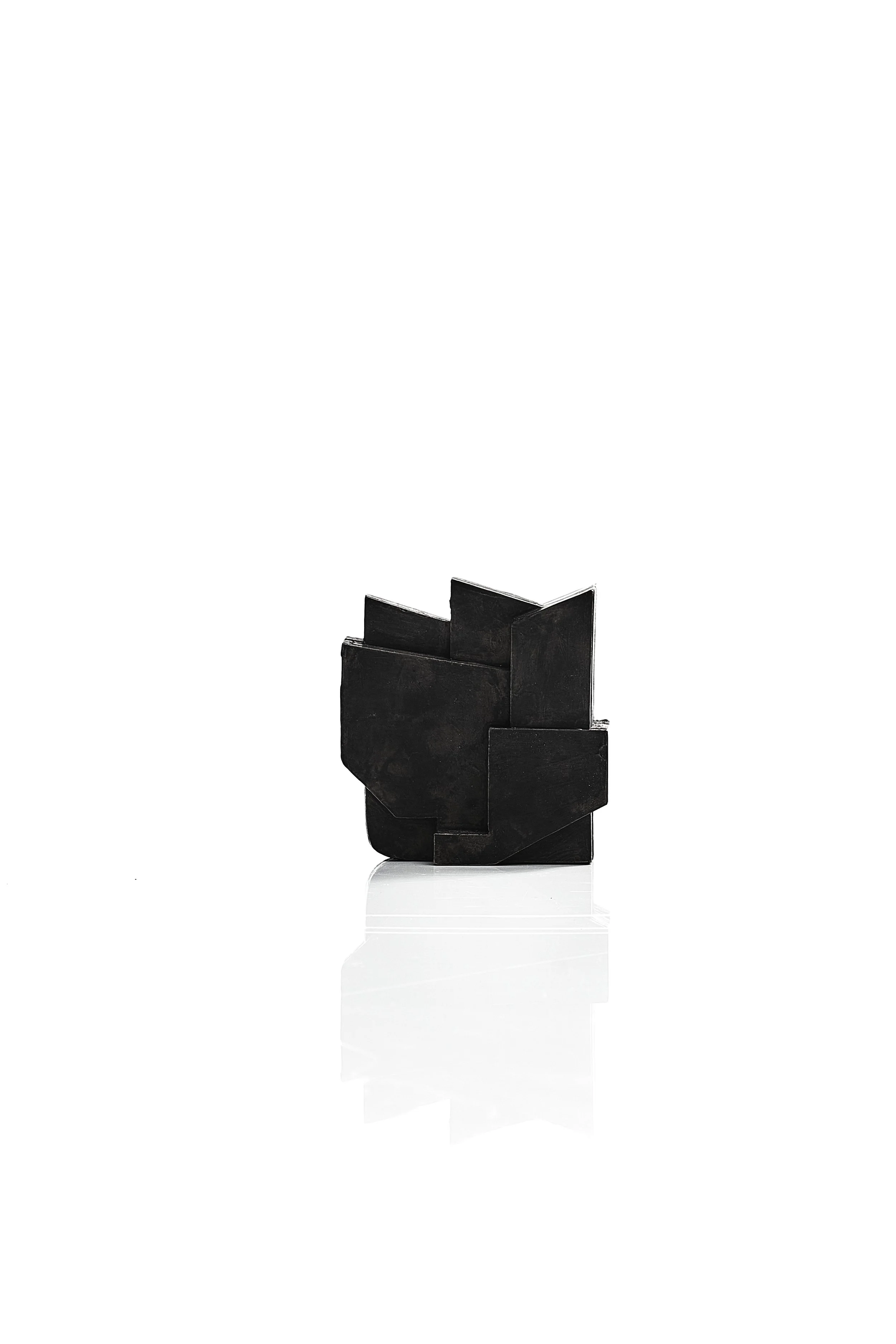
Lot 31. Levi Hawken, Solv 4 (Bronze), 2023, solid bronze, edition 2/10, signature engraved on bottom, 125 x 120 x 55mm. $2,890
On Removing Colour
During the Rugby World Cup in Auckland, graffiti was painted over in grey by council workers. I wondered: if I made my work grey, would it survive? It became a form of camouflage, like an animal blending into its environment.
Using brush paint left ridges. Even after works were painted over, the ghost of the piece remained in relief. I began leaning into that, layering paint, sanding back, revealing what was beneath. In exhibitions like Timepiece, I explored accumulation and abrasion, the buildup of layers over time and their eventual erosion.
Skateboarding reinforced this idea: wearing down shoes, decks, wheels, while also wearing down concrete. Watching smooth surfaces crack and age fascinated me.
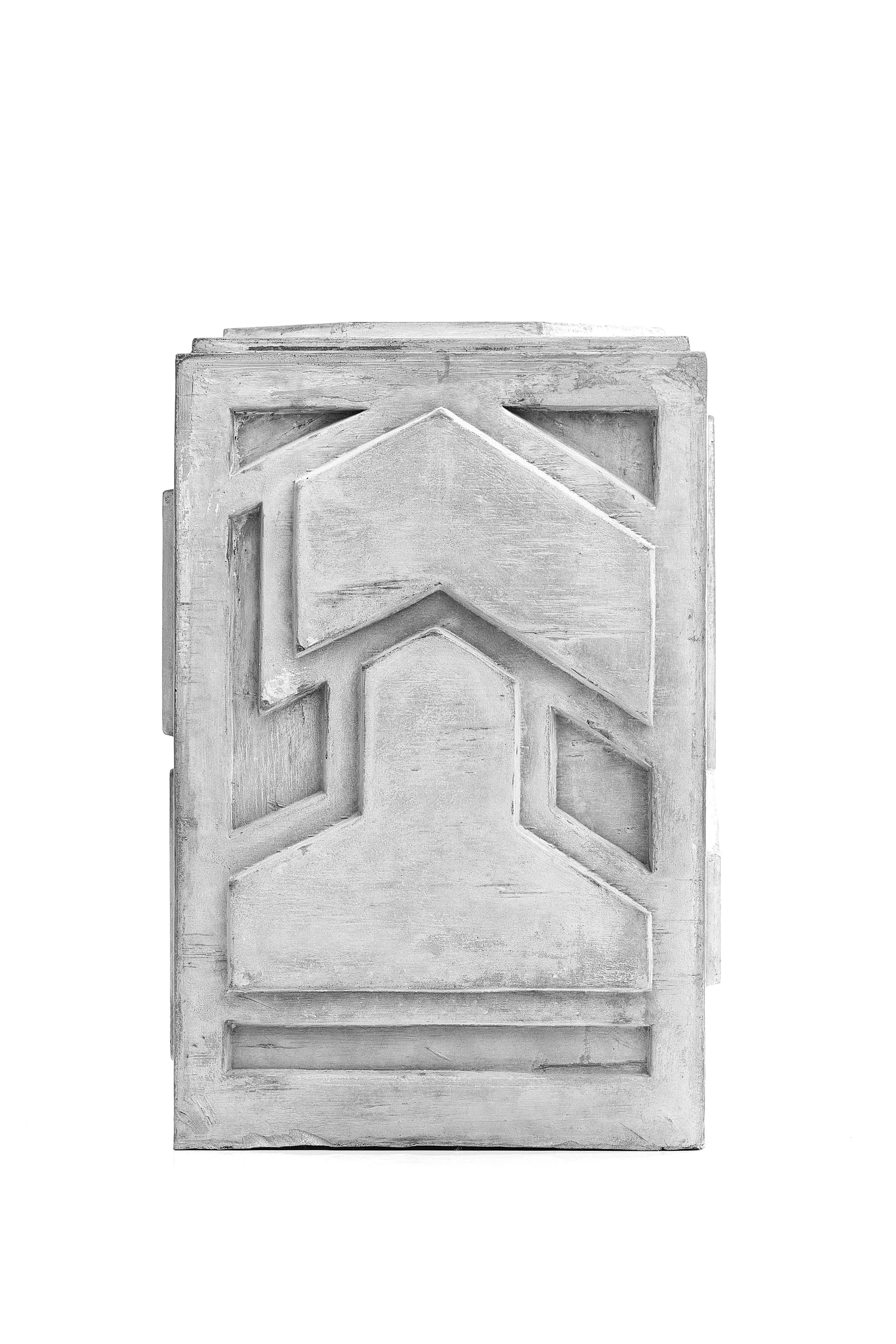
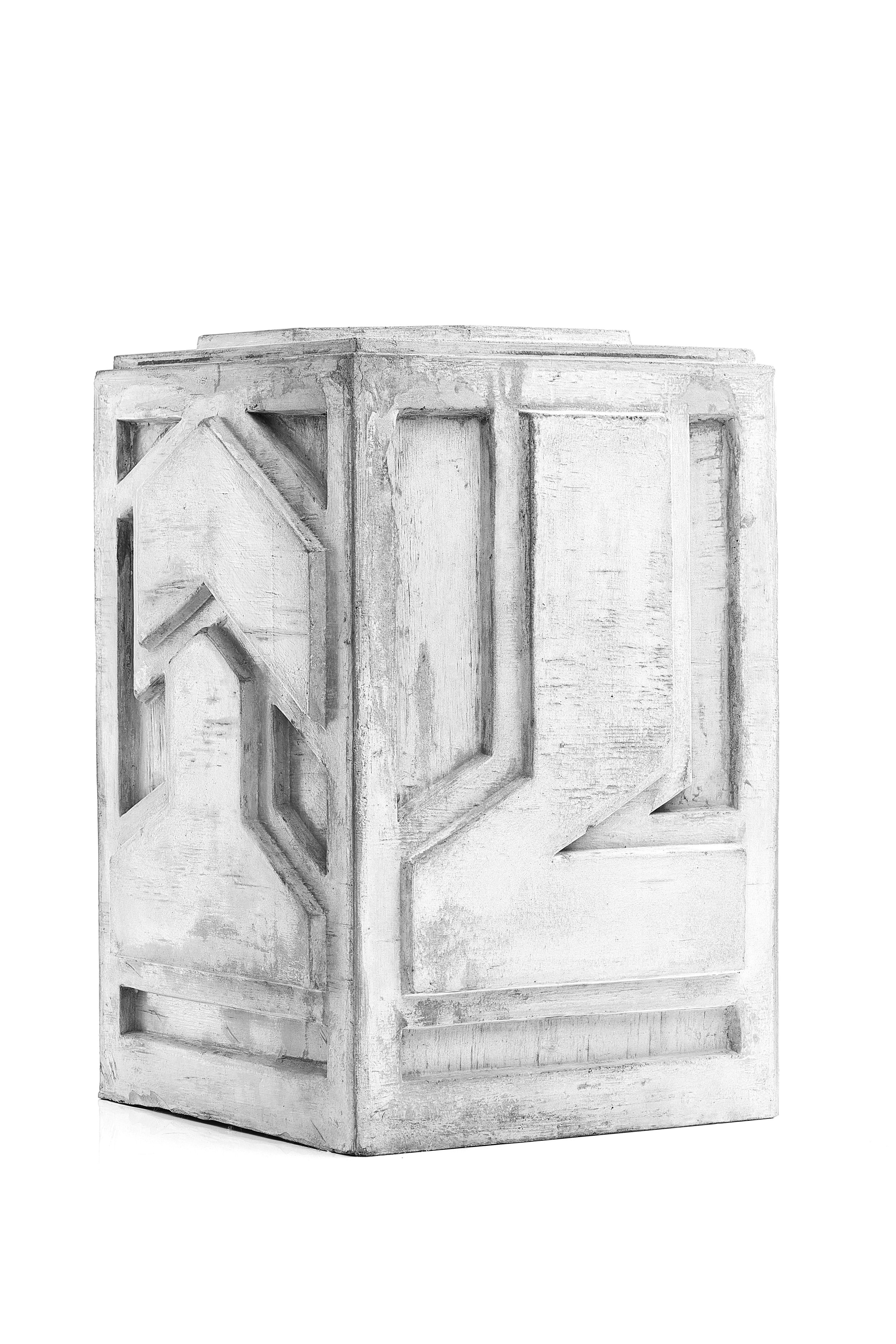
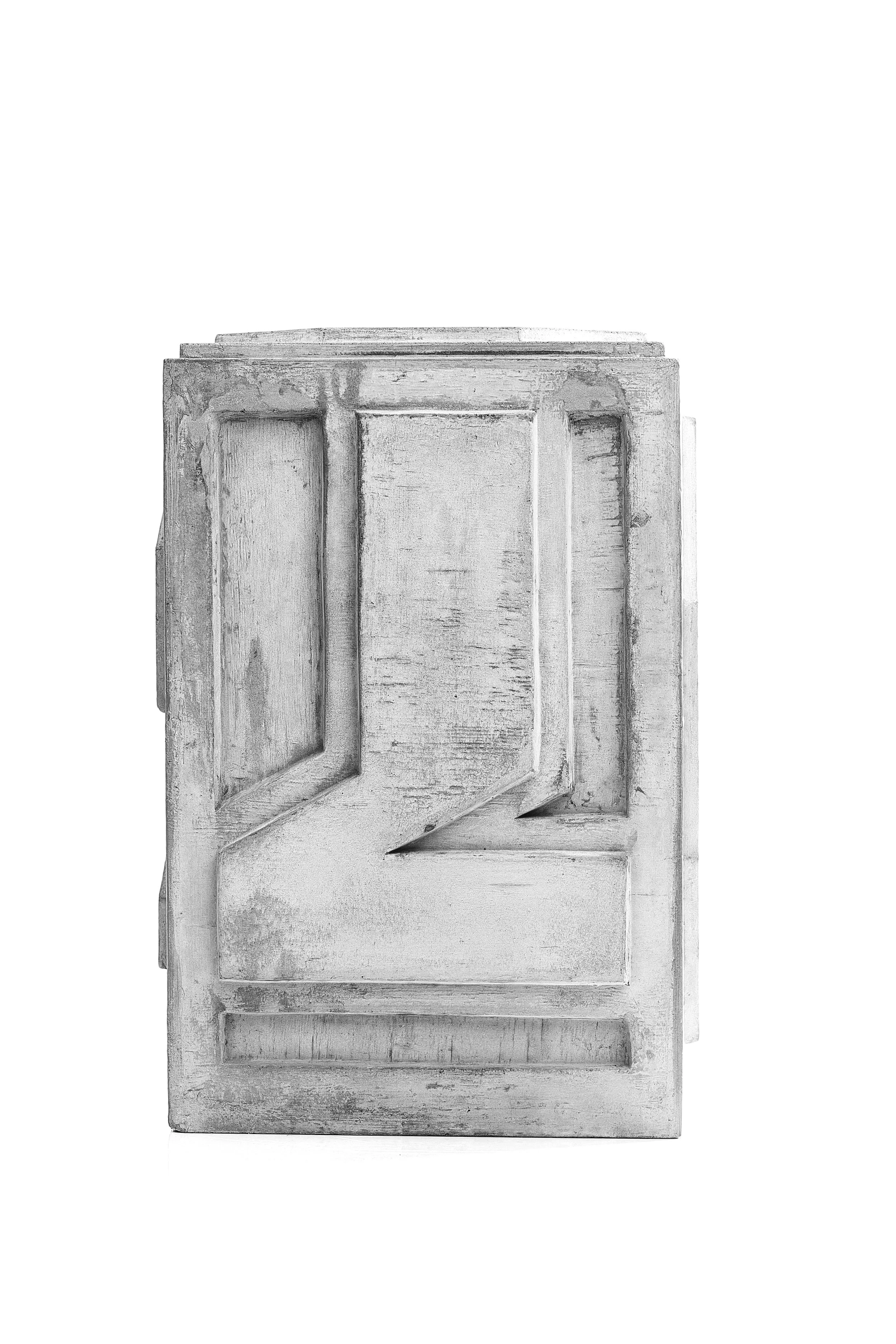
Lot 28. Levi Hawkes , G Cube 3 (Plinth/seat), 2024, lightweight GRC concrete (hollow), unique 1/1, signature inside sculpture, 630 x 420 x 420mm. $3,500
On Lost Gods and False Idols
I was tasked with designing a headstone for my grandparents, and they wanted a crucifix on it because they were Catholic. So I began thinking about symbolism. If you don’t follow a specific religion, what symbol would you have on a headstone to represent the power of the universe? That question led to the creation of the series of sculptures titled Idols.
The term “false idols” interested me, especially in a world full of grifters. My idols are “false,” but they’re not selling anything or asking to be followed. They exist in a space before assigned meaning.
I’m interested in what happens when monuments lose their cultural meaning, when no one remains to explain them. That unexplained space, before corruption or definition, is where I like my work to sit. I’ve never felt strongly connected to one religion or culture, so creating my own symbolic language, without rules, has been liberating.
On the Unknown and Symbol
Books like Fingerprints of the Gods (by Graham Hancock) and the writings of Carlos Castaneda influenced my thinking about the “power of the unknown”, the idea that true possibility lies beyond what we can immediately perceive.
I’ve also been interested in the idea of condensing language into symbols, like magical sigils formed from initials. Some of my Solvs come from condensing my own name into a symbol. “Solv” comes from “solution.” Art was the problem; this was the solution. The interlocking forms function like puzzles, spaces the eye can move through and inhabit.
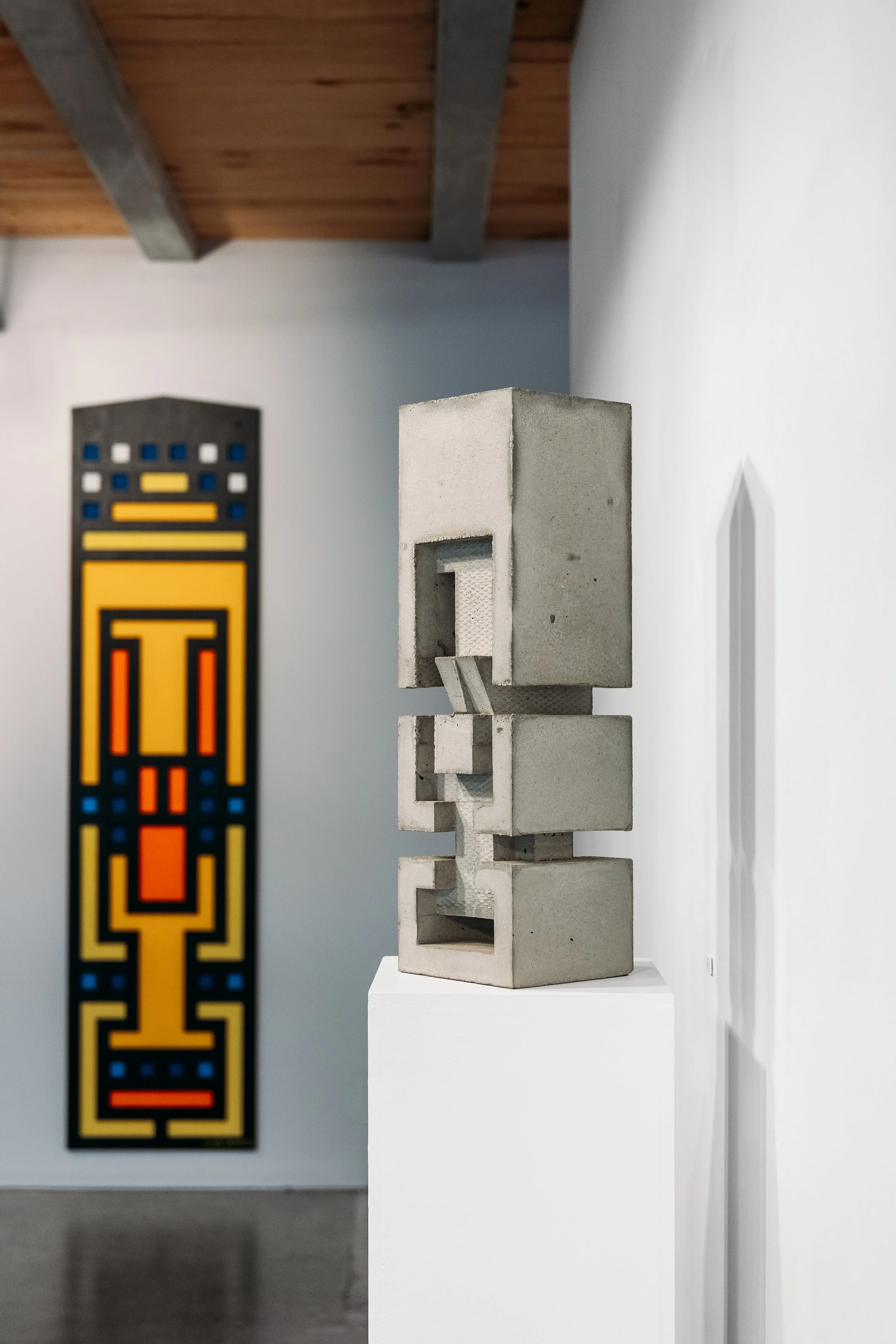
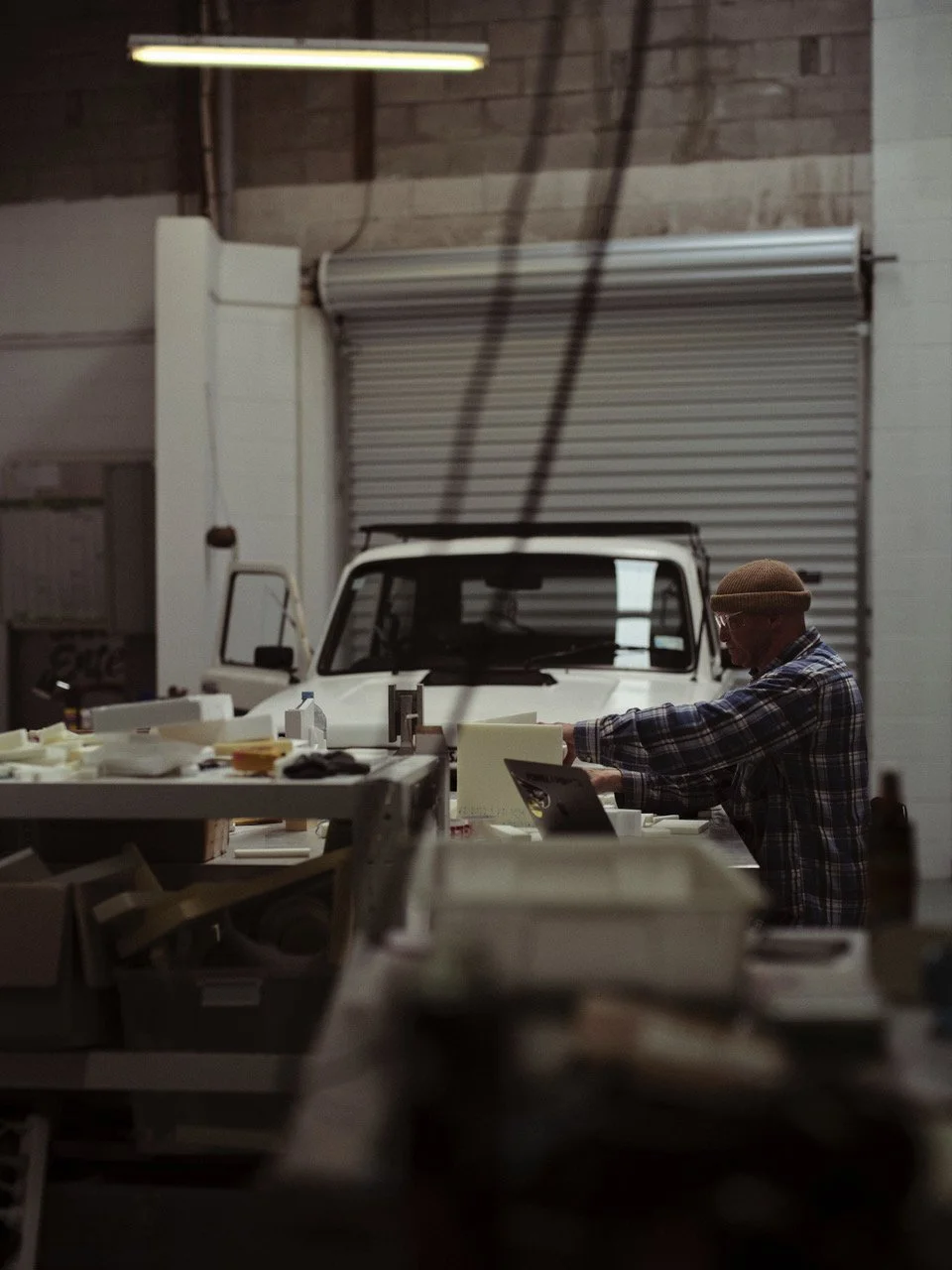
Levi Hawken in Studio.
On Legality and Freedom
I didn’t start by doing illegal graffiti. I drew it in books and adapted its style into portraits and urban scenes. But when I was disappointed by my school grades, I felt pushed toward a space without institutional judgment. Graffiti offered that, a place without rules or measurable achievement.
Skateboarding in the streets was similar; before skate parks, it was technically illegal. Both practices existed outside formal systems. Over time, both have been absorbed into institutions, the Olympics and galleries, but initially they provided a space of freedom.
On the Studio and Practice
My new studio is the second warehouse I have worked in, but the first I own. It’s freeing not to worry about moving again. Setting up takes time, especially since I work across mediums, glass, concrete, painting, and I never know which direction will dominate. As an artist, you make what you love, but you also have to make what sustains you.
On Craft in a Digital Age
The upcoming show brings together forms and materials developed over decades, pushing technical casting processes while retaining visible imperfections. In an era of AI, 3D printing, and CNC cutting, I value handcrafted work. The roughness, board-form marks, and small imperfections feel increasingly important.
I hope viewers first respond to the material presence, light, shadow, texture, and then construct their own narratives. I want the work to offer a moment outside rules, in the power of the unknown.
Webb’s Wellington brings together a series of these exceptional works by Hawken for its selling exhibition titled Future Relics. Join us for an artist talk or throughout the duration of this fantastic exploration of form, tactility and depth.
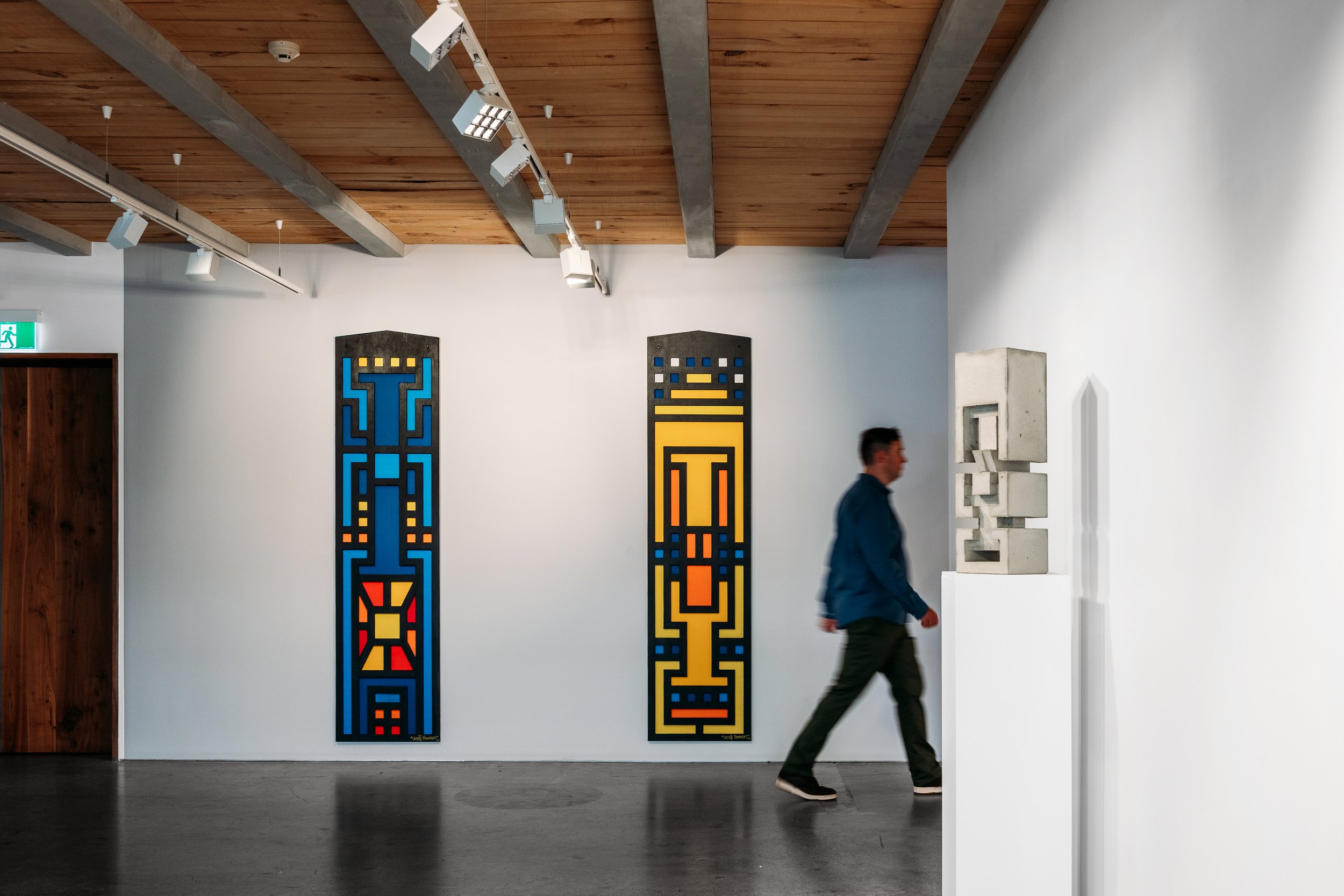
Installation in Webb's Wellington.
Future Relics: Levi Hawken
A Selling Exhibition
17.03.26—11.04.26
Preview Event
Saturday 21 March, 12.30pm—2.30pm
With an artist talk from 1pm—2pm
Location
Webb's Wellington | 23 Marion Street, Te Aro, Wellington
Contact
Virginia Woods-Jack | Exhibitions Manager
[email protected] | +64 22 679 8664