
Portrait of Sophia Street
Art historian, writer and Webb’s Wellington’s Senior Art Specialist Mark Hutchins-Pond explores Charles F. Goldie’s 1900 portrait of Sophia Street, revealing how this celebrated early work captures the intersections of artistic ambition, social status, and colonial identity in turn of the century New Zealand.
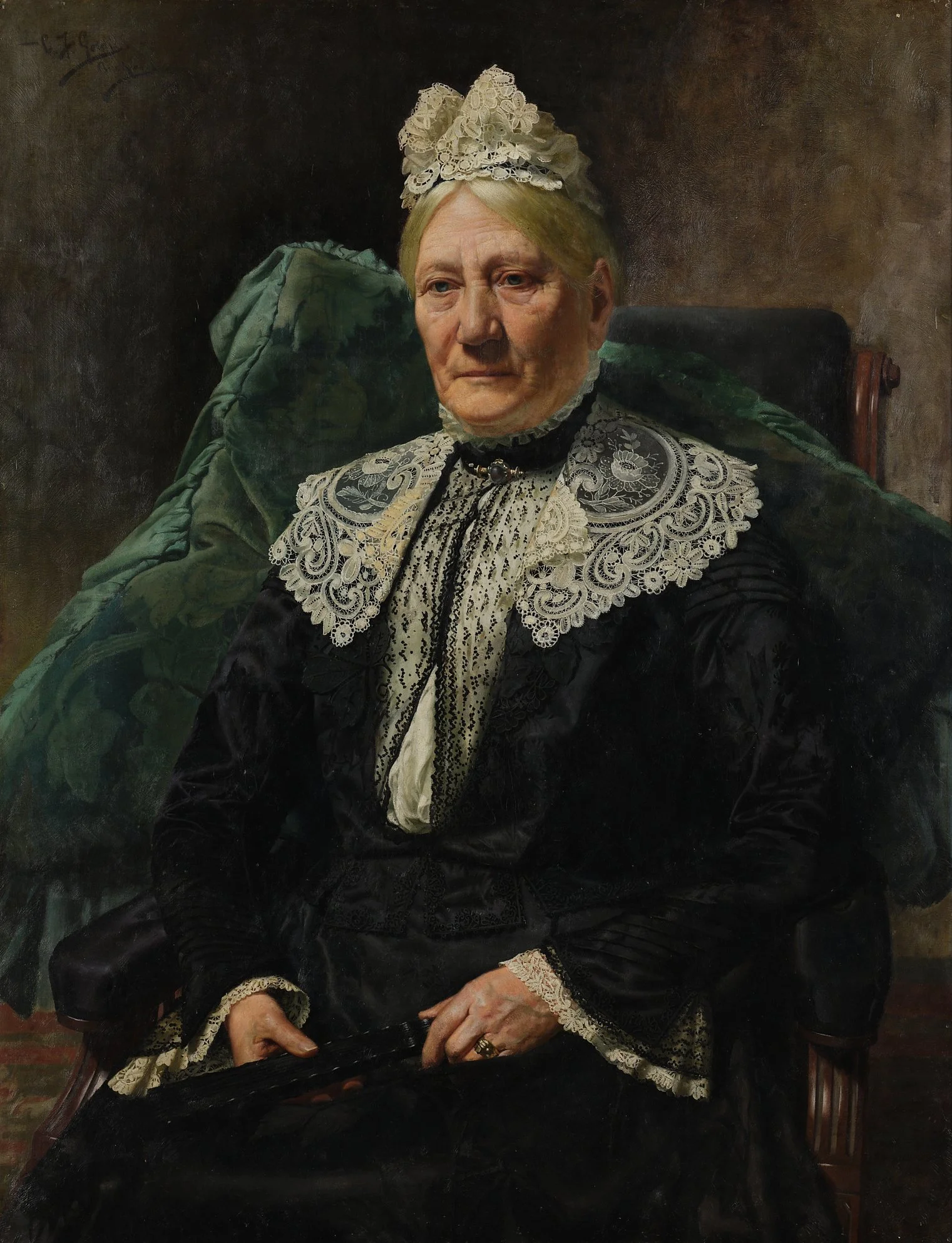
Lot 44. Charles Frederick Goldie, Portrait of Sophia Street, circa 1900, circa 1900, oil on canvas, 1100 x 840mm.
EST. $85,000—$125,000
Price Realised incl. BP. $97,990
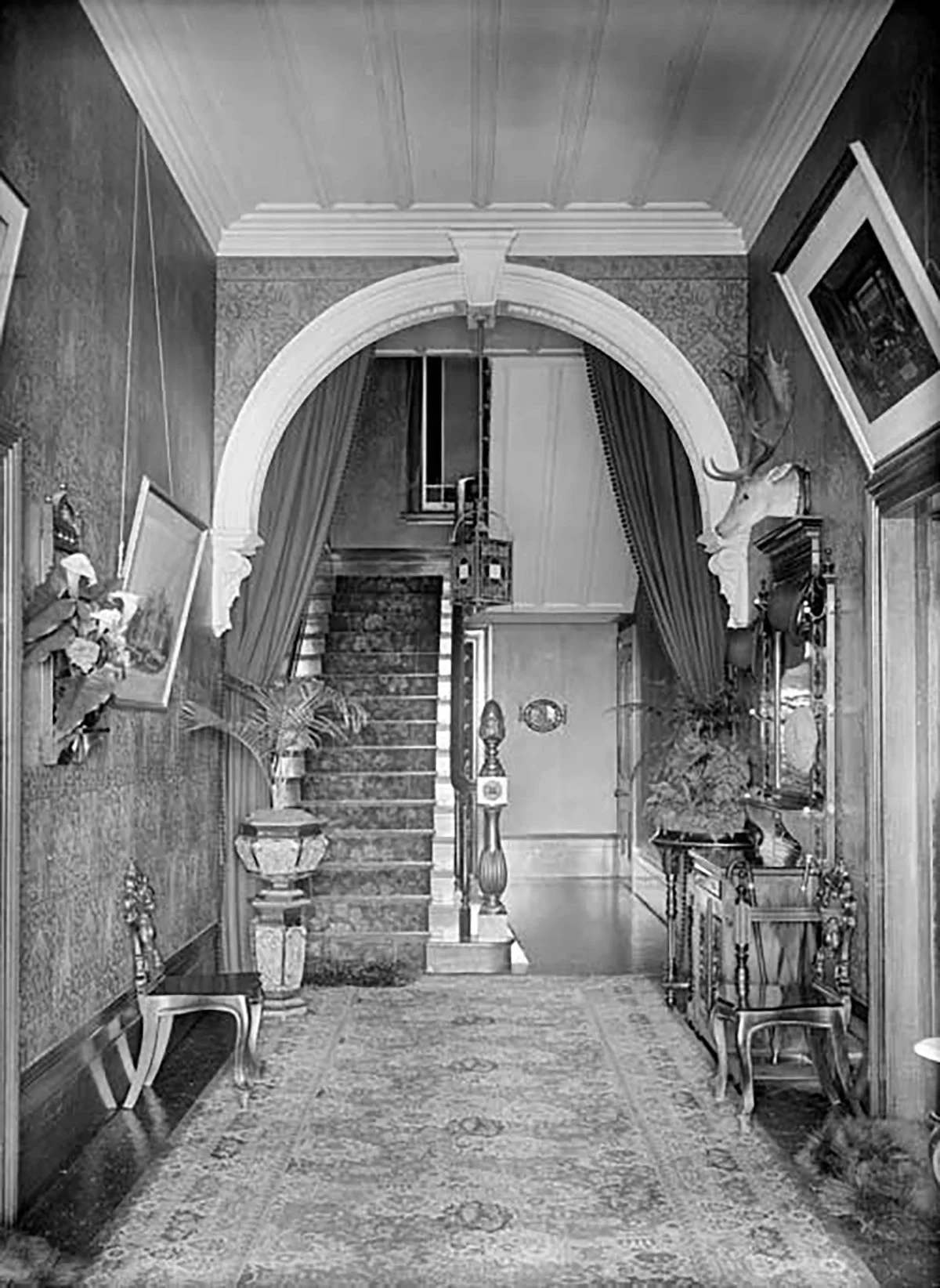
Birtley, the Street Family Home in Parnell, 1899 by Henry Winkelmann. Images Courtesy of Auckland Libraries
According to Te Ara Encyclopedia of New Zealand: “Charles Frederick Goldie’s career began in earnest in 1900, the year in which he first presented a collection of portraits –Pākehā and Māori– at the Auckland Society of Arts.” Goldie’s portraits there received immediate acclaim, the Graphic reporting that: “Nothing better had been seen here, and it is abundantly evident that in this gentleman we have an artist who… may reach almost any height.”1 Another commentator echoed the sentiment, saying that Goldie received “the grand prix in popular estimation for works far- and-away superior to anything of the kind seen in Auckland.”2 While yet another, enthusiastic critic claimed: “No one with any knowledge of art could walk through this exhibition and fail to pick out the work of the master which makes that show. The work of C. F. Goldie stands out pre-eminently. This is not only apparent in training and technique, but in the higher fields of expression — those qualities which separate a mere copyist and patient labourer on technical rules from a true master.”3
Such acclaim encouraged the young artist to continue his idiosyncratic pursuit of a meticulously rendered realism. He began exhibiting regularly and more widely, and his works soon became highly sought after.
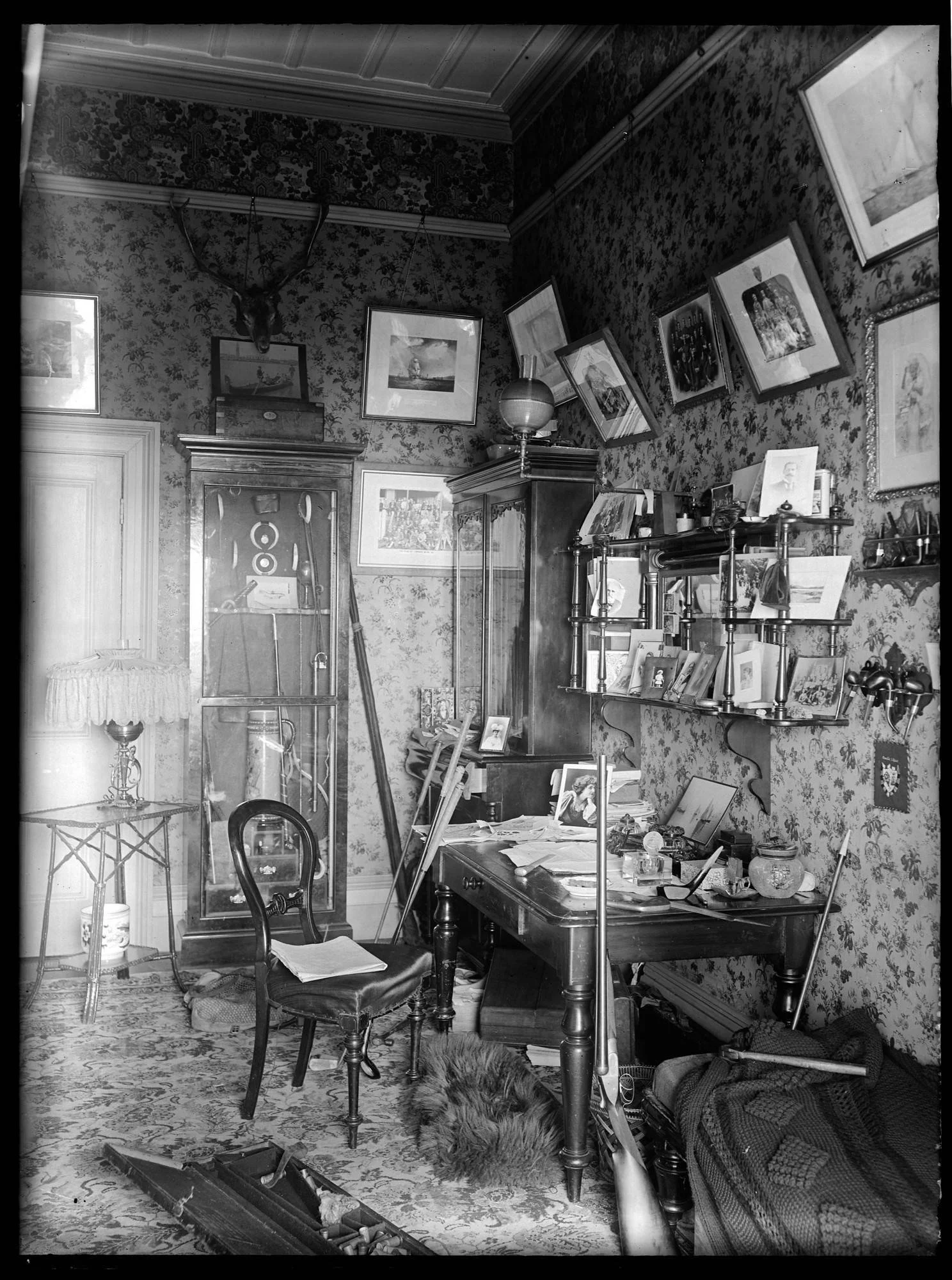
Birtley, the Street Family Home in Parnell, 1899 by Henry Winkelmann. Images Courtesy of Auckland Libraries.
The portrait of Sophia Street presented here was painted by a young Goldie during that initial flurry of celebrity; shortly after his hugely popular exhibition. Although Goldie eventually became best known for his portraits of Māori sitters; he also painted a number of significant portraits of Pākehā, particularly in these early years of his career. When the young Goldie became the talk of the town following the sensational response to his Auckland Society of Arts’ show, Sophia Street, three years into her widowhood, was living alone in a grand house above Judge’s Bay in Auckland’s inner city fringe. Sophia Street (née Dabinett) was born in Somerset, Southern England, into a family of agricultural labourers. She was the fifth of nine children and as soon as she was of age, trained as a glove maker and moved to London where she married Charles Street, a bank clerk. In 1853, Charles and Sophia, together with their young daughter Emily and Charles’ mother, emigrated to Aotearoa New Zealand. After some years developing rural properties, they settled in Ōtepoti Dunedin and Charles began working as a land agent. These were Ōtepoti's boom years, when the city served as the commercial centre of the Otago gold fields, a context that enabled Charles to make a significant fortune.
In 1866, Emily married Charles’ business partner, Robert Gillies. When Charles retired in the early 1880s, he and Sophia moved to Auckland. Here, they built Birtley, a substantial house on land that later became the Parnell Rose Gardens. Charles died in 1887, leaving Sophia well established in the higher echelons of Auckland’s wealthier residents, and very generously provided for. In 1900, Goldie painted both Sophia and his own mother, Maria Goldie. It is interesting to compare both as a way to discern the social and emotive differences of both sitters. The portrait of Maria Goldie is smaller in scale, but fundamentally they have much in common.
Both women are seated in a chair, posed to reveal a three-quarter view of their face, illuminated by a single light source from the upper right, against a dark but warm neutral background that is gently raked by the same light. The proportions of the figures within the picture frames are also very similar, as are their dark clothes, which strongly contrast with the warm pink flesh tones of their faces and hands. However, this is where the similarities end. While the clothing worn by Maria Goldie is smartly tailored and elegant in its simplicity, Sophia Street’s couture is lavish and luxurious. She is dressed in a sumptuous black satin gown, embroidered and appliqued with delicate floral motifs along the internal facing edges of its bodice panels.
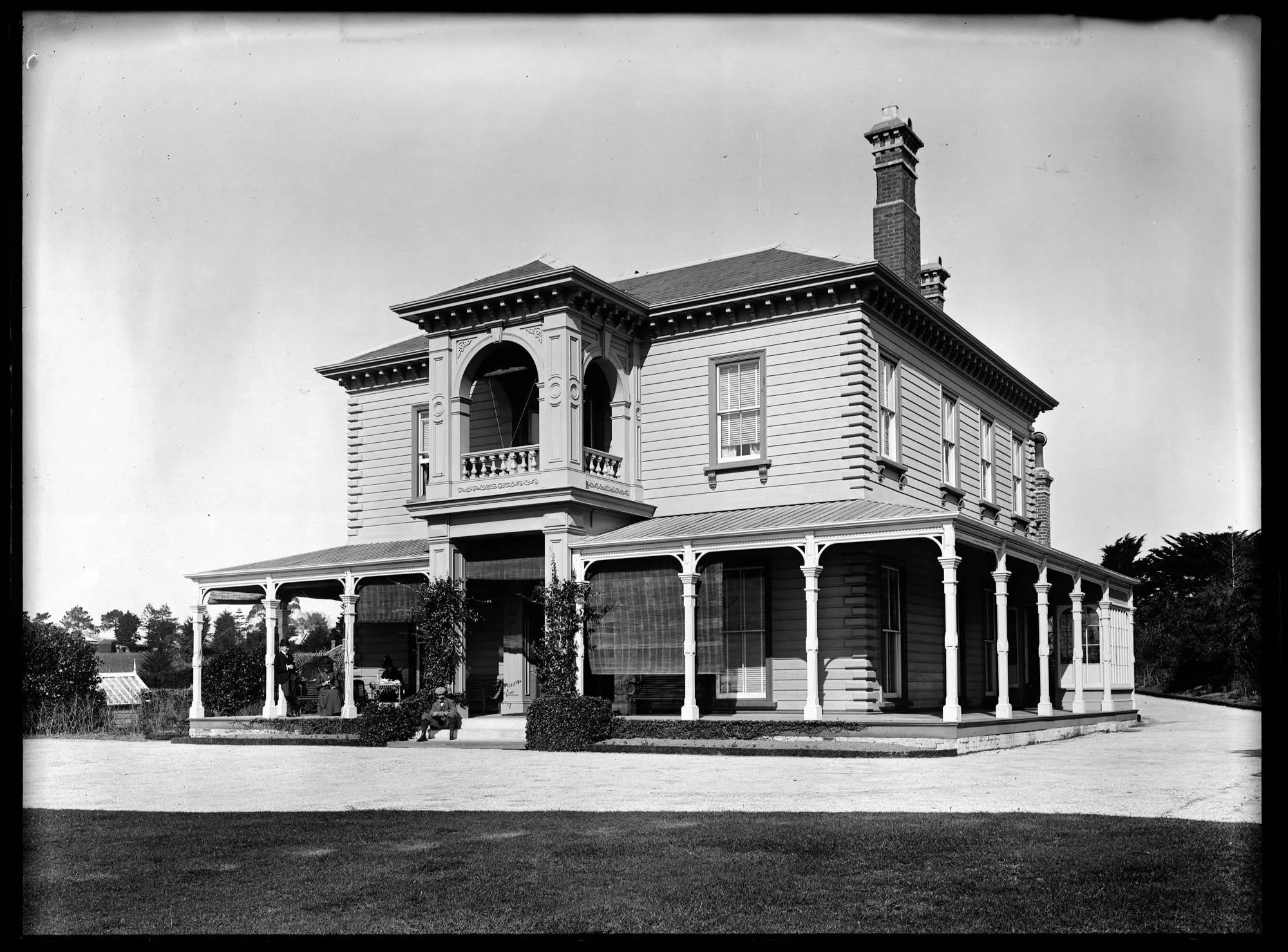
Birtley, the Street Family Home in Parnell, 1899 by Henry Winkelmann. Images Courtesy of Auckland Libraries
This is overlaid with a wide, highly extravagant collar of crisp white lace decorated with even more intricate floral patterns. Sophia’s neck is cushioned by a delicate ruff of finely worked lace which also encircles her cuffs. An elaborate Fanchon Cap completes Goldie’s framing of Sophia’s face with radiating white lace, dramatically contrasting with the sitter’s black satin gown and the painting’s dark background. Goldie’s extraordinarily fine rendering of all these details of his sitter’s attire, particularly the lace and other fabrics, evokes the elaborate portraits of Dutch and Flemish Old Masters he would have seen in galleries and museums a few years earlier. As a widow, Sophia Street’s choice of attire may have consciously evoked the visual conventions of widowhood familiar throughout the British Empire, not least those associated with the most famous widow of the era, the then-reigning monarch, Queen Victoria.
More than a likeness of a single sitter, the portrait captures the aspirations, conventions, and social identities of colonial New Zealand at the turn of the twentieth century.
Essay by Mark Hutchins-Pond
Live Auction | 24.08.26
Works of Art
—North Island Tour
Wellington
Launch
Wednesday 12 August, 5.30pm—7.30pm
On View
Wednesday 12—15 August
23 Marion Street, Te Aro, Wellington 6011
Auckland
Launch
Tuesday 18 August, 6pm—8pm
On View
Tuesday 18—24 August
Live Auction
Monday 24 August, 6.30pm
33a Normanby Road, Mount Eden, Auckland 1024