
The Italian Hand: Six Decades of Italian Flair at Webb’s Design Edit
From Murano glass to Brianza upholstery, we take a look at Webb’s Design Edit catalogue for a decade-by-decade look at how Italian makers turned ideas into objects we still want to live with.
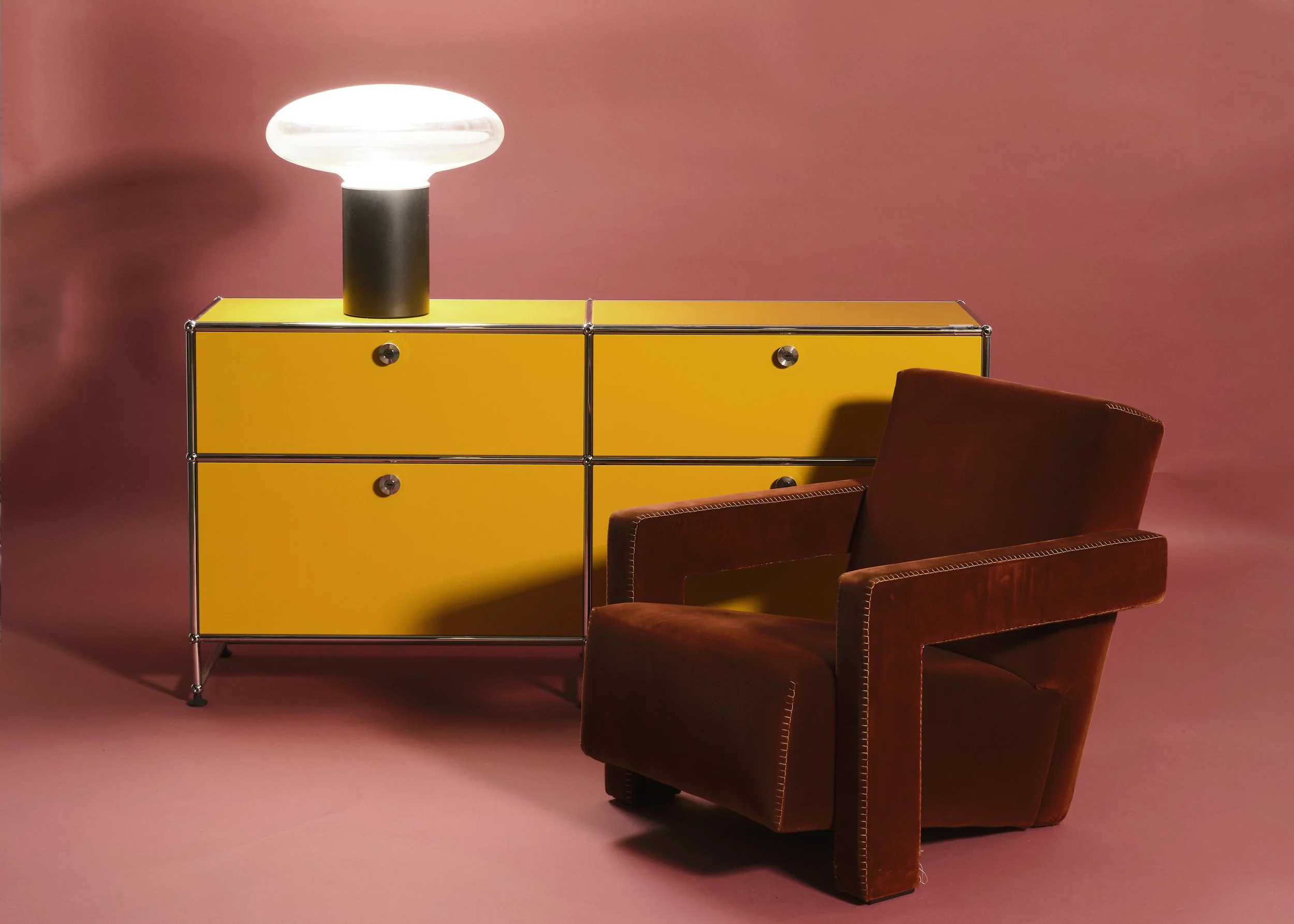
From Murano glass to Brianza upholstery, we take a look at Webb’s Design Edit catalogue for a decade-by-decade look at how Italian makers turned ideas into objects we still want to live with.
Collectable design rarely travels on a single passport. The Estate: Design Edit, our curated online auction and in-person exhibition, brings together mid-century furniture and lighting, modernist objects and pieces by recognised local and international designers. This edition meanders from Swiss modular steel and Dutch daybeds to Danish linen pendants, French quilting and work by top New Zealand designers, with stops in many regions and most of the decades in between.
Within this jet-setting catalogue, there one country keeps stealing the room: Italy. Few places have produced design so prolifically, or with such consistent flair. Much of the credit belongs to tradition and partnerships. On one side are architects and designers with ideas; on the other, family manufacturers (often a short drive from Milan or Venice) with the skill and history to build them.
Add to this a consistent partnership between government and the various design industries toward promotion (i.e the various, highly respected fairs and biennales), and you have a perfect storm for global design domination.
In terms of industrial design, the result has been furniture and lighting with a confidence you can spot across any room, and a collector appeal that tends to outlast trends.
To coincide with the launch of The Estate: Design Edit auction, we picked one Italian lot to represent each decade from the 1960’s onwards, alongside a few pieces from elsewhere in the sale that make for an interesting counterpoint in the rich narrative that runs through global craft and design thinking.
1960s: Roberto Pamio, Gill Lamp for Leucos (1962)
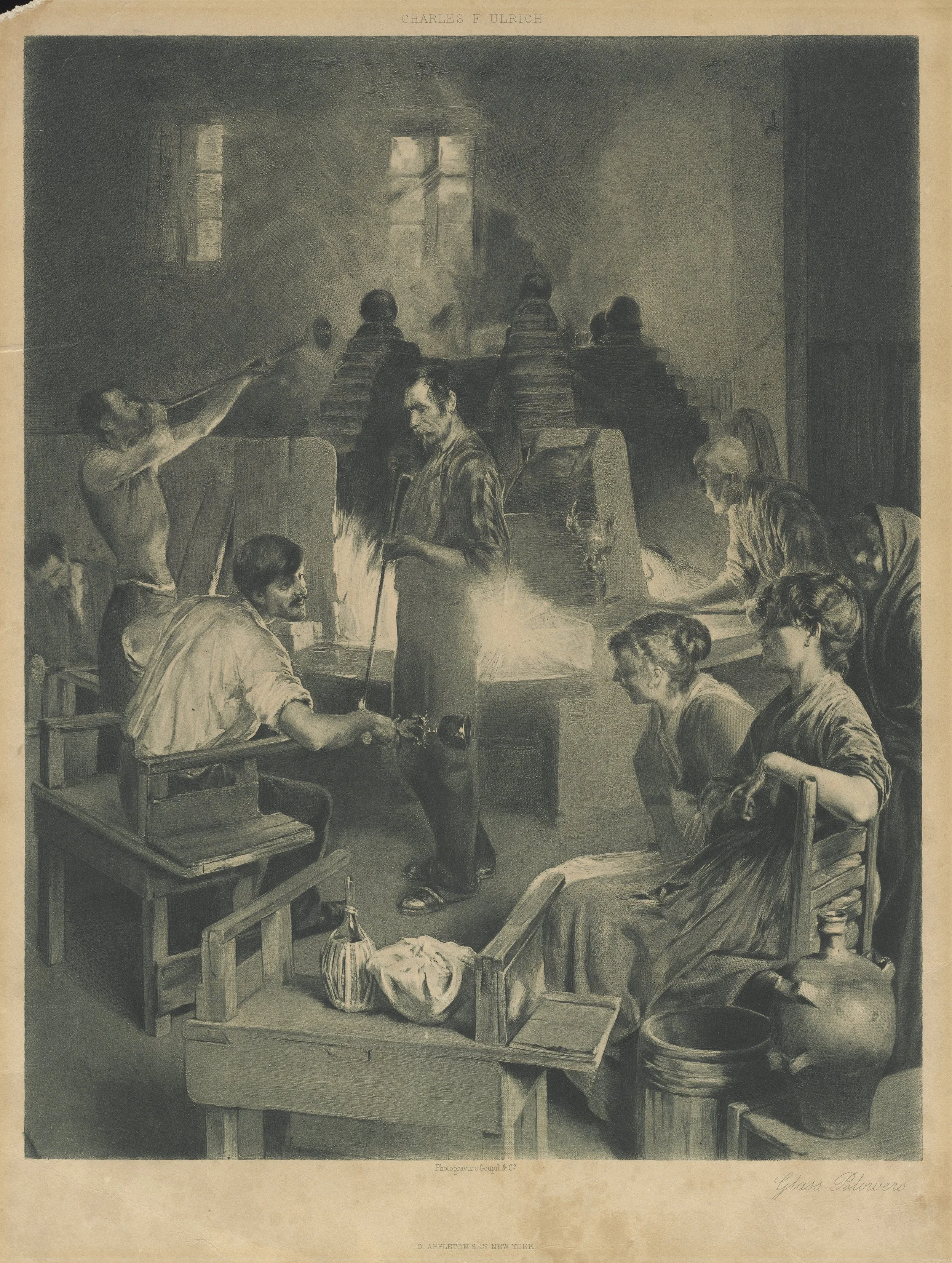
Some companies spend years searching for a signature product, Leucos started with one. Designed by architect Roberto Pamio in 1962, the Gill was the very first lamp the company launched, and it remains closely tied to the brand’s identity.
Leucos was founded the same year on the outskirts of Venice, with a simple premise: take the centuries-old skills of Murano’s glassblowers and apply them to modern lighting. The Gill shows how well that worked. Its mouth-blown glass shade carries a soft white top that diffuses the light rather than directing it to your eyes, producing the warm, flattering glow that dinner hosts (and anyone who has endured a fluorescent tube) would appreciate.
A graduate of Venice’s architecture faculty, Pamio went on to design lighting for seminal lighting brands such as Artemide and iGuzzini, among others, but the Gill remains his calling card.
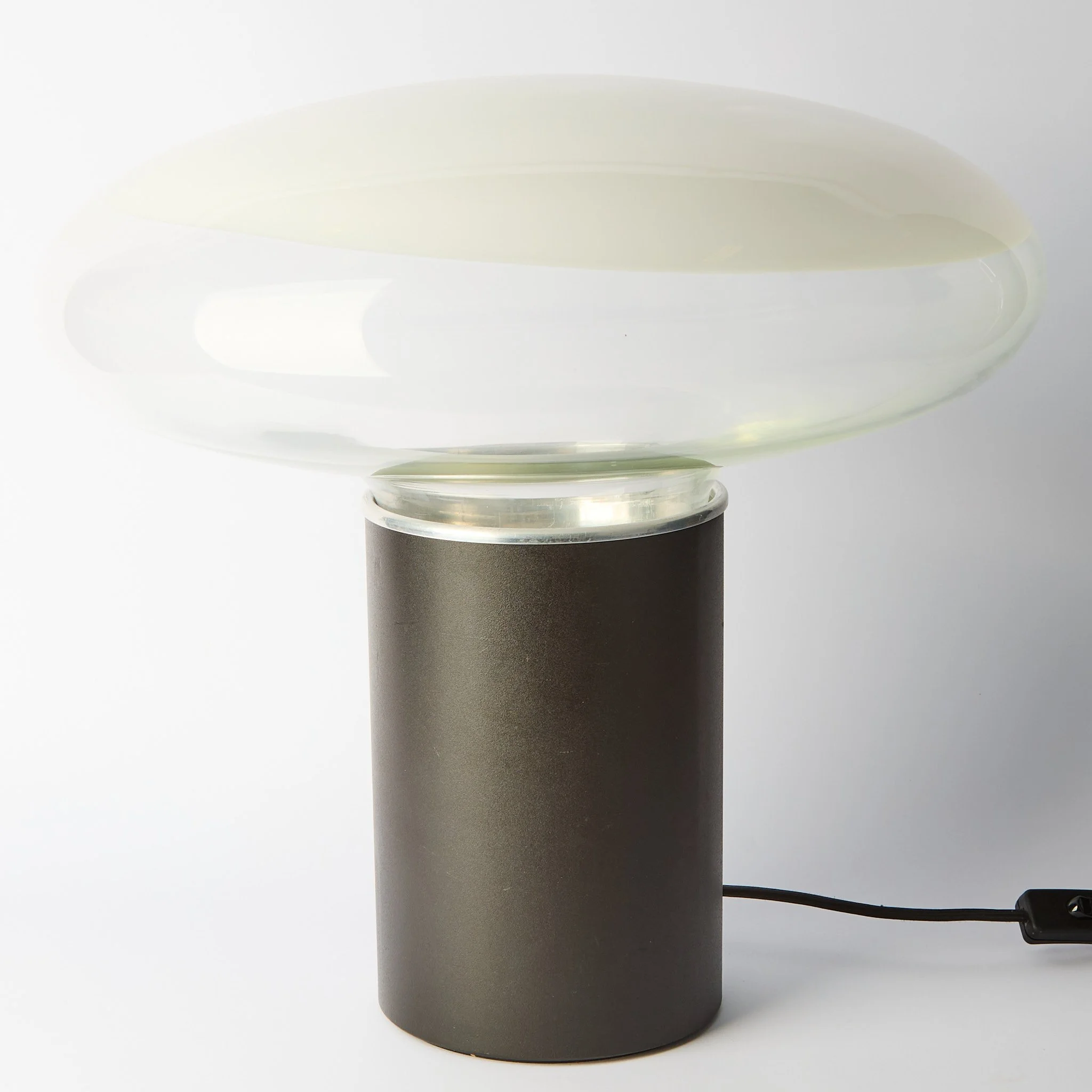
Lot 27. A Roberto Pamio Large Gil Lamp For Leucos, Italy. EST. $2,500—$3,000
From the same decade:
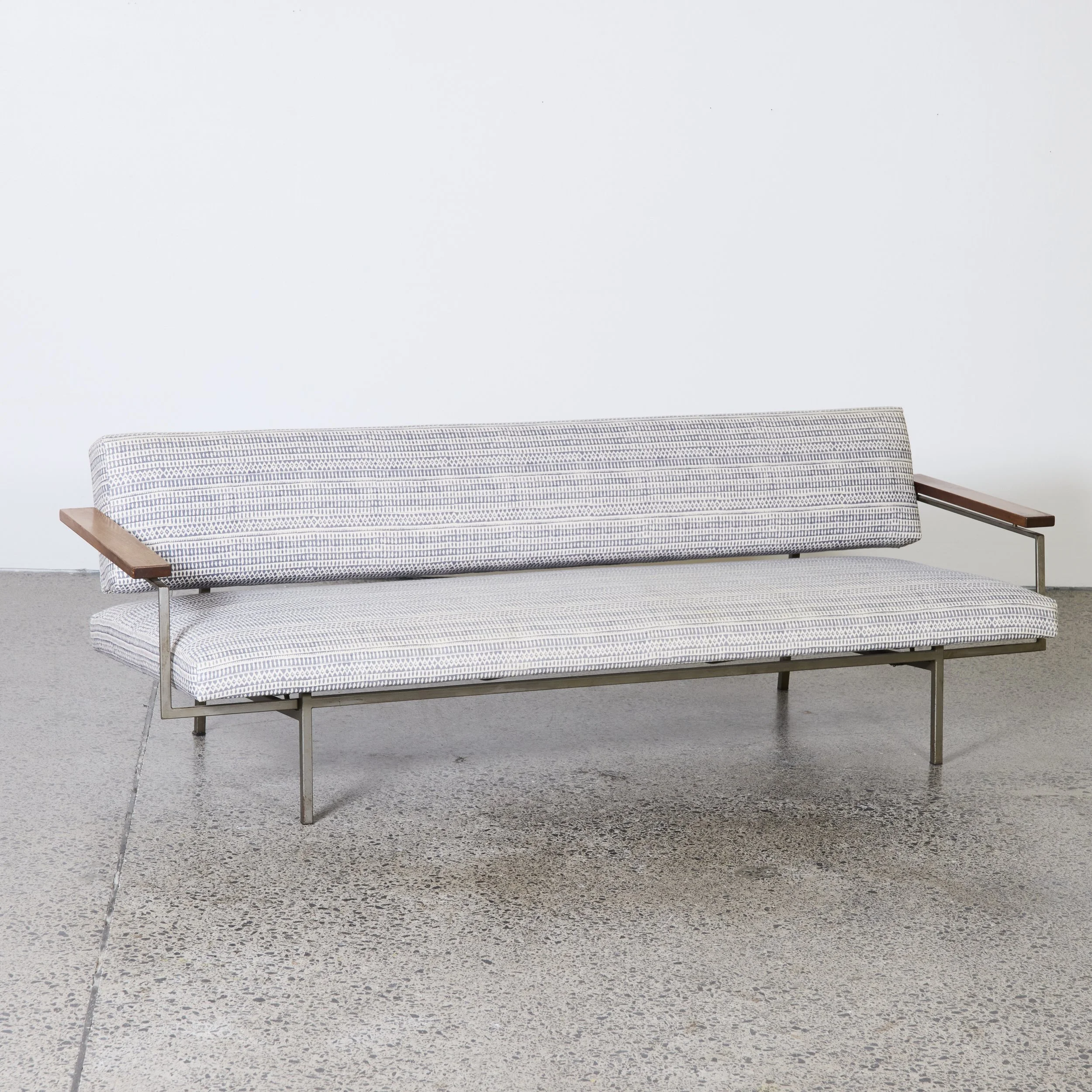
Rob Parry, Lotus 75 Sofa for Gelderland (c.1960). The Dutch, meanwhile, were thinking about small homes. Parry’s slim daybed on a steel base converts into a single bed in one movement, which made it ideal for the compact apartments of the era.
Lot 36. A Lotus 75 Sofa by Rob Parry for Gelderland.
EST. 3,000—4,000
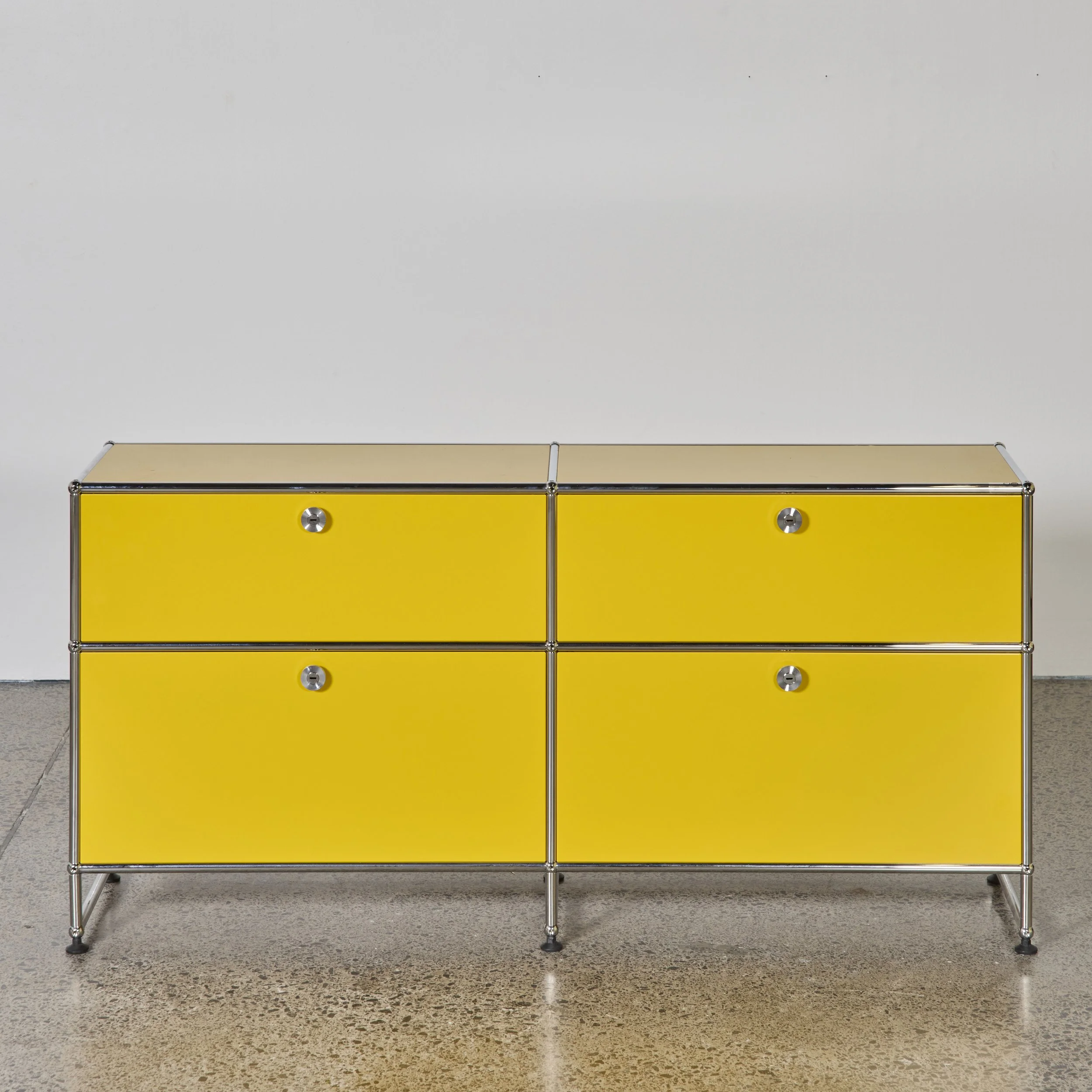
USM Haller Storage System (Fritz Haller and Paul Schärer, 1963). Where the Gill is all breath and fire, the Swiss answer to the 1960s was chromed steel. The system grew out of a factory building that architect Fritz Haller designed for Schärer’s family firm in Münsingen, and the furniture follows the same modular logic as the architecture. MoMA added it to its collection in 2001.
Lot 2. A USM Haller Storage System .
EST. $3,000—$4,000
1970s: Mario Marenco, Marenco Sofa for Arflex (1970)
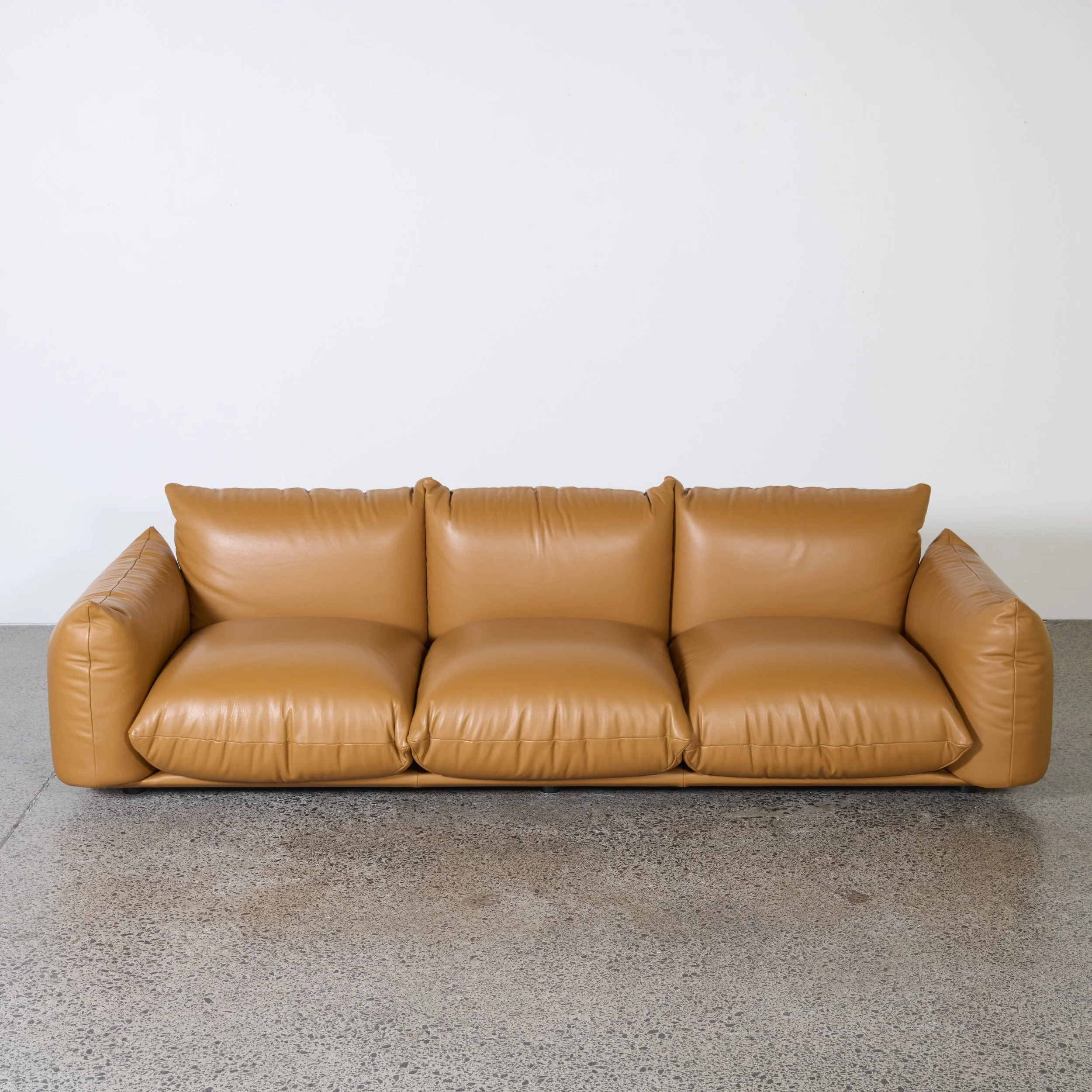
Lot 29. An Arflex Marenco Sofa by Mario Marenco.
EST. $5,000—$8,000
With a few exceptions, comedy and architecture are not exactly the most likely bedfellows. Trained as an architect in Naples, Mario Marenco, however, was also one of the voices behind Alto Gradimento, an anarchic radio comedy show he co-created in 1970. He later became a television favourite, best remembered as Riccardino, an overgrown schoolboy with a satchel and a checked smock. At the same time he was receiving awards for his research at Stockholm and Chicago universities and carrying out projects across Italy in technology, furniture and lighting design, as well as architecture. Imagine a member of Monty Python with a sideline in some of the most forward thinking design and the comfiest pieces of the decade, and you’ve come somewhat close.
The sofa he designed for Arflex, however, is no joke. Its generous seat, back and arm cushions are slotted into a hidden tubular metal frame, so the whole thing reads as a relaxed stack of cushions while being thoroughly well engineered. Generous and cloud-like, friendly and entirely inviting, the Marenco sofa has been so loved that the Arflex still produces it today.
From the same decade:
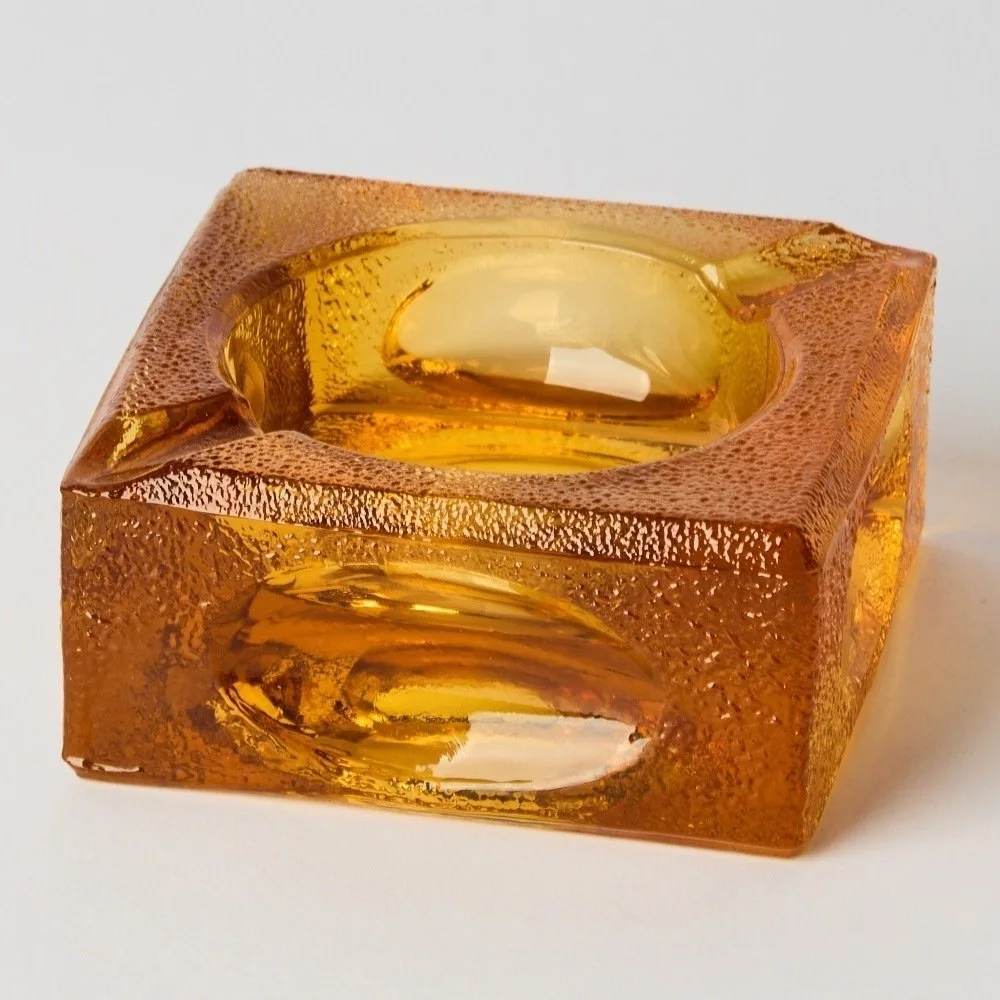
Antonio Imperatore, Murano Glass Ashtray (1970s). In an era when the ashtray held pride of place on any respectable coffee table, Imperatore made his from thick, faceted Murano glass. Heavy and full of presence. These smokeless days it’s more likely to hold keys or rings, but it still catches the light beautifully and holds a similar magnetism.
Lot 870. A Murano Glass Ashtray by Antonio Imperatore, 1970.
EST. $80—$160
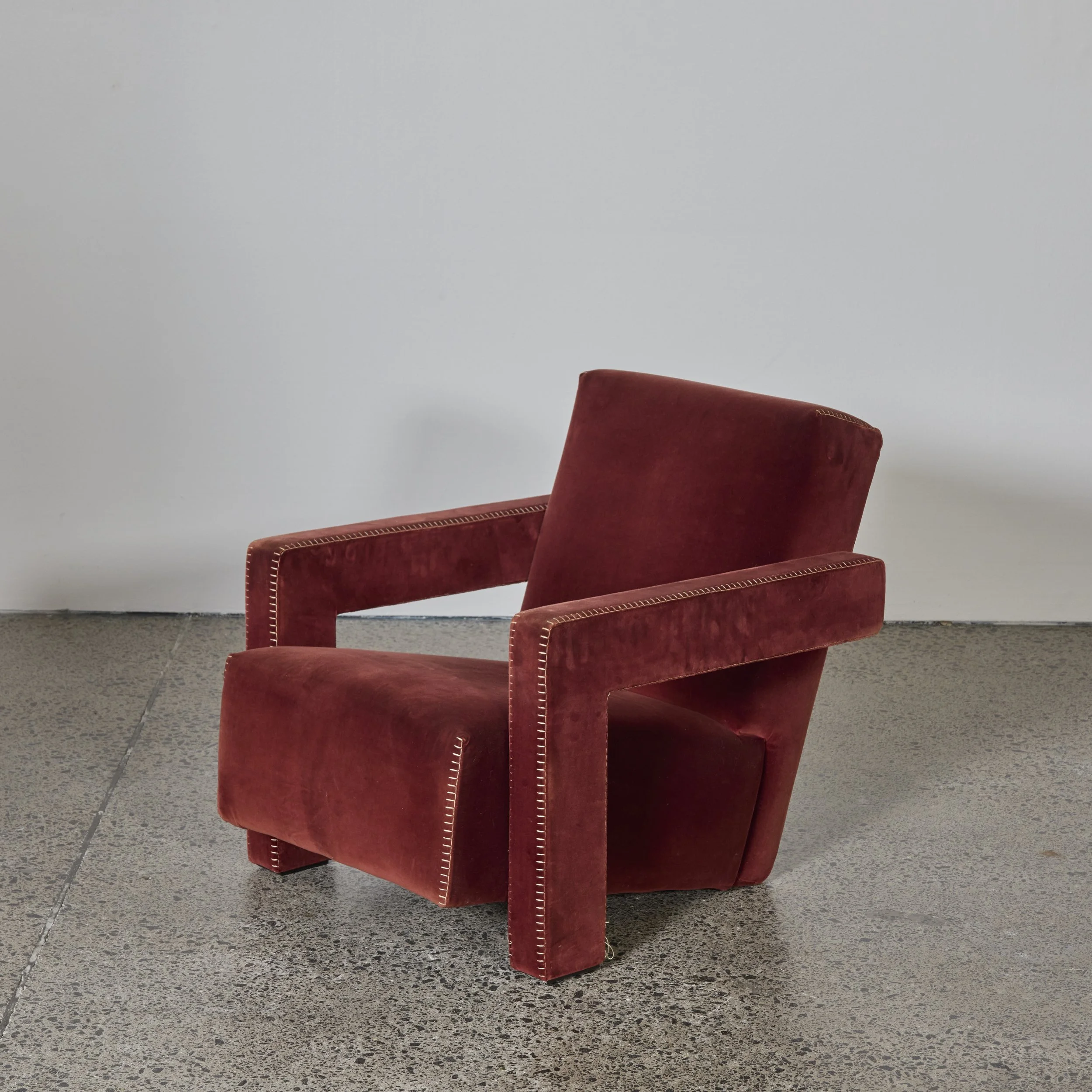
Lot 1. A Utrecht Armchair Designed by Gerrit Rietveld for Cassina.
EST. $3,000—$5,000
1980s: Gerrit Rietveld, Utrecht Armchair for Cassina (designed 1935, produced from 1988)
Gerrit Rietveld, Utrecht Armchair for Cassina (designed 1935, produced from 1988)
Yes, a Dutch designer heads the Italian list, and there’s a good reason for this. Gerrit Rietveld designed the Utrecht in 1935 for Metz & Co, the Amsterdam department store, naming it after his picturesque hometown. It was one of the few upholstered chairs he saw into production, built from four puzzle-like parts that could be assembled on site.
Cassina, the pioneering Italian industrial design manufacturers from the 1950s, acquired the rights to Rietveld’s designs and in 1988, a century after Rietveld’s birth, it brought the Utrecht back into production. This is the Italian hand at work in another way: taking a modernist classic, rebuilding it with the skill of its own craftspeople, and keeping it alive for new generations. Look for the visible stitching along the edges, a detail that makes a 1930s design look surprisingly current.
Fun fact: Rietveld started hanging out in his father’s furniture workshop in Utrecht at the age of 12, long before his Mondrian-inspired De Stijl experiments with primary colours.
From the same decade:
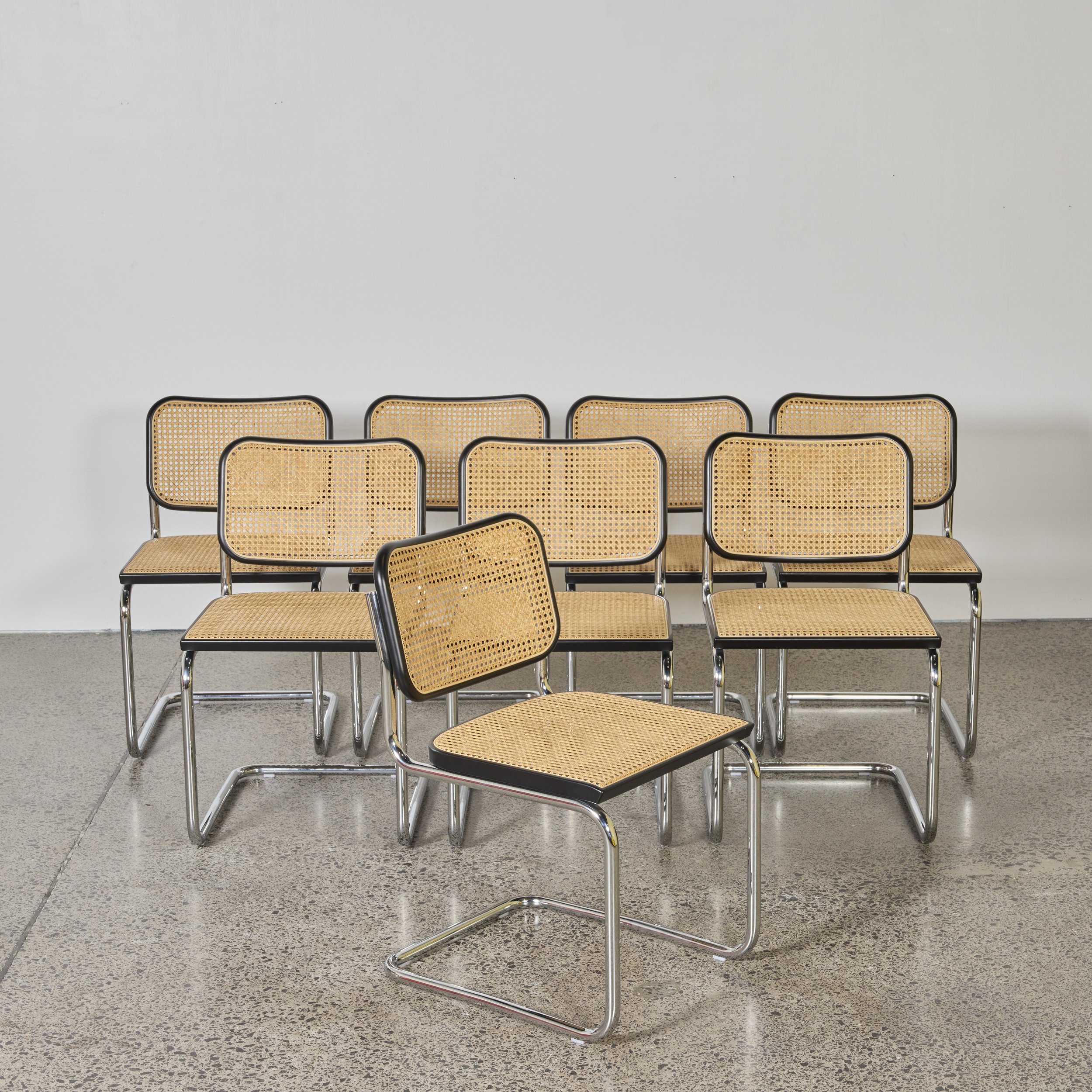
Marcel Breuer, Set of Six Cesca Chairs for Knoll. Cassina wasn’t the only company to give a pre-war classic a second life. Breuer designed his tubular steel chair in 1928 under the rather dry name B32. Decades later, the Italian manufacturer Dino Gavina renamed it Cesca (after Breuer’s daughter Francesca), and Knoll has made it since acquiring Gavina in 1968. Proof that a good name can work wonders.
Lot 23. A Set of Six Cesca Chairs Designed by Marcel Breuer, Produced by Knoll Studio.
EST. $3,000—$5,000
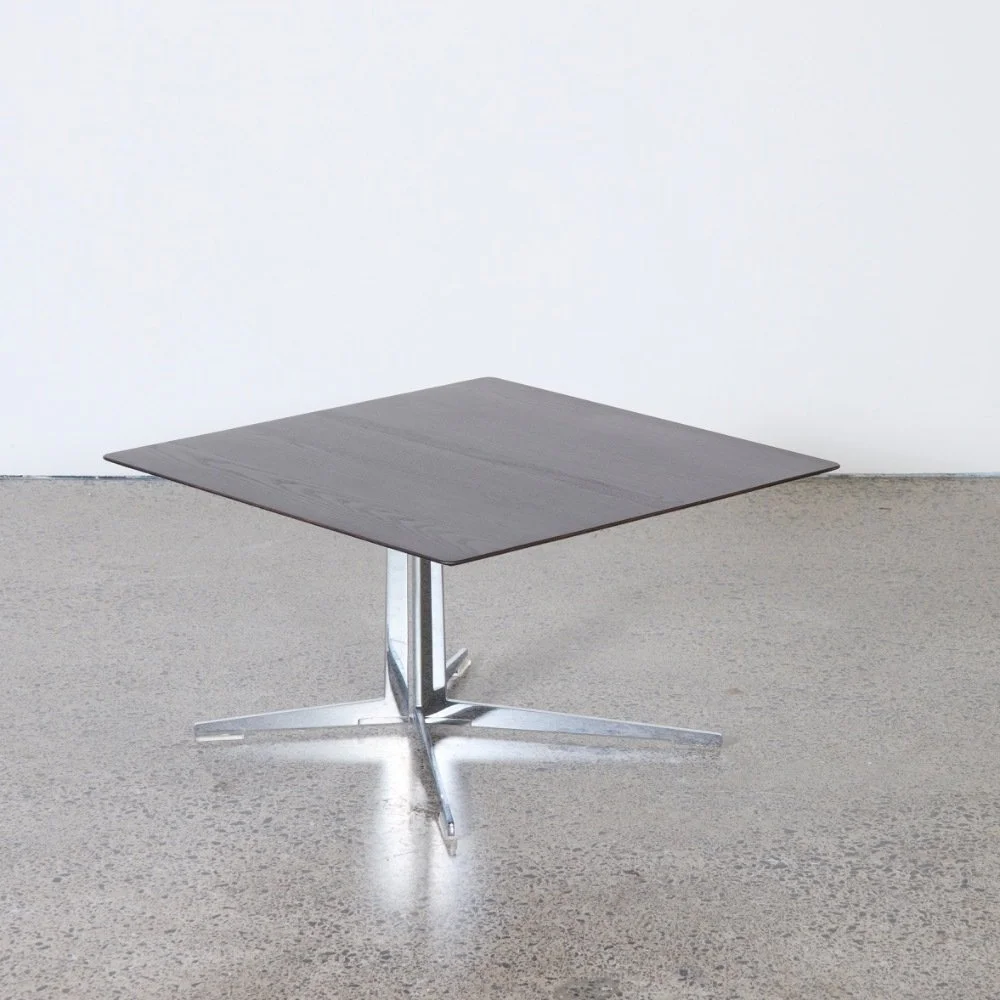
Lot 46. A Flexform Fly Coffee Table Designed by Antonio Citterio.
EST. $1000—$2000
2000s: Antonio Citterio, Fly Table for Flexform (2009)
If Italian design has a quiet heavyweight, it’s Antonio Citterio. He has shaped Flexform’s collection for more than 40 years, and with his partner Patricia Viel he designed the Bulgari hotels, from Milan to Tokyo. So if you’ve ever meandered (or scrolled) through a Bulgari lobby and thought, “I could live here,” his furniture is a sensible place to start.
Flexform began as a family upholstery workshop in Meda, in the Brianza furniture district north of Milan, and was formally established by the Galimberti brothers in 1959. It is still family-run and still makes everything in Italy.
Designed in 2009, Fly is Citterio at his most disciplined: a family of tables, coffee tables, side tables and cabinets with a slim metal structure and tops in wood or marble. It’s an exercise in proportion, versatile enough to sit happily beside almost anything, which is precisely the point.
From the same era:
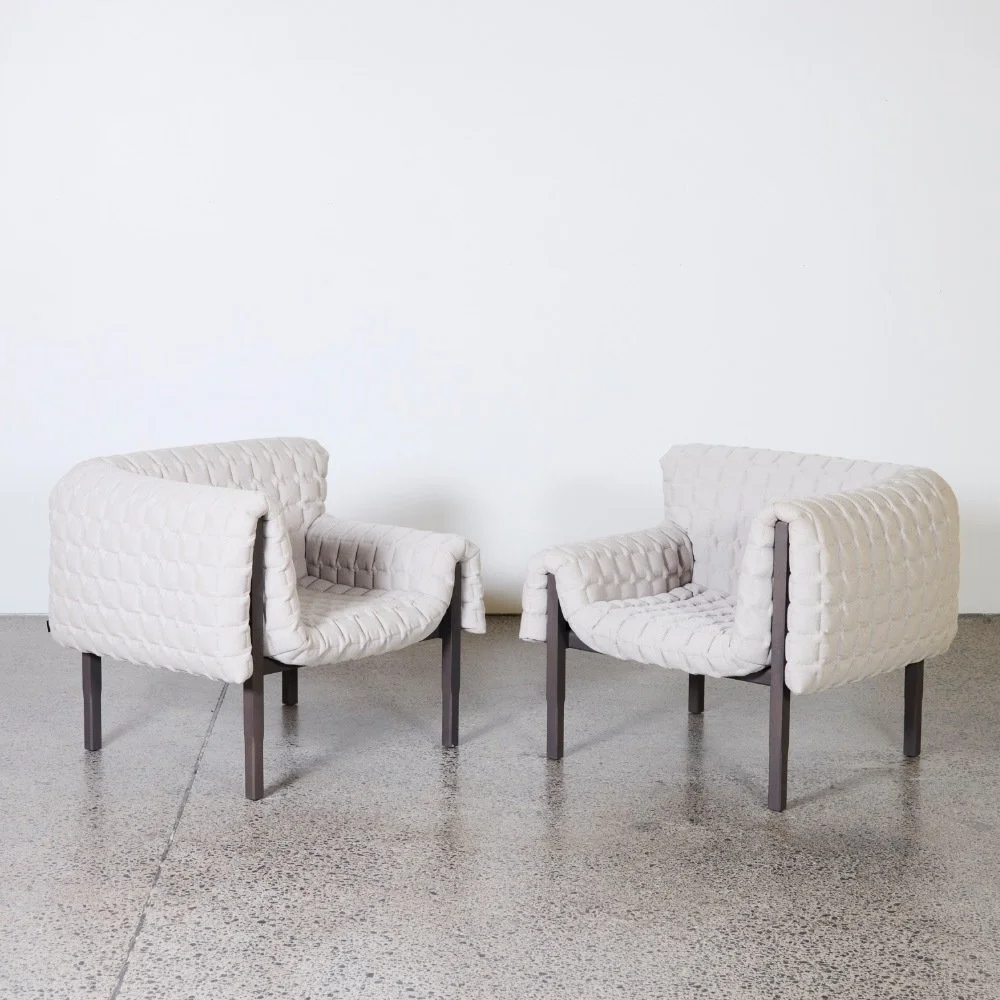
Inga Sempé, Pair of Ruché Armchairs for Ligne Roset (2009). Same year, opposite mood. Where Fly is crisp and metallic, French designer Inga Sempé’s Ruché drapes a thick quilted cover over a slender beech frame. She was inspired by garden swing seats, and the name refers to the gathered or pleated fabric used to trim clothing. Sempé is the daughter of illustrator Jean-Jacques Sempé, of Le Petit Nicolas fame, which may explain the lightness of touch.
Lot 47. A Pair of Inga Sempé Ruché Armchairs by Ligne Roset.
EST. $4,000—$4,000
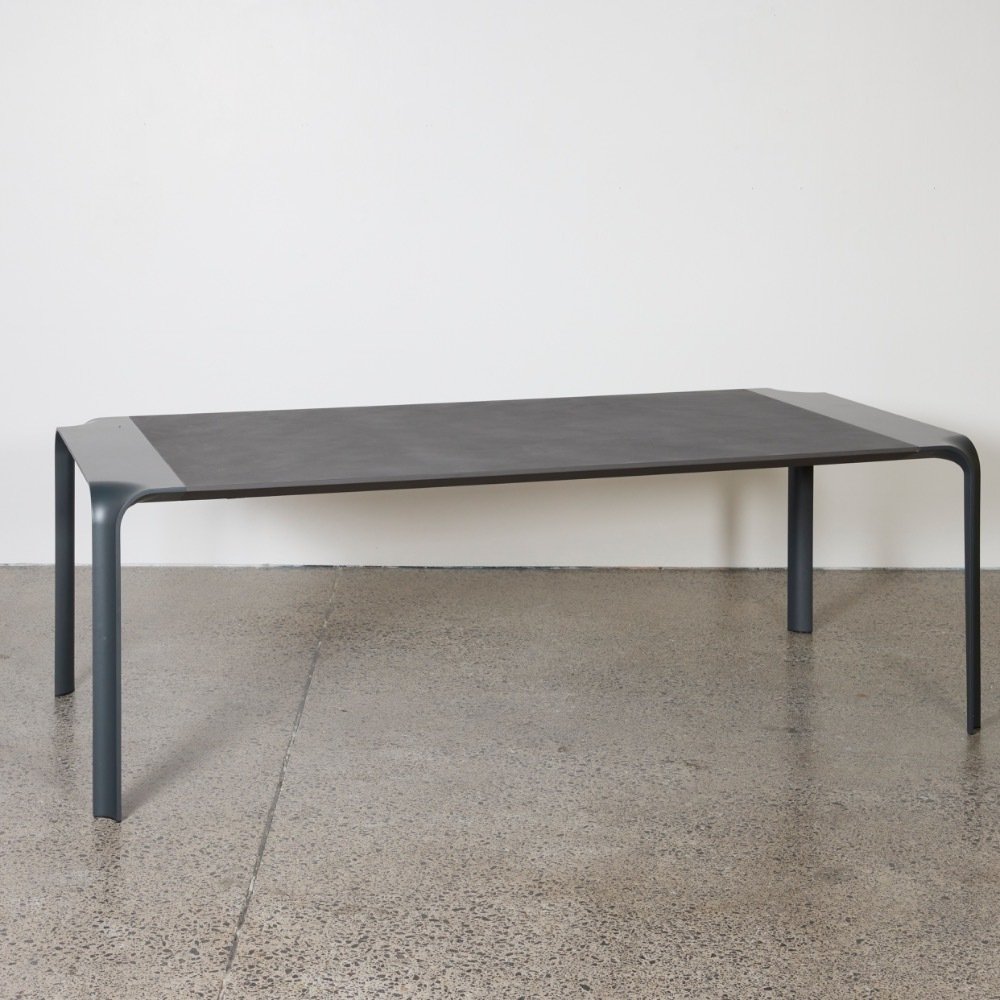
LOT 24. A Living Davani Brasilia Dining Table by David Lopez Quincoces.
EST. $2,500—$3,500
2010s: David Lopez Quincoces, Brasilia Dining Table for Living Divani (2015)
Oscar Niemeyer had no time for right angles. The Brazilian architect behind the key buildings of his country’s architectural utopian capital Brasília preferred what he called “free-flowing, sensual curves,” and he kept drawing them until his death at 104. He is also the inspiration for this table.
Designed by Madrid-born, Milan-based David Lopez Quincoces and presented at the Salone del Mobile in 2015, Brasilia does away with right angles. Its metal moulds and folds like a thin sheet of paper, giving a dining table the presence of a small piece of architecture. Lopez Quincoces studied interior design at the Politecnico di Milano and worked with Piero Lissoni before founding his own studio.
From the same era:
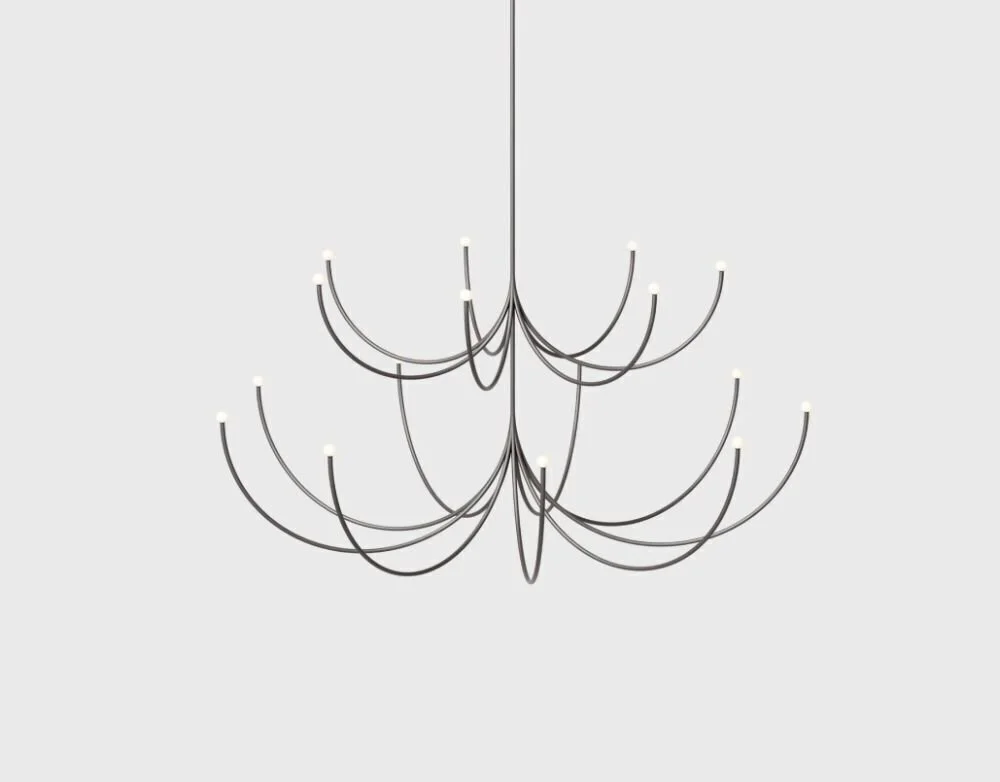
Philippe Malouin, Arca Chandeliers for Matter Made (2017). Malouin plays a similar game with history. Arca borrows the swooping branches of a classical chandelier but strips them back to a spare, linear composition, and its tiers can be added together to build a larger fixture. The sale includes both single and double tier versions.
Lot 519. An Arca Double Tier Chandelier by Philippe Malouin.
EST. $5,000—$7,000
The Italian Hand is just one thread in The Estate: Design Edit’s highly curated catalogue of industrial design. Bidding opens online on 16 October and runs until 20 October, with in-person viewing at Webb’s Mount Eden showroom throughout the auction.
Featured Auction Highlights
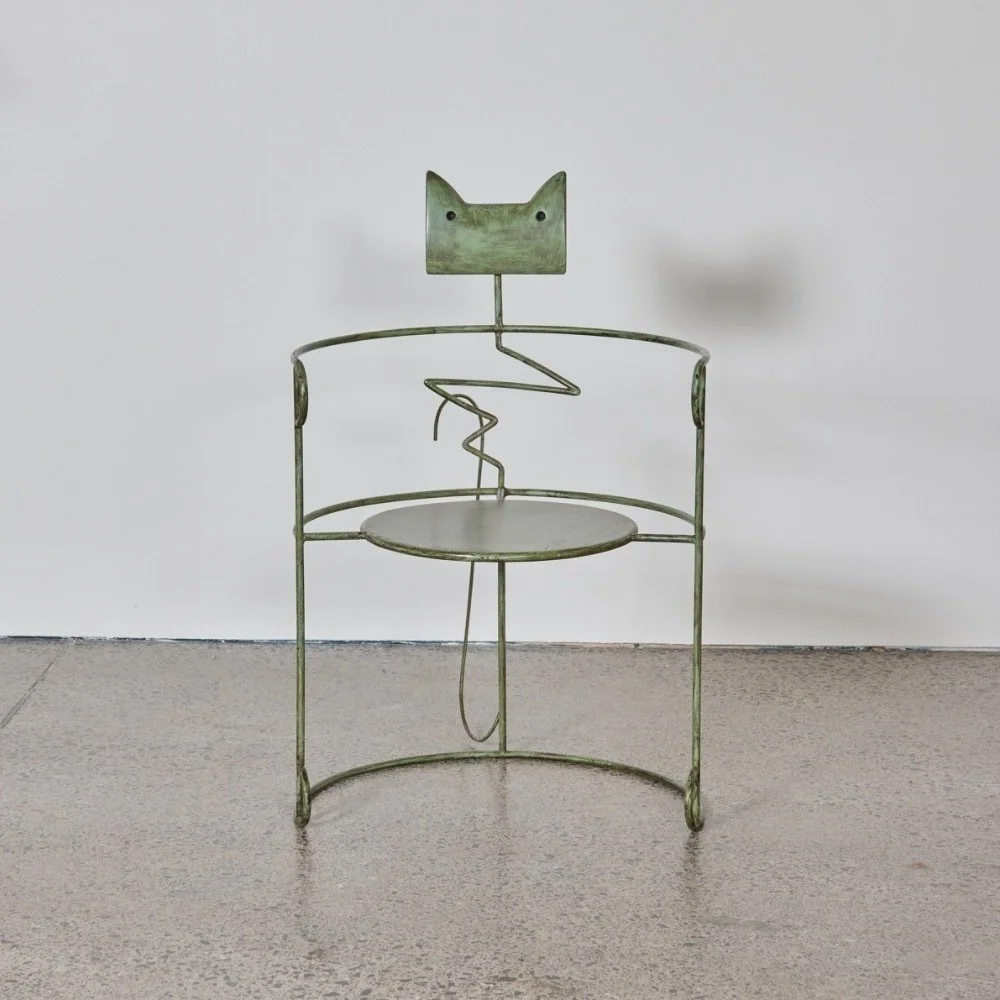
Lot 11. A Stephane Rondel Cat Chair.
EST. $800—$1,200
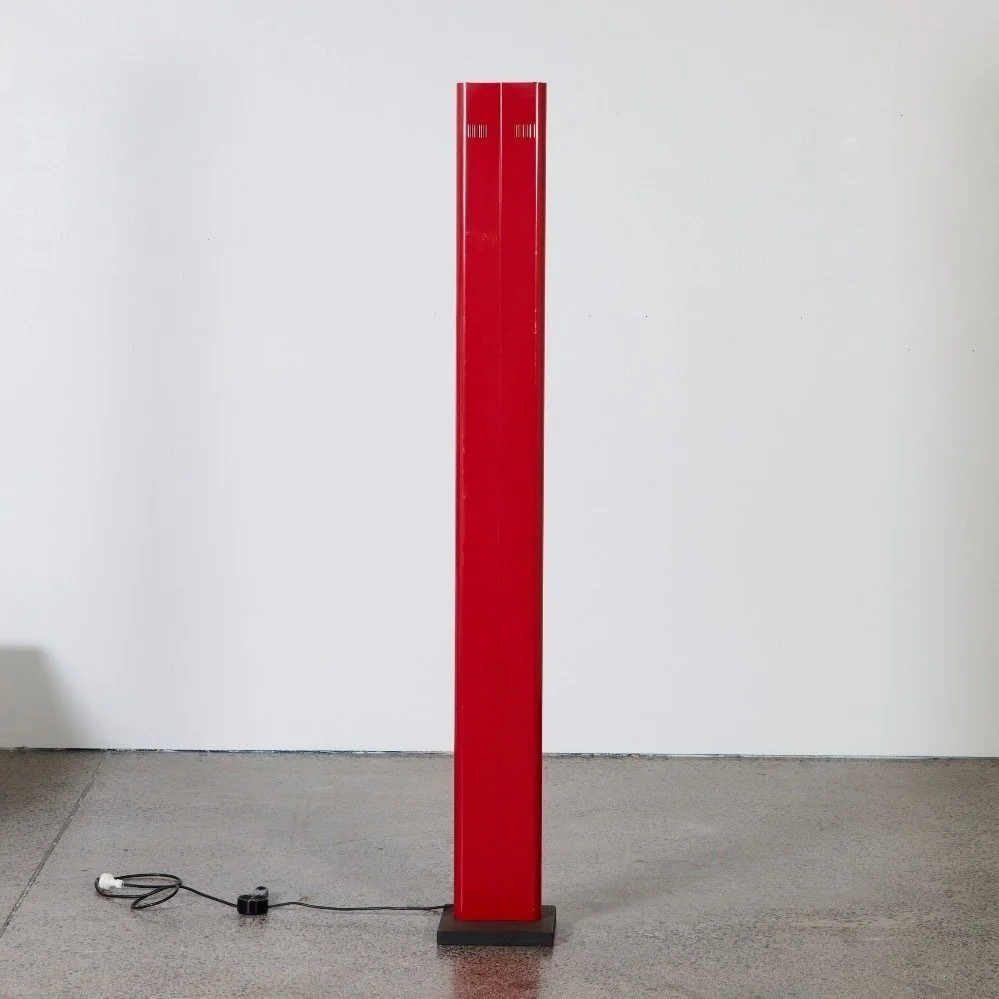
Lot 20. A Gianfranco Frattini Artemesia Torchre for Ycami Collection.
EST. $1,000—$1,500.
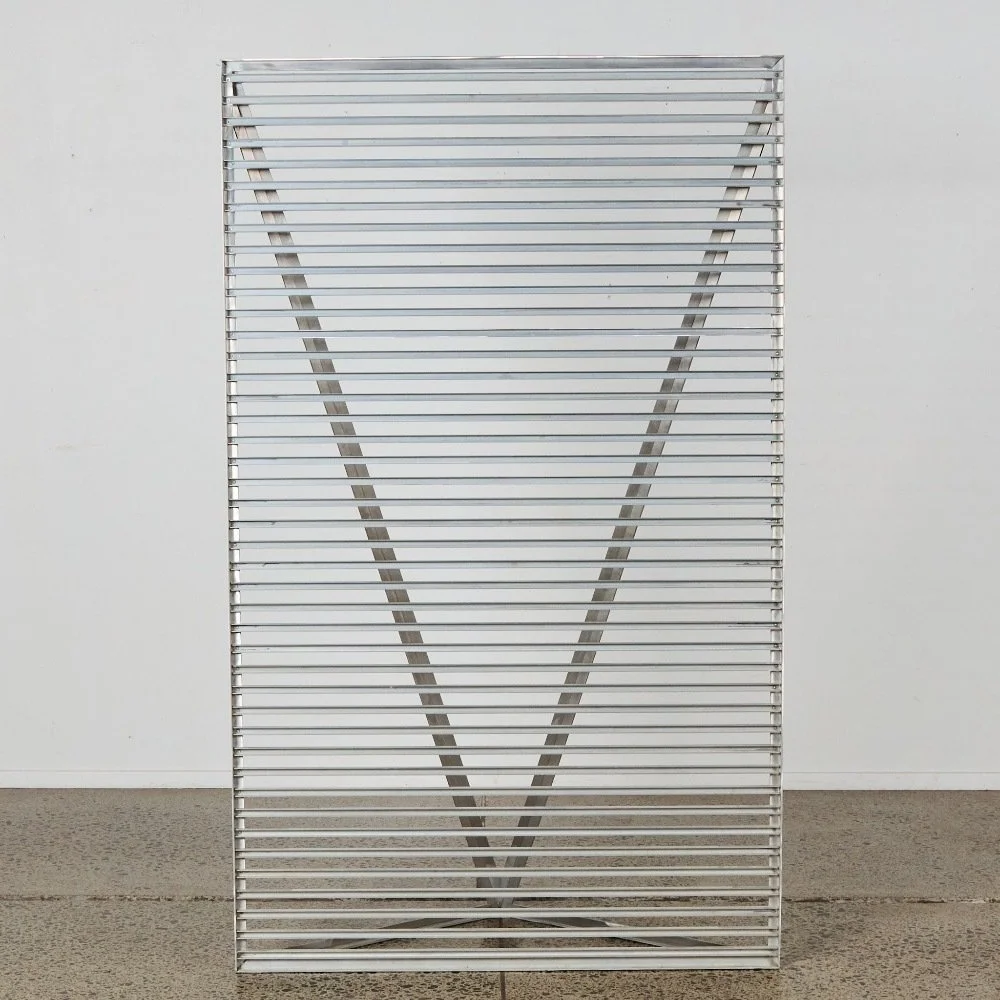
Lot 41. An Aluminium CD Wall by Patrick Loo.
EST. $300—$600.
Sell With Us
Webb's Decorative Arts department welcomes enquiries about objects of historical, cultural or design significance, from sporting memorabilia and colonial silver to furniture and works on paper. Our specialists offer free, obligation-free valuations and can advise on the best route to market, whether that's a dedicated single-owner sale or inclusion in an upcoming Estate or Decorative Arts auction.
Browse Upcoming Auctions
The Estate runs fortnightly online, closing every second Tuesday from 8pm, and offers a changing selection of furniture, silver, ceramics, jewellery and collectables. Full catalogues, condition reports and bidding are available on webbs.co.nz, with registration required to bid.
About the Department
Webb's Decorative Arts team, led by Leah Morris, handles a broad range of material across the decorative and fine arts, with particular expertise in New Zealand colonial history, sporting heritage and design objects. The department regularly brings significant historical pieces to market, connecting them with collectors and institutions both in New Zealand and internationally.
Location—Estate Showroom
31d Normanby Road, Mount Eden, Auckland 1023
Contact
Leah Morris
Head of Decorative Arts
[email protected]
+64 22 574 5699
Callum Johnstone
Specialist, The Estate
[email protected]
+64 22 097 7524