
The Shopper, the Toy and the Relic
Three of the more quirky entries in Webb's September Collectors' Cars auction each carries a story that specialists have traced and checked and, in one case, matched to footage of the incident. It is those stories that make each lot unique and entirely collectable.

Chris Wiseman
Head of Collectors’ Cars, Motorcycles & Automobilia
An early Californian electric car, a children's Land Rover assembled by a grandfather, and the panel that ended a title rally run, each closely documented.
Most of the September catalogue behaves the way a collectors' cars catalogue is supposed to. There is an elegant Mercedes-Benz 280SL Pagoda leading it, a 1936 Rolls-Royce 25/30 HP Limousine with plenty of history, a 2024 Honda Civic Type R, and a good deal in between. Then there are three lots that fit a more quirky and playful pattern: a c.1960s Electric Car Company Shopper FG-75 (Lot 26, EST. $25,000—$30,000), a Toylander 2 Land Rover built across two generations of one family (Lot 13, EST. $3,000—$3,500), and the rear valance from Colin McRae's 2002 Ford Focus RS WRC (Lot 14, EST. $4,500—$5,500).
"Every catalogue has cars you can value against a market," says Chris Wiseman, Head of Collectors' Cars, Motorcycles & Automobilia at Webb's. "These three are different: you are buying the story attached to the object, the emotive responses to them and the curiosity and quirky factor. That is rarer than it sounds."
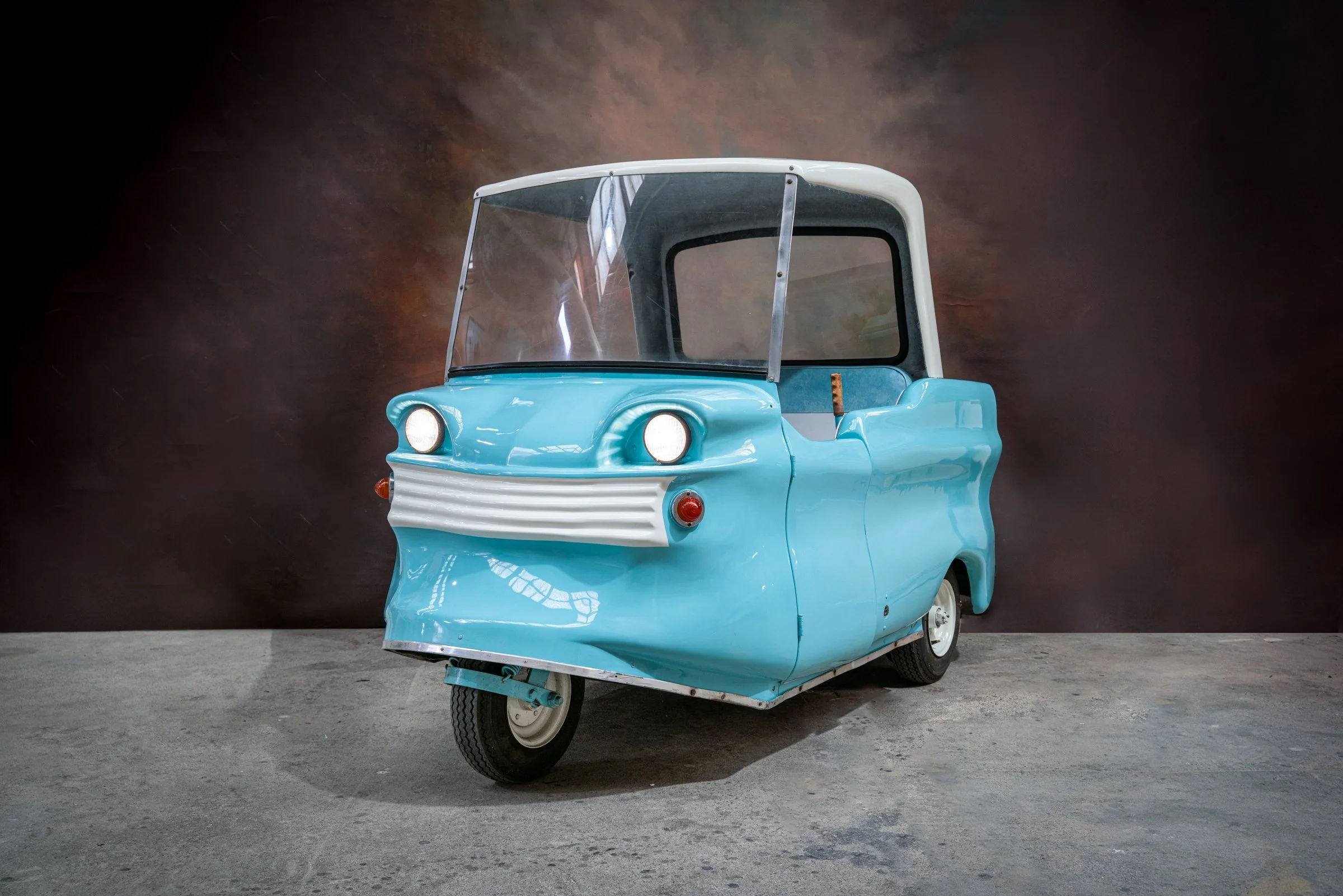
An electric car from before electric cars
The Electric Car Company of California opened on Alamitos Street in Long Beach in 1951, founded by a group who had previously sold Autoettes (three-wheeled, battery-powered electric microcars), and it built what the trade then called pleasure cars: small battery-powered vehicles for short local trips. Long Beach was the centre of this industry. At its peak in the 1950s and 1960s, southern California supported around nine such manufacturers, several of them within the same few blocks.
The FG-75 arrived in 1960 under the company's new president, Byron T. Cline, and was a deliberate answer to a fibreglass rival that had just reached the market. Company literature described it as a departure from the electric cars buyers knew, promising the low, sweeping profile of contemporary full-size American cars. The specification was modest and honest: around 318kg, a 1.5hp 24-volt DC series-wound motor, an advertised top speed of 18mph and a claimed range of 30 to 35 miles on a charge. Options included a removable fibreglass top, a windscreen and side curtains.
The FG-75 had a short run. Cline sold the business in late 1962 and the Shopper name went with it. Vehicles of this type stayed popular into the early 1970s, largely with older residents running errands, before falling foul of a problem their makers never solved: they were too slow for the road and too fast for the footpath. The FG-75 was built in a small, niche batch, and it is reported that only 15 to 50 of these vehicles still exist worldwide.
The example offered here is understood to be the only one in New Zealand. It is finished in light blue with a white roof, retains its manufacturer's identification plate and California licence plate, and runs and drives with working lights. "It was built for a suburban errand in 1960, which is precisely the use case the industry spent the last fifteen years rediscovering," says Wiseman. "People tend to smile at it first and think about its exciting history and uniqueness second."
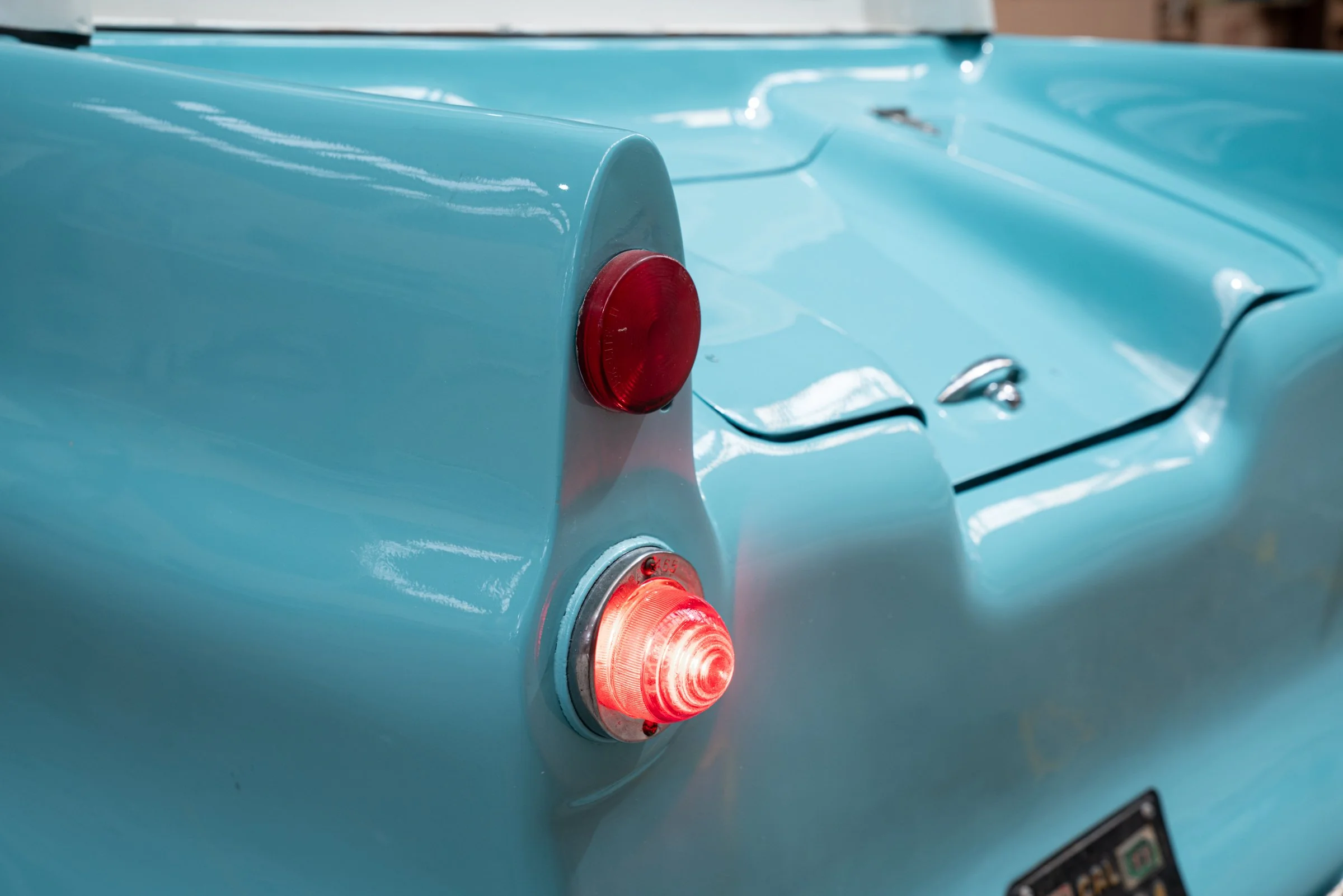
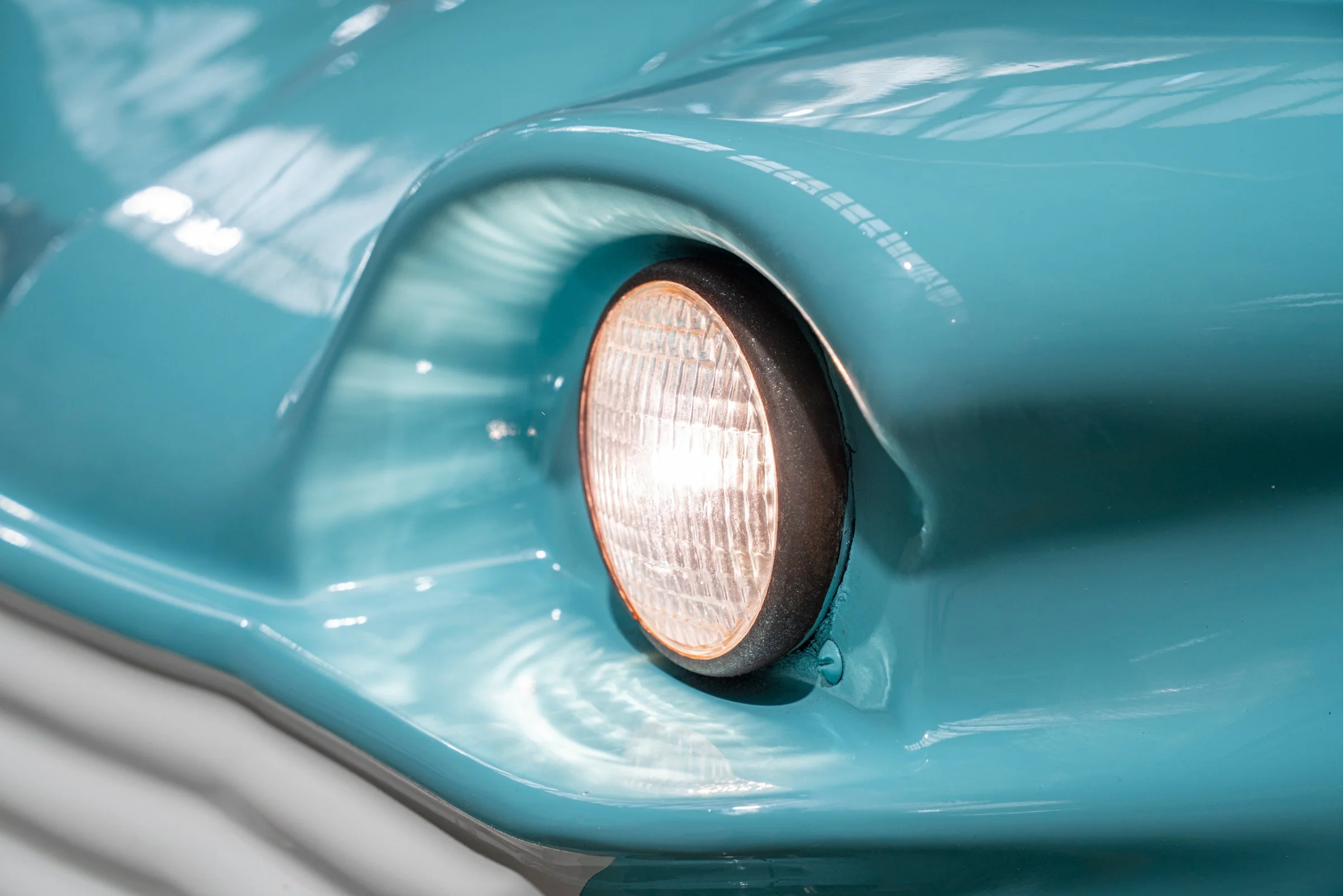
Lot 26. c.1960s Electric Car Company Shopper FG-75. EST. $25,000—$30,000.
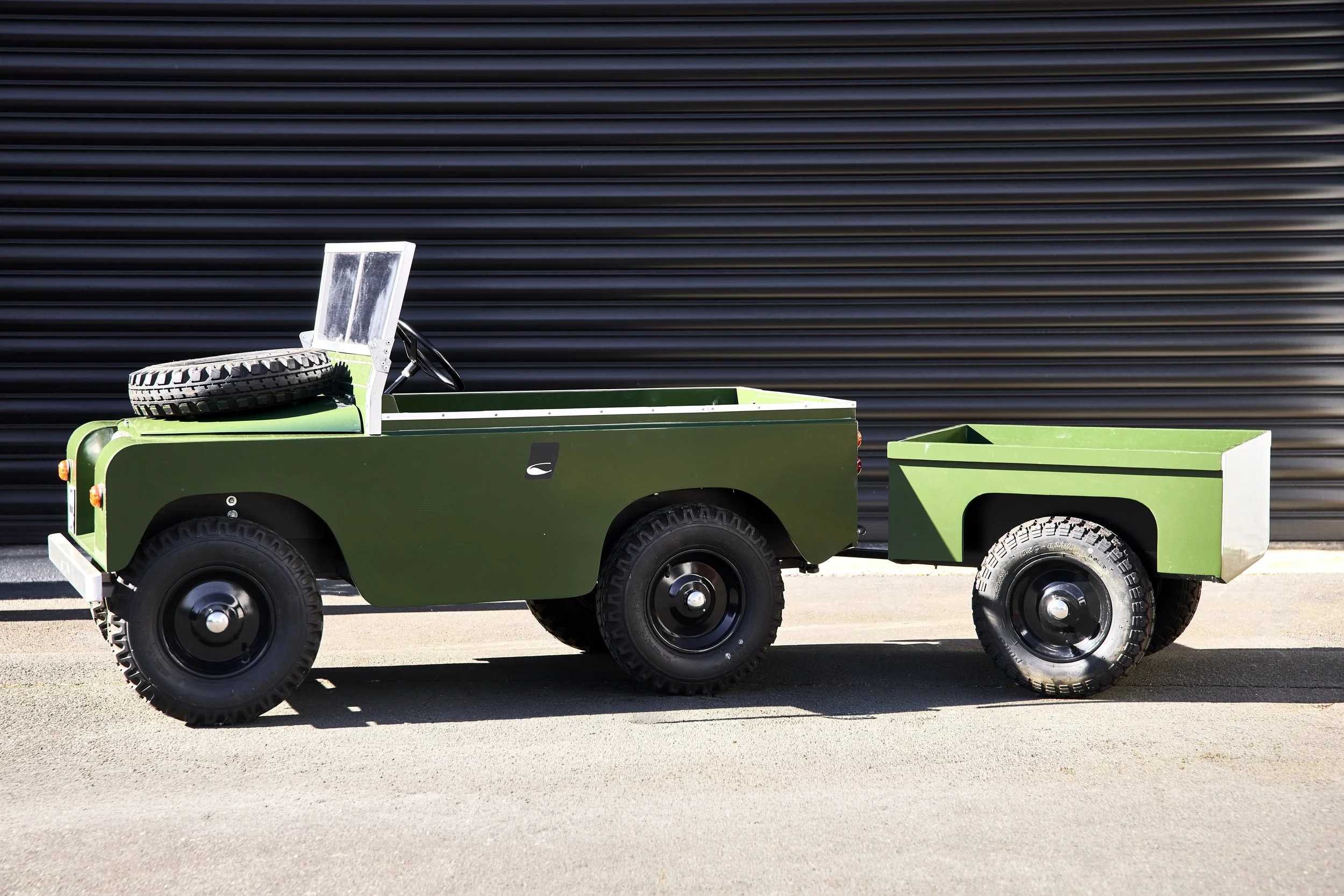
A Land Rover built across two generations
Toylander began in the United Kingdom in 1987, selling children's ride-on vehicles mainly as home-build kits. The Toylander 2, a homage to the 1958 Land Rover Series II, joined the range around 2000 and has remained one of the company's best-known models. The proposition has always been the build as much as the vehicle: parents and grandparents work through a manual with a child, and the result is something the child can then drive.
That is exactly how this one came about. The vendor bought the kit and constructed it with his grandchildren. It is powered by an electric motor and specified with forward and reverse modes, adjustable speed control, foot brake, handbrake, lights, a folding windscreen, an opening tailgate and pneumatic tyres. The monocoque body seats one adult and two children, with a manufacturer-stated safe top speed of approximately 8kph. It measures 610 x 700 x 1460mm. The horn is currently inoperative, most likely a fuse.
It is finished in Land Rover green and comes with a matching trailer, a spare wheel for bonnet mounting and the manufacturer's literature. New examples are available only from the United Kingdom, at a current list price of about NZ$12,600 before shipping and taxes.
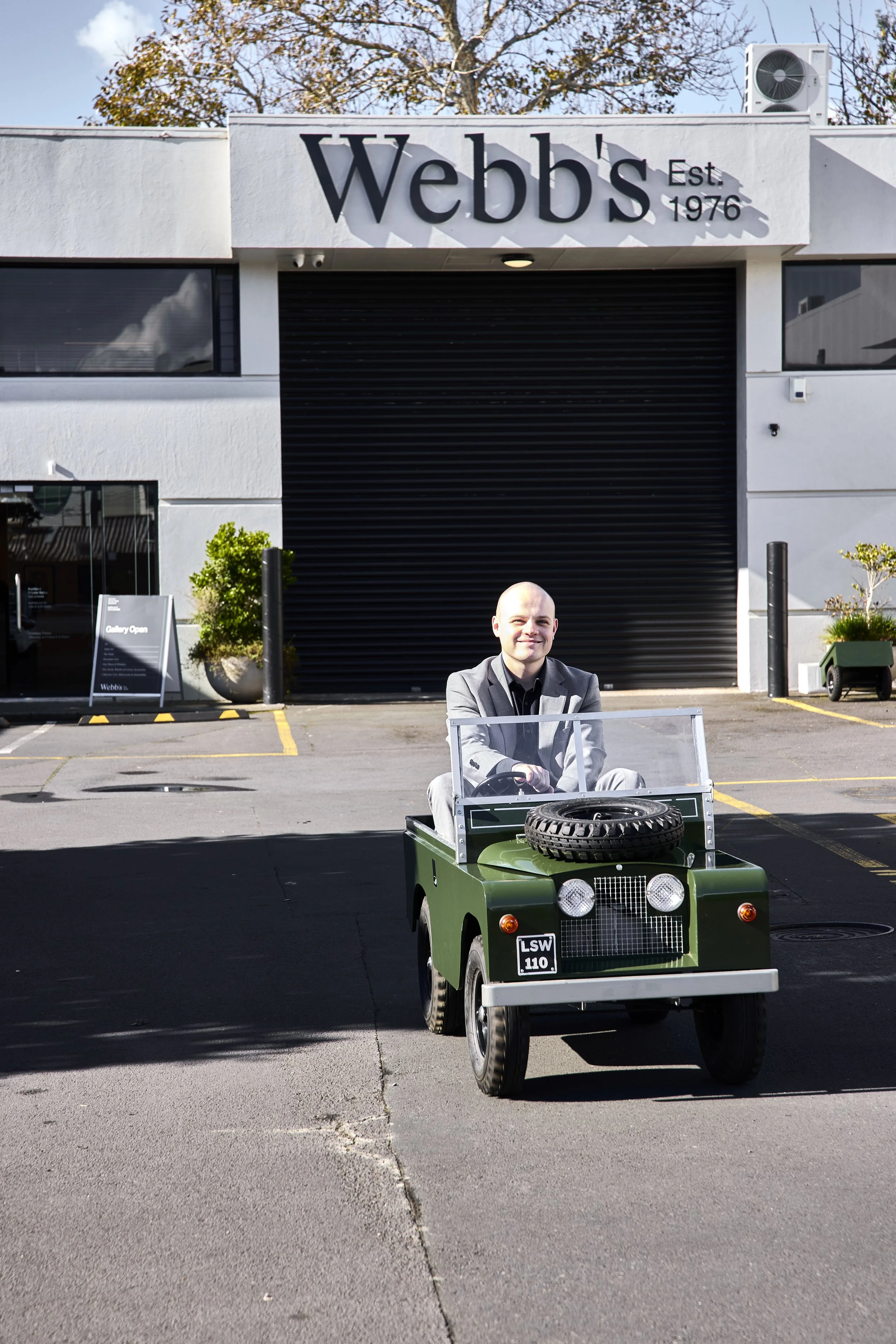
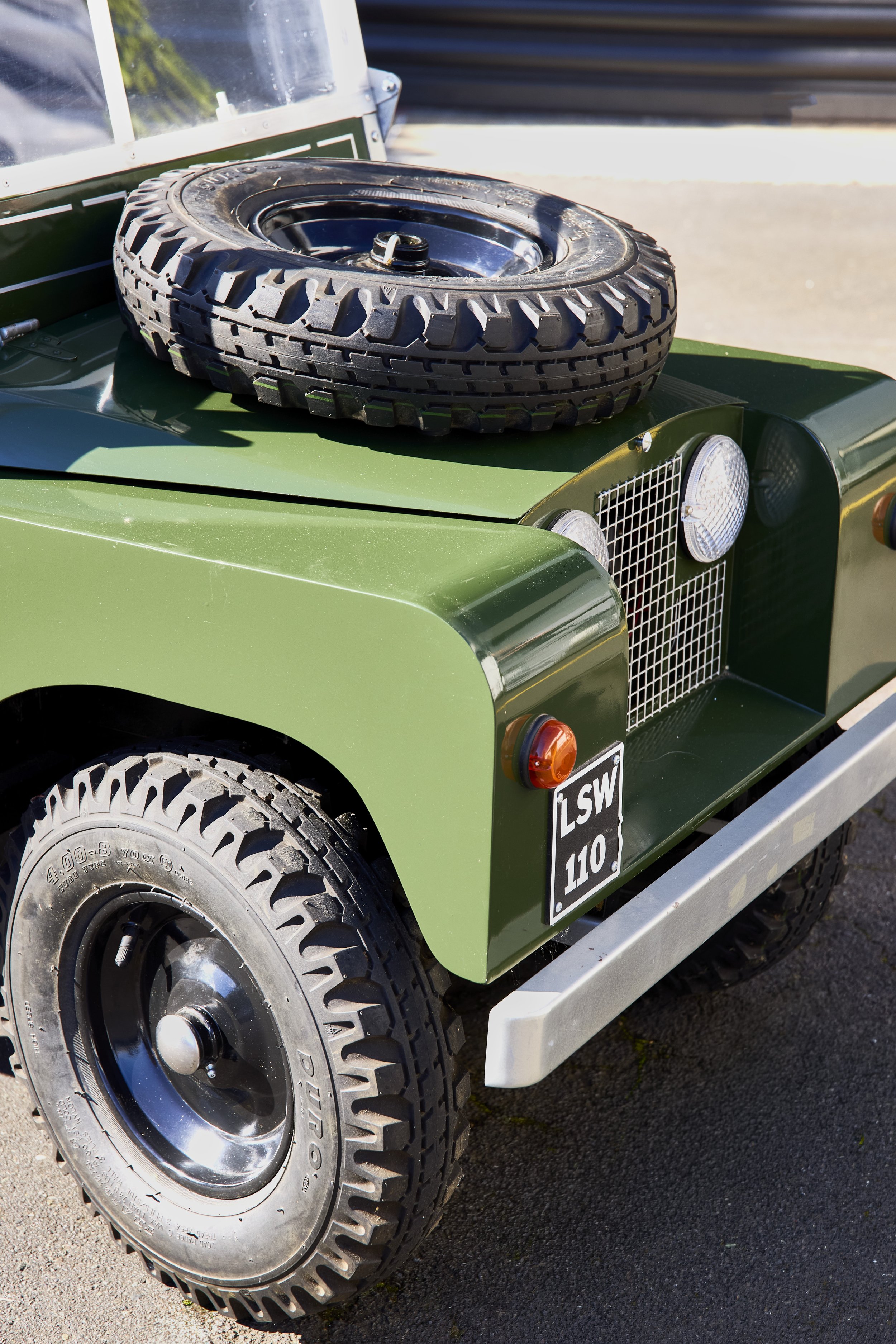
Lot 13. Toylander 2 Land Rover Toy. EST. $3,000—$3,500.
The crash that ended a championship run
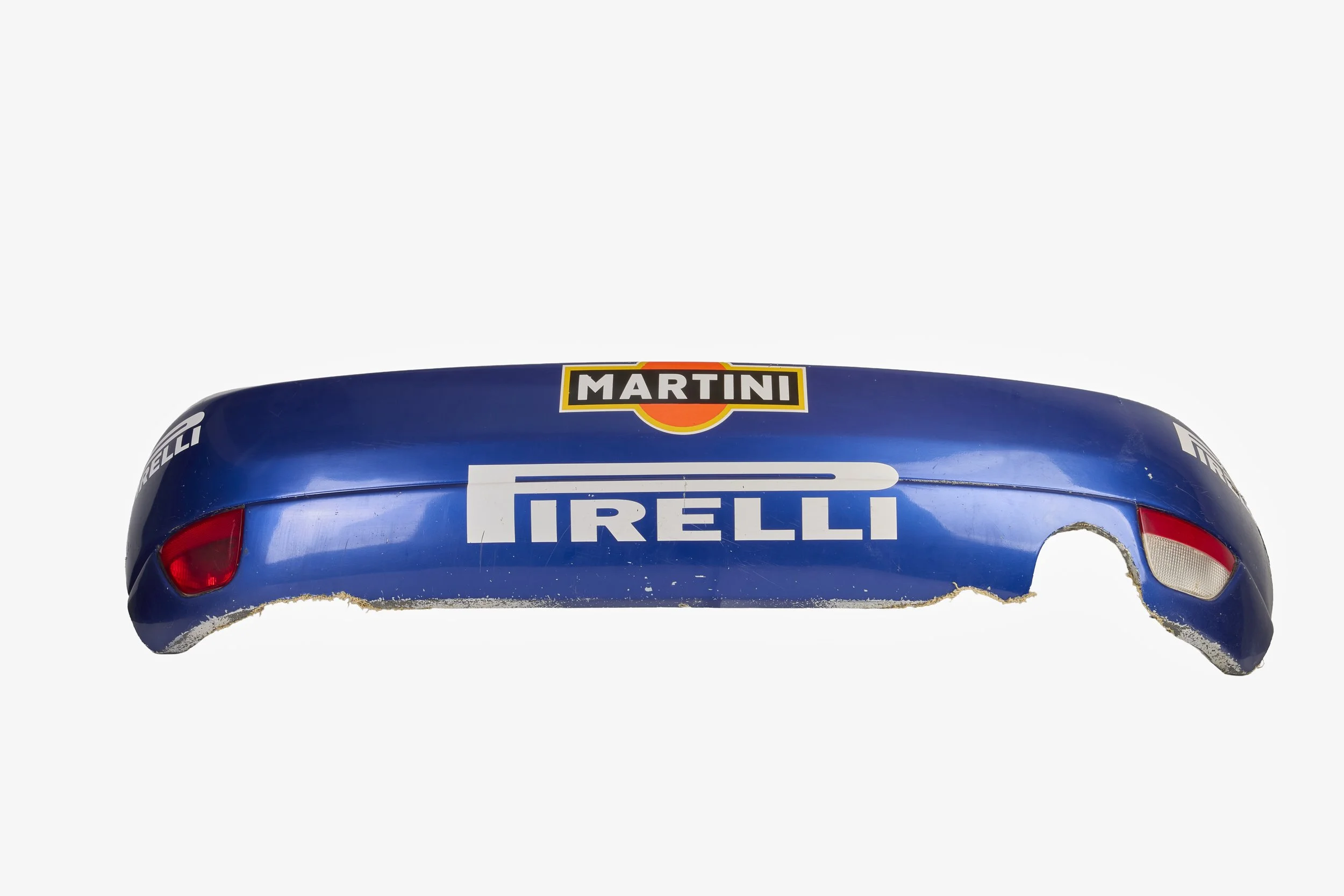
The 2002 Rally New Zealand was the twelfth round of that year's World Rally Championship, run from 4—6 October. Whaanga Coast was the fourth special stage, 29.6km on the first leg. Colin McRae, driving a Ford Focus RS WRC for the factory team with Nicky Grist alongside him, misheard a pace note and took a downhill right-hander a gear too high. The car went off the road near the end of the stage, made contact with a fence post and holed the radiator. McRae shut the engine down rather than risk further damage, and the rally was over. Marcus Grönholm won the event for Peugeot and went on to take the drivers' title.
This lot is the original rear valance from that car, in Martini and Pirelli livery, 1740mm at its widest point, carrying period competition wear and the damage from the stage. The crash attribution is supported by markings on the inner face of the valance and by footage of the incident.
There is a second McRae connection in this catalogue. A signed print of New Zealand rally driver Possum Bourne, gifted to its vendor by the Subaru World Rally Team, carries the signatures of Bourne, McRae and Richard Burns, all since deceased, alongside those of Ari Vatanen and Carlos Sainz. Sainz was McRae's Ford teammate at the 2002 event.
"Rally memorabilia is usually a photograph or a suit," says Wiseman. "This is the part of the car that hit the scenery, on a stage that people in this country watched from the bank. It is a piece of motor racing history that many still remember clearly."
Watch Colin McRae Day 1 from Round 12 of the 2002 WRC season at New Zealand.—https://www.youtube.com/watch?v=6Fs6Jrnfmyw
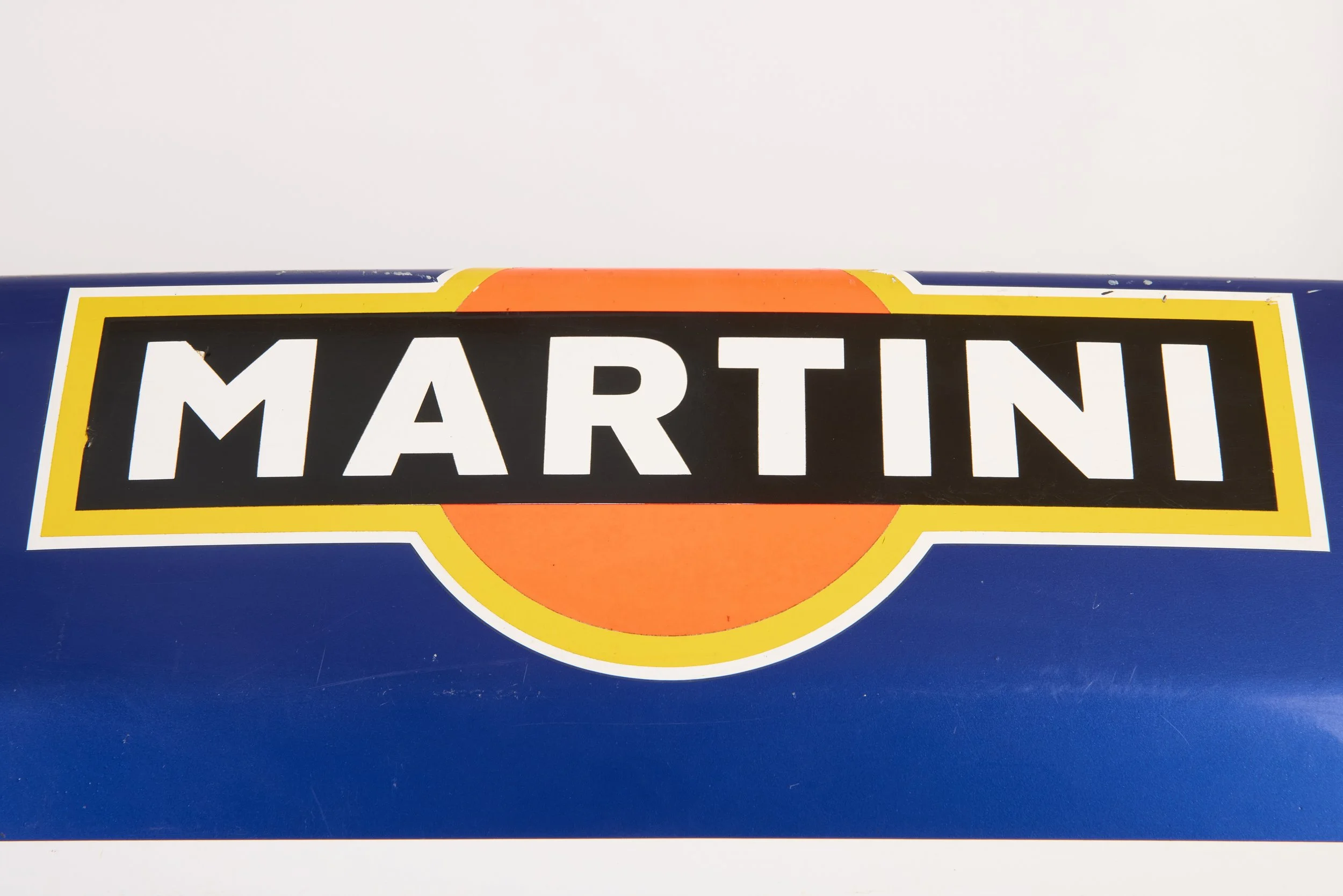
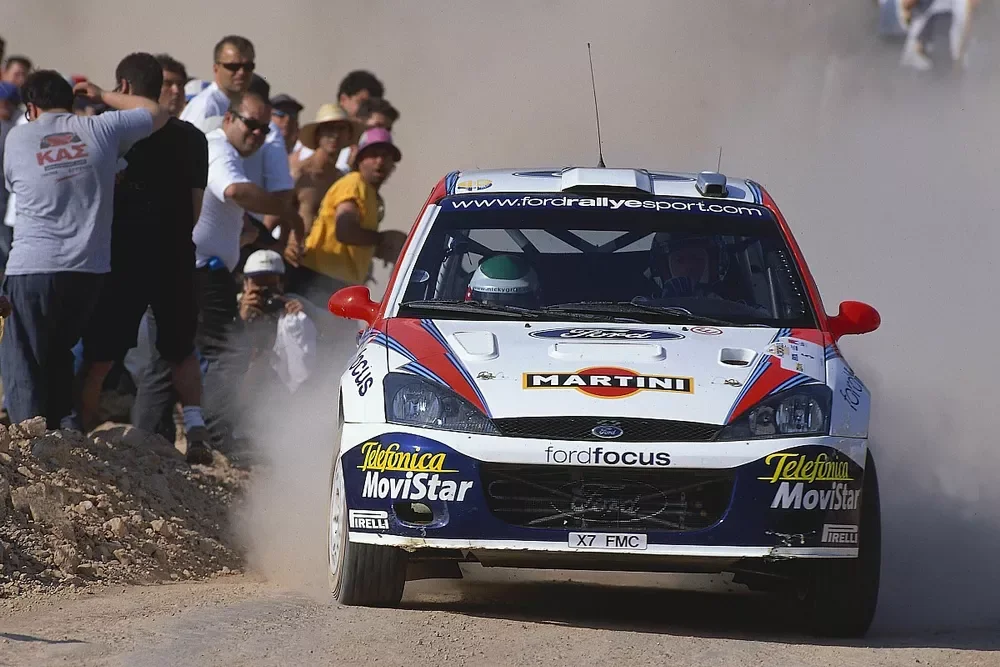
Lot 14. The rear valance from Colin McRae's 2002 Ford Focus RS WRC. EST. $4,500—$5,500.
Seeing them in person
All three lots mentioned here are on view at Webb's Mount Eden Gallery from 2—6 September before the live auction. They reward a slow walk. The Shopper reads as a toy until you get close enough to see the plate. The Toylander sits at knee height and is plainly the fun, meandering work of someone's weekends. The valance is a single piece of composite with a story that fills a paragraph. Between them and the Pagoda at the head of the catalogue sits most of a century of engineering.
Webb's Collectors' Cars live auctions present a curated selection of cars, motorcycles and automobilia, with Auckland viewings and events leading into a live auction focused on rarity, performance and provenance. Led by Chris Wiseman, the department holds regular live and online auctions throughout the year and welcomes consignments of significant vehicles, motorcycles and automobilia. Whether you are considering selling a single car or an entire collection, our specialists offer complimentary, no-obligation appraisals.
Collectors’ Cars, Motorcycles & Automobilia
Live Auction
Sunday 6 September, 2.30pm
Launch Event
Tuesday 1 September, 6pm
On View
2—6 September
AucklandLocation
33a Normanby Road, Mount Eden
Contact
Chris Wiseman | Head of Collectors’ Cars, Motorcycles & Automobilia
[email protected]
+64 22 187 7693