
Victories: Yuki Kihara at Webb's Wellington Gallery
For her new selling exhibition, Yuki Kihara turns the Tiki shirt into a critical instrument. Fifteen garments carry early lithographs of Indigenous victories over colonial expeditions, setting a souvenir aesthetic against images of imperial failure. Exhibitions Manager Virginia Woods-Jack speaks to the artist.
From Te Papa's archives to Cuba Street's vintage racks, Kihara traces how colonial imagery was produced, circulated and eventually made wearable. Virginia Woods-Jack talks with the artist about archives, militourism, the politics of renaming, and who profits from Pacific fantasy.
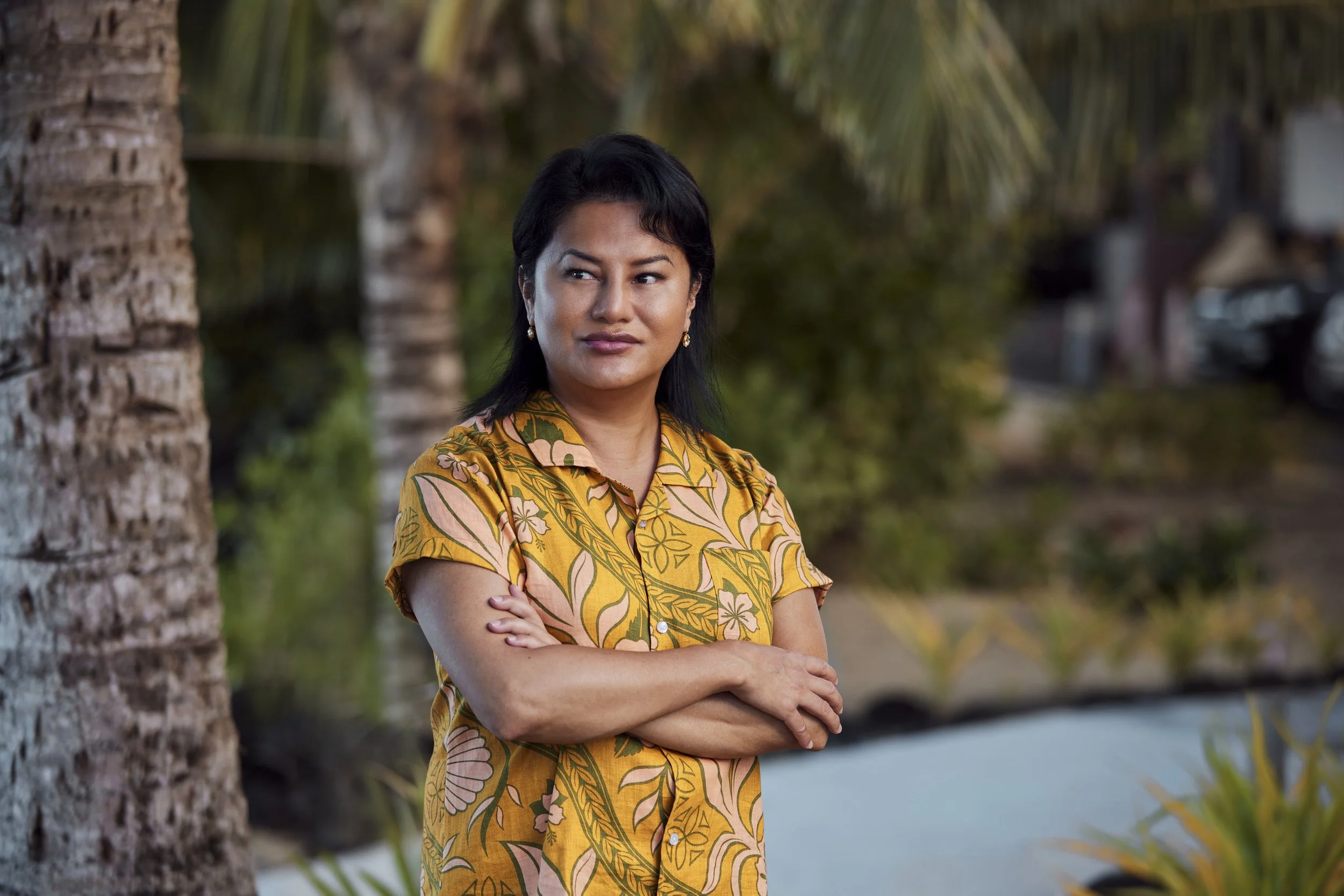
Yuki Kihara portrait by Ralph Brown
The Tiki shirt emerged from mid-20th century America as a romanticised portrayal of Pasifika cultures, reducing them to superficial motifs that catered to Western fantasies of tropical escapism. In Victories (2026), Yuki Kihara reimagines this commercialised garment as a medium for critical engagement with history.
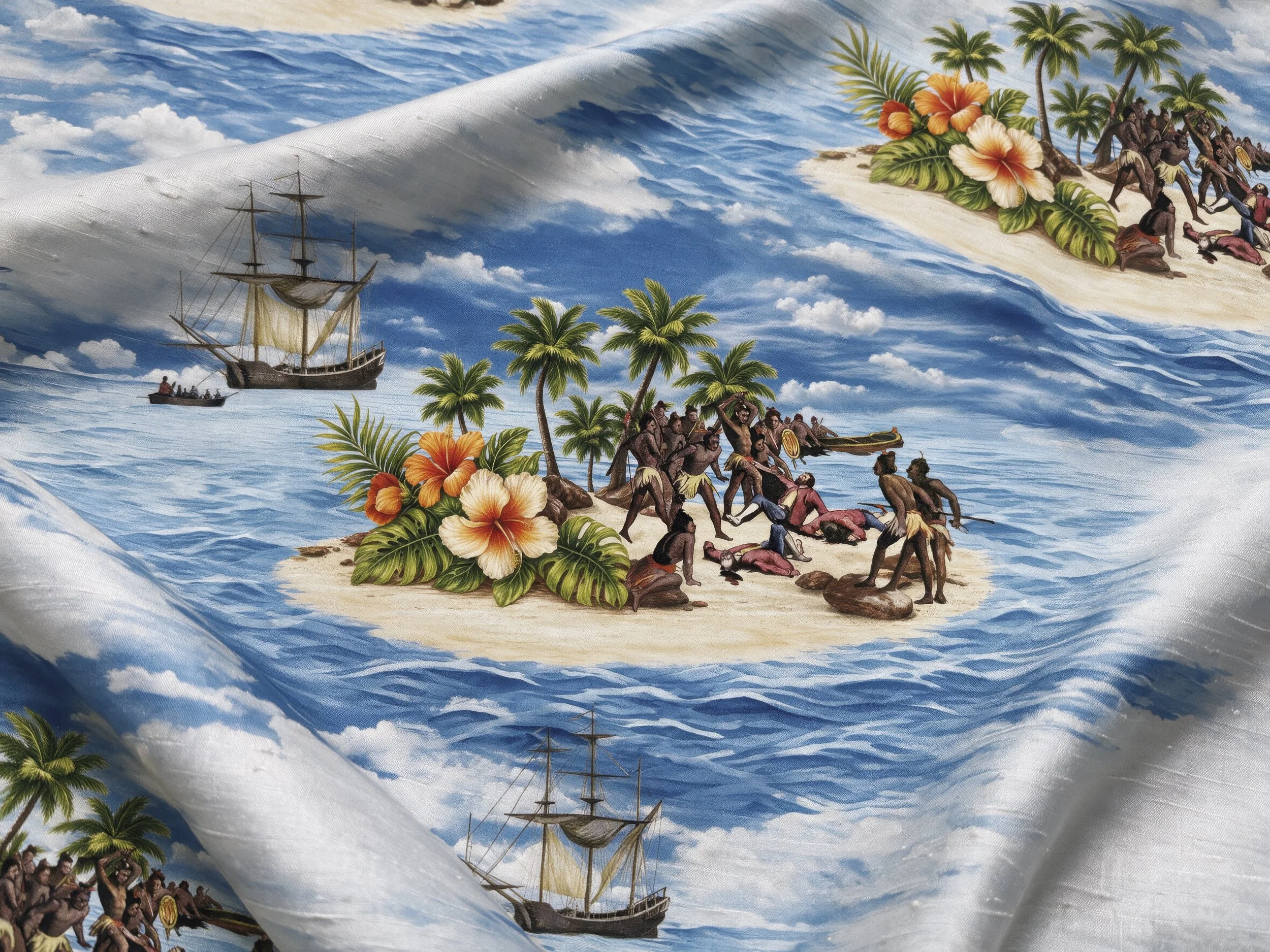
Across fifteen works, each shirt is adorned with early lithographs depicting native victories over colonial expeditions: explorers in their final moments, ships capsized, the hubris and failure of colonial ambition laid bare. Presented flat with custom-made hangers that hang against the wall, the shirts read as both art objects and historical artefacts (and not as a wearable souvenir), holding in tension their commercial origins and their critical recontextualisation. By setting the playful aesthetic of the Tiki shirt against these stark images, Kihara invites viewers to reconsider the narratives that have shaped perceptions of Pasifika cultures and the wider legacy of colonialism.
Virginia Woods-Jack (VWJ): A Guardian article from 2017 that traces the Hawaiian shirt from Elvis to contemporary fashion highlights the ongoing reuse and reinterpretation of cultural motifs. How has this continued circulation of imagery informed or motivated Victories?
Yuki Kihara (YK): Australian scholar Patricia Field argues that conflicts in the Middle East contribute to a romanticisation of the Pacific as a form of escapism for the Global North, a process framed by Edward Said's theory of Orientalism. I've noticed this sentiment echoed in today's fashion resurgence of vintage Tiki shirts, which seem to celebrate a carefree lifestyle and evoke the problematic notion of the "noble savage."
VWJ: Victories draws on a range of cultural and historical references. Could you speak to the initial impulses behind the work, and how these ideas developed through your research and making process?


Lot 5. Yuki Kihara, Victories in Hawaii’ and Aotearoa’, 2026, digital print on dupion silk with coconut-shell buttons; constructed shirt; custom CNC-cut acrylic hanger, 980 x 1299mm (approx.).
PRICE $9,000
YK: Victories series grew from a personal curiosity about archives. As a fashion design student at Wellington Polytech in the late 90s, a costume history course revealed a Western-focused curriculum, which stirred my interest in Moana regalia, including Sāmoa, and led me to Te Papa's archives for answers. Encountering early 20th-century Sāmoan photographs taken by Pākehā New Zealand photographers such as the Burton Brothers, Thomas Andrew, and Alfred Tattersall showed me how these images were produced and circulated under a colonial gaze. I began to see how archives shape our sense of cultural and historical narratives, raising questions about representation, power, and the mechanics of archiving itself.
Over the past two decades, I have pursued archival research across museums and collections, tracing the global circulation of early 20th-century Sāmoan photographs and instances of Sāmoan people photographed in Europe and presented as specimens. I have observed and gathered lithographs, photographs, and documentary accounts from explorers, missionaries, merchants, and journalists to map the industry that produced, disseminated, and commodified these images. By tracing networks, provenance, captions, and exhibition histories, I aim to uncover not only what was photographed, but why and how these images were crafted and circulated, and what those choices reveal about colonial visual culture. The making process has evolved into a critical examination of archives themselves (how they document, misrepresent, and shape collective memory), while also engaging with the materiality of the photographs, albums, and documentation that carry these histories.
VWJ: Your practice often revisits and reworks recurring cultural motifs. What drew you to these particular visual languages in this series, and how have you approached their reinterpretation in a way that both acknowledges and repositions their meanings?
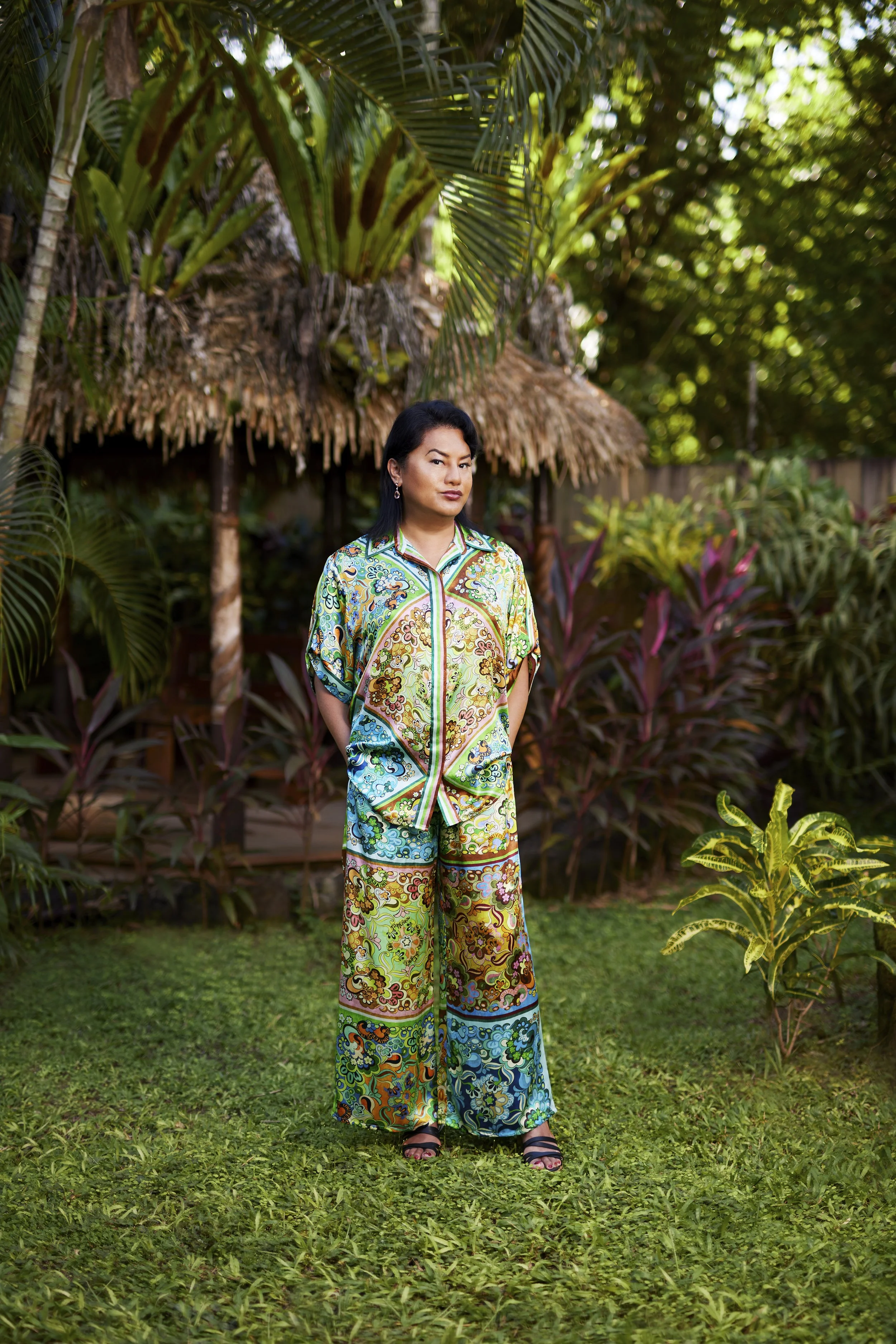
Yuki Kihara portrait by Ralph Brown
YK: I created this series from a deeply personal place, drawn to visual languages that carry the weight of colonial and modernist legacies: Pastoral Pacific imagery, Tiki motifs, and Orientalist tropes. I've felt the pull of their history in my own practice, where power, fantasy, and desire cross cultural boundaries. Reinterpreting these motifs, I privilege critique over celebration, acknowledging the histories and stereotypes they carry while reconfiguring them to reveal and question their original meanings. I aim to reframe imagery to centre the agency and voices of the cultures being referenced, shaping composition, materials, and context to shift the viewer's gaze from exoticising allure to critical reflection. My hope is to foster meaningful dialogue between cultures, disrupt single-narrative readings, and invite viewers to reconsider what these motifs signify in our contemporary moment.
VWJ: The works draw directly on historical paintings, placing the series within the global circulation of Pacific visual culture and its questions of appropriation, authorship and cultural exchange. What led you to select these particular images, and what resonances or tensions did you find in them?
YK: The selection of archival images draws inspiration from the sinking of the HMNZS Manawanui, a Royal New Zealand Navy dive and hydrographic vessel, off the southern coast of Upolu, Sāmoa, in October 2024. This event, framed as a gesture of goodwill by the New Zealand government alongside Australia and American navy vessels in preparation for the arrival of King Charles and Queen Camilla for CHOGM, revealed itself as a display of military might and a continuation of colonial power dynamics among nations with a shared colonial history. The environmental disaster caused by the shipwreck, particularly its impact on the village of Safata, whose livelihoods depend on the Moana, exposes stark inequities in how such incidents are addressed, compensating residents with meagre payments that fail to account for the long-term devastation. Yet the narrative is often diluted by tourism marketing that masks these inequities and ecological damage, turning a humanitarian crisis into a spectacle-driven opportunity that prioritises profit over accountability. This reminds me of militourism, a term Teresia Teaiwa uses to describe places where military spectacle runs alongside tourism, turning humanitarian crises into profitable narratives while obscuring inequities and ecological damage. With this in mind, the Tiki shirts serve as a metaphor for the spectacle while the patterns and surface designs in Victories series reveal a deeper story.
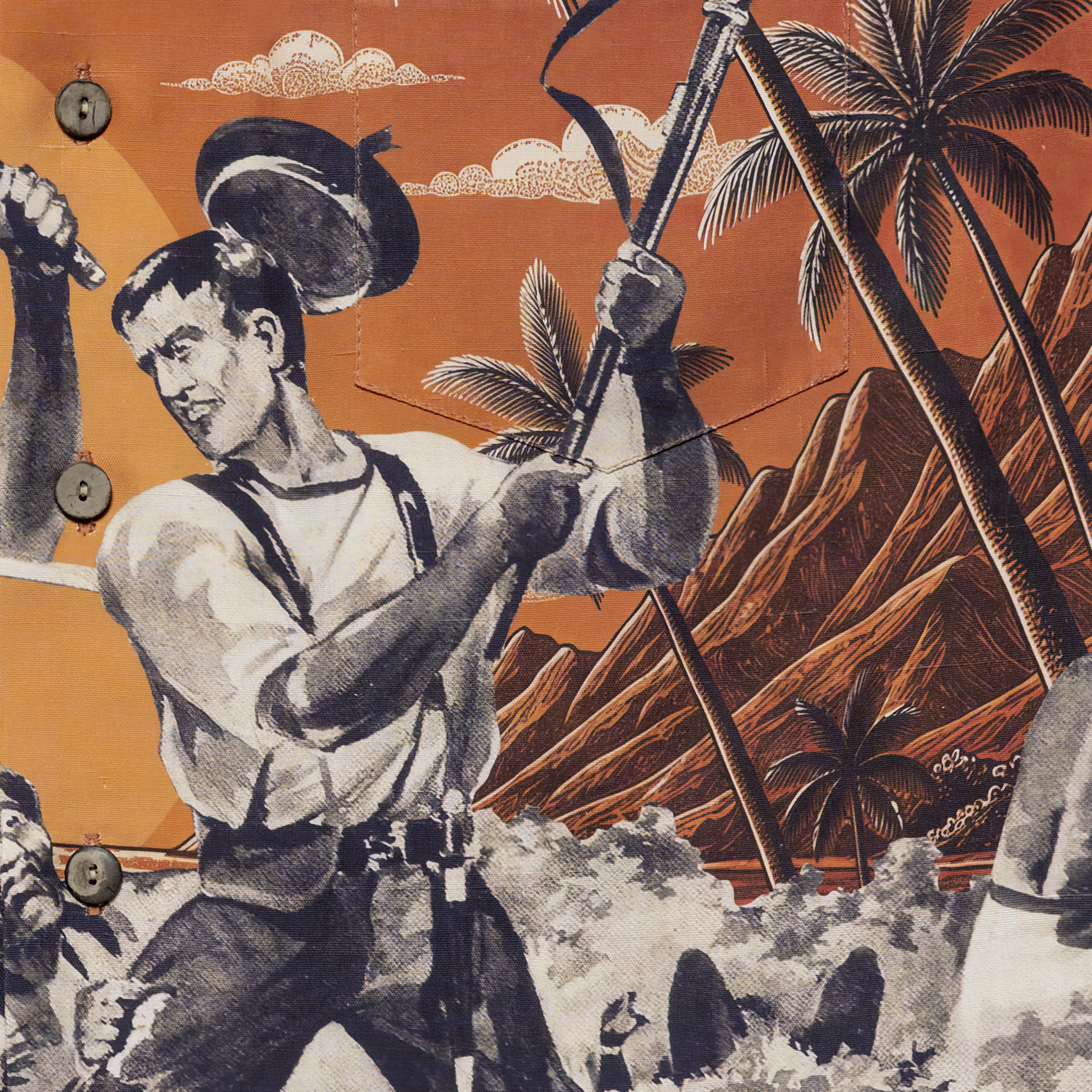
Lot 10. Yuki Kihara, ‘Victory against the New Zealand rebels [formally ‘The last stand against the rebels at the battle of Vailele, Saturday, April 1’]’ (2026). From ‘Victories’ (2026) series.
PRICE $7,000
VWJ: Renaming is central to the series: The Death of Abel Tasman and his Crew becomes Victory over Abel Tasman and his Crew. How does that shift in title work to redistribute perspective, power and agency within these historical narratives?
YK: Renaming shifts the gaze from a historical catastrophe to a narrative of conquest and resilience, reframing the images as deliberate victories rather than losses. This act foregrounds the politics of naming as a creative intervention that challenges the original contexts and powers behind the imagery. By recasting The Death of Abel Tasman and his Crew as Victory over Abel Tasman and his Crew, the series critiques how archival material can be repurposed to sanitise or valorise colonial encounters, while inviting viewers to interrogate who gets to define legitimacy, triumph, and memory. This renaming thus becomes a core conceptual tool for rearticulating power, authorship, and cultural exchange within the series.
VWJ: What kinds of reflections or reconsiderations do you hope this project might prompt in viewers, particularly in relation to inherited histories and the visual codes embedded in everyday objects and images?
YK: I envision Webb's Gallery as the ideal venue for presenting the Victories series because its intimate, unfolds-within-community atmosphere invites conversations that extend beyond the gallery's white walls. The show could act as a bridge between high-concept art and everyday life, drawing in people who encounter Tiki shirts in Cuba Street, Webb's Gallery on Marion Street, or in vintage stores elsewhere. I'm not asking the audience to throw away their Tiki shirts; instead, I invite them to pause and ask: who profits from these narratives, and at what cost to the cultures being referenced? The exhibition is an invitation to the audience to scrutinise the politics behind everyday objects and to consider how they might participate more responsibly in the storytelling around them.
Featured Auction Highlights


Lot 1. Yuki Kihara, ‘Natives of New Hebrides claim victory against French cutter Petrel' [formally ‘The French cutter Petrel attacked by natives of the New Hebrides’], 2026, dition 1/3 + 2AP, 1200 x 1490mm (approx.).
PRICE $11,000
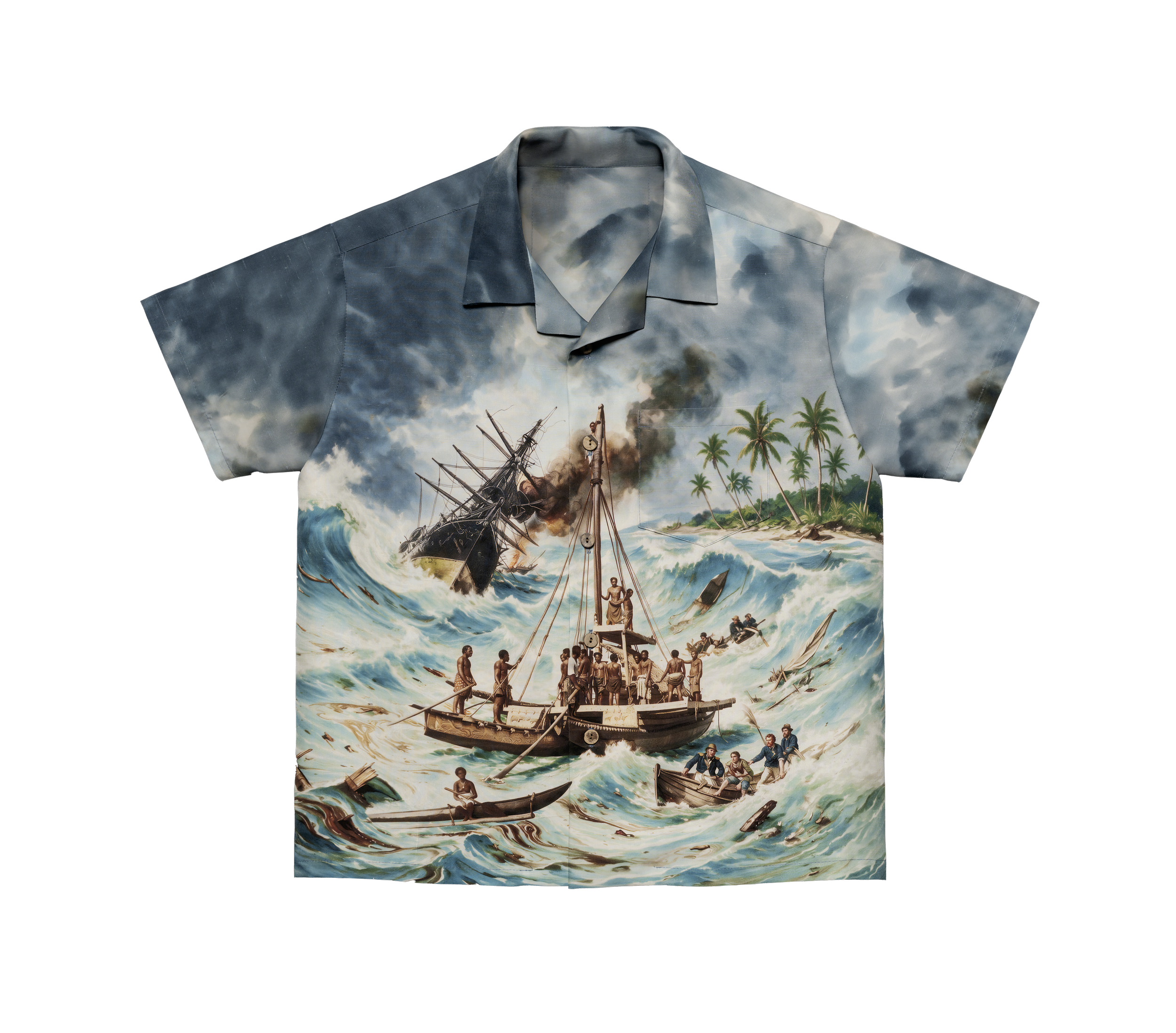
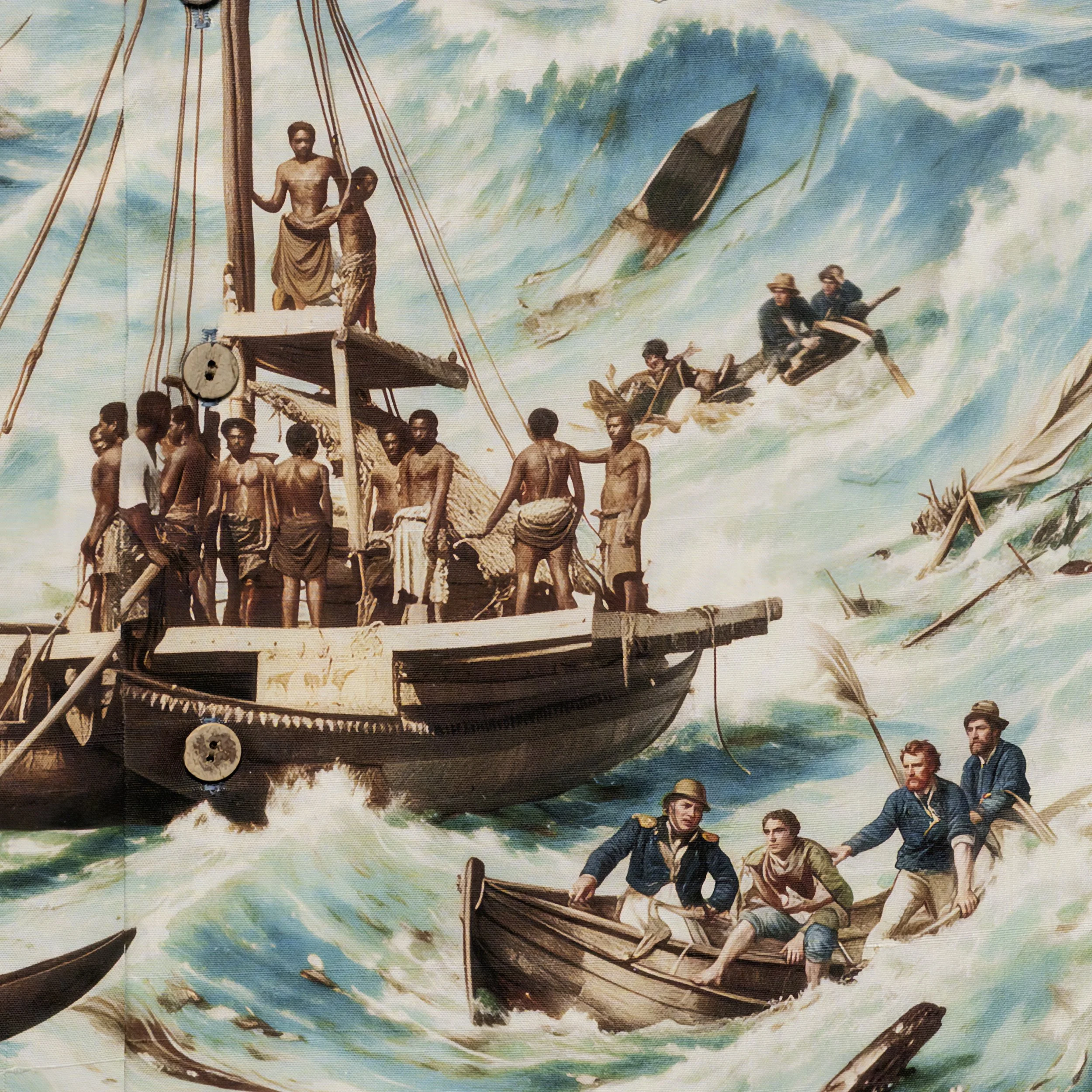
Lot 9. Yuki Kihara, ‘Empire collapsing’, 2026, digital print on dupion silk with coconut-shell buttons; constructed shirt; custom CNC-cut acrylic hanger, Edition 1/3 + 2AP, 760 x 910mm (approx.).
PRICE $7,000
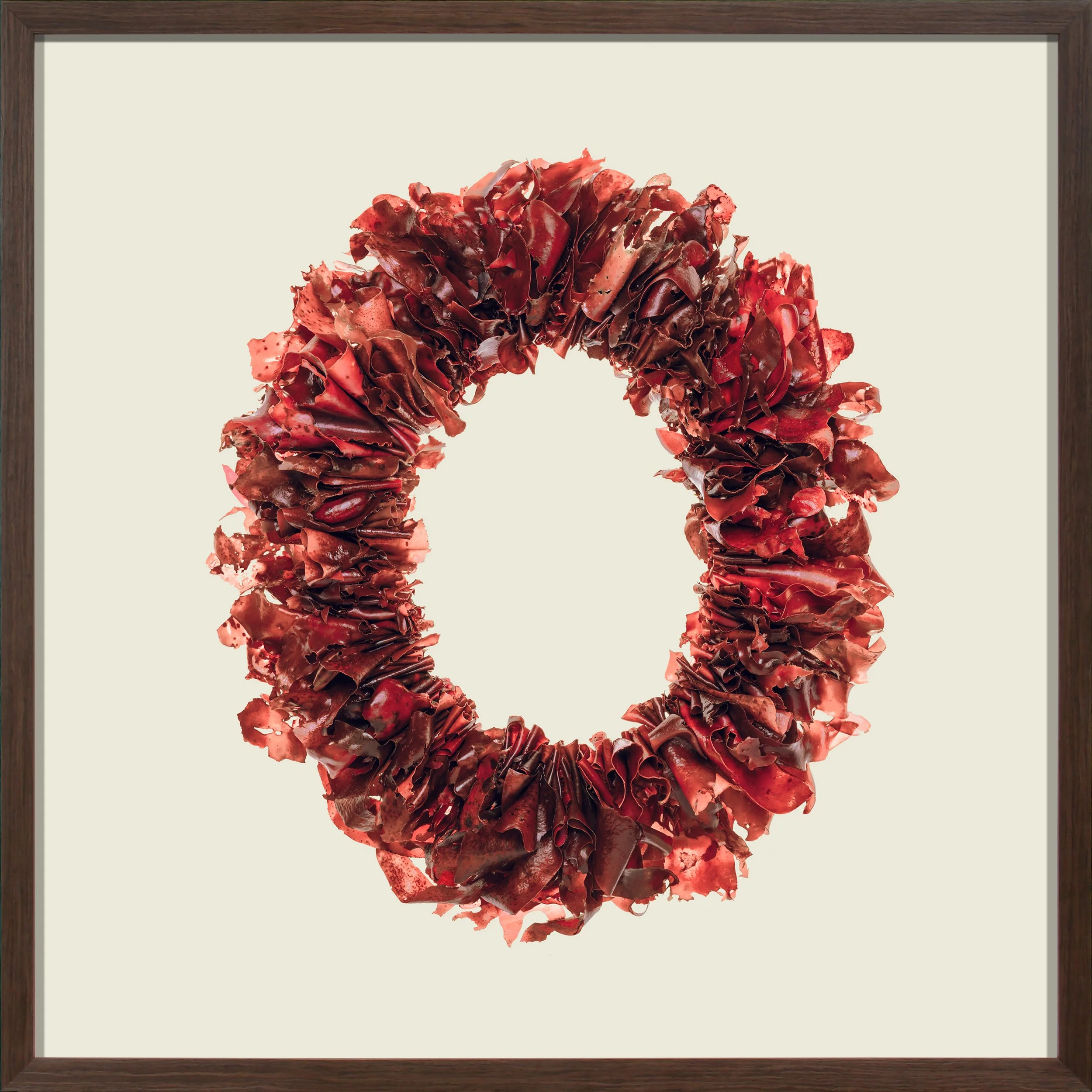
Lot 16. Yuki Kihara, ‘Aotea'ula Eit (Psaromenia Berggrenii), 2023, pigment print on Hahnemühle fine art paper, edition 2/7, 843 x 843 x 38mm.
PRICE $7,500

Lot 20. Yuki Kihara, Aotea'ula Twantefo (Puawhānanga / Clematis Paniculata), 2026, pigment print on Hahnemühle fine art paper, edition 1/7, 843 x 843 x 38mm. PRICE $7,500
Webb's Wellington Gallery presents a year-round programme of selling exhibitions alongside its auction viewings, working with contemporary artists, estates and private collections. Entry is free and all works in Victories are available for purchase throughout the exhibition period.
Our specialists welcome enquiries about the works in this exhibition, and consignments of art for our regular auction series held throughout the year. Contact us for a complimentary, no-obligation appraisal.
Victories, Yuki Kihara.
A Selling Exhibition at Webb's Wellington Gallery
Launch Event
Saturday 26 September, 12.30pm
Artist Talk
Saturday 26 September, 1 pm
On View
22.09.26—26.11.26
23 Marion Street, Te Aro, Wellington 6011
Contact
Virginia Woods-Jack
Exhibitions Manager, Webb's Wellington
[email protected]
+64 22 679 8664