
Casual Friday Fantasies: Yuki Kihara's Victories
Yuki Kihara's exhibition Victories brings together fifteen new works and selected photographs from Aoteaʻula. In this essay, Sophie Thorn considers how the Hawaiian shirt and the Sāmoan ʻula are reworked to question colonial histories and their lingering present.
How Yuki Kihara turns the Hawaiian shirt and the ʻula into carriers of Indigenous resistance and remembrance.
Essay by Sophie Thorn on Victories, an exhibition that reads colonial history through the patterns of the Pacific.
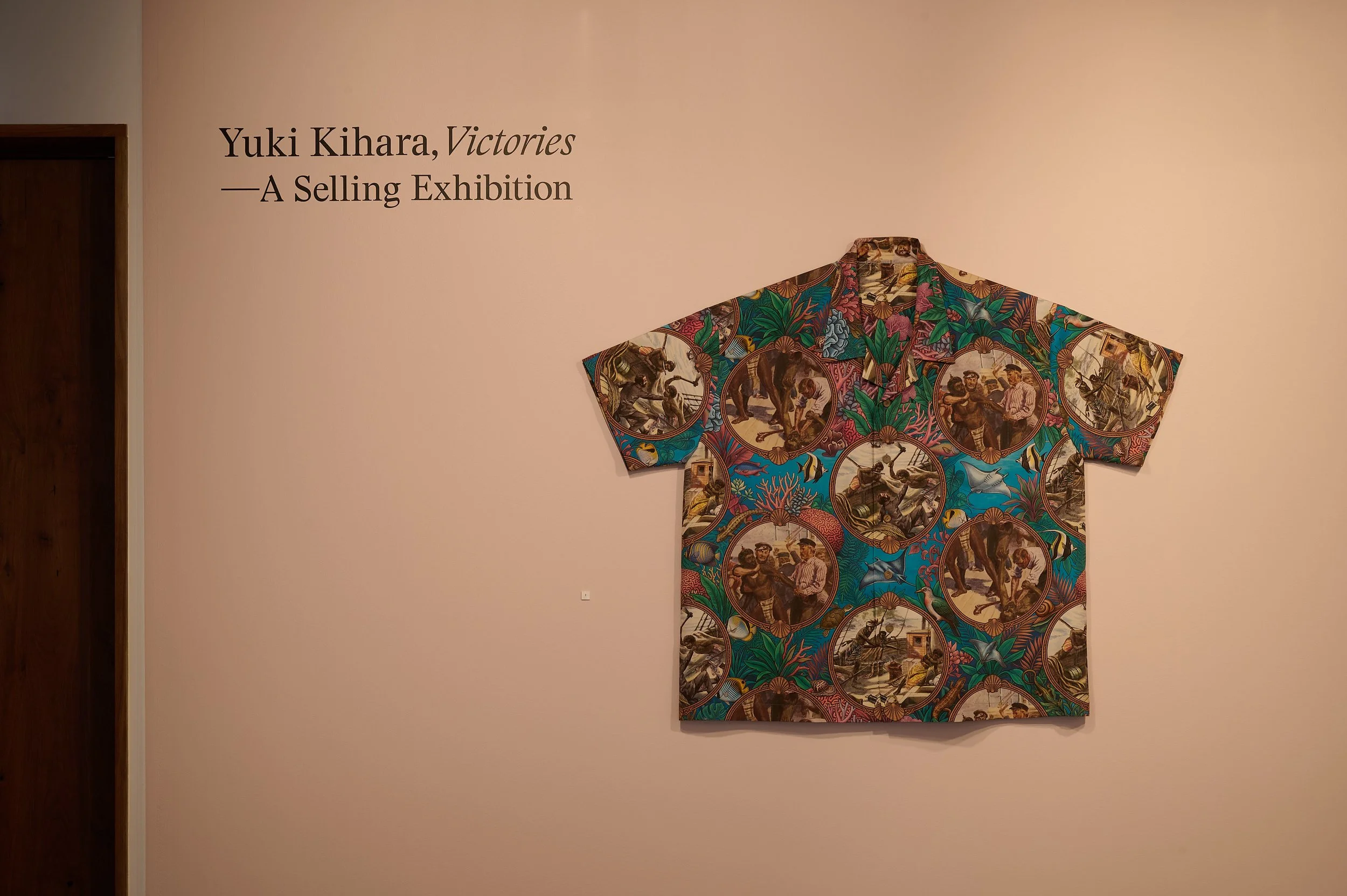
In the 1920s in Honolulu, a Japanese shirtmaker, Musa-Shiya, began selling shirts made from colourful kimono fabric. In 1937 Ellery Chun, the owner of King-Smith Clothiers in Waikiki, trademarked the term 'Aloha Shirt'. From here the Hawaiian shirt, and with it an idealised, mass-produced 'casual Friday' version of the Pacific, spread across the world. In 1995 Yuki Kihara, a young artist of Japanese and Sāmoan descent, enrolled in a fashion degree at Wellington Polytechnic, where she would study this history.
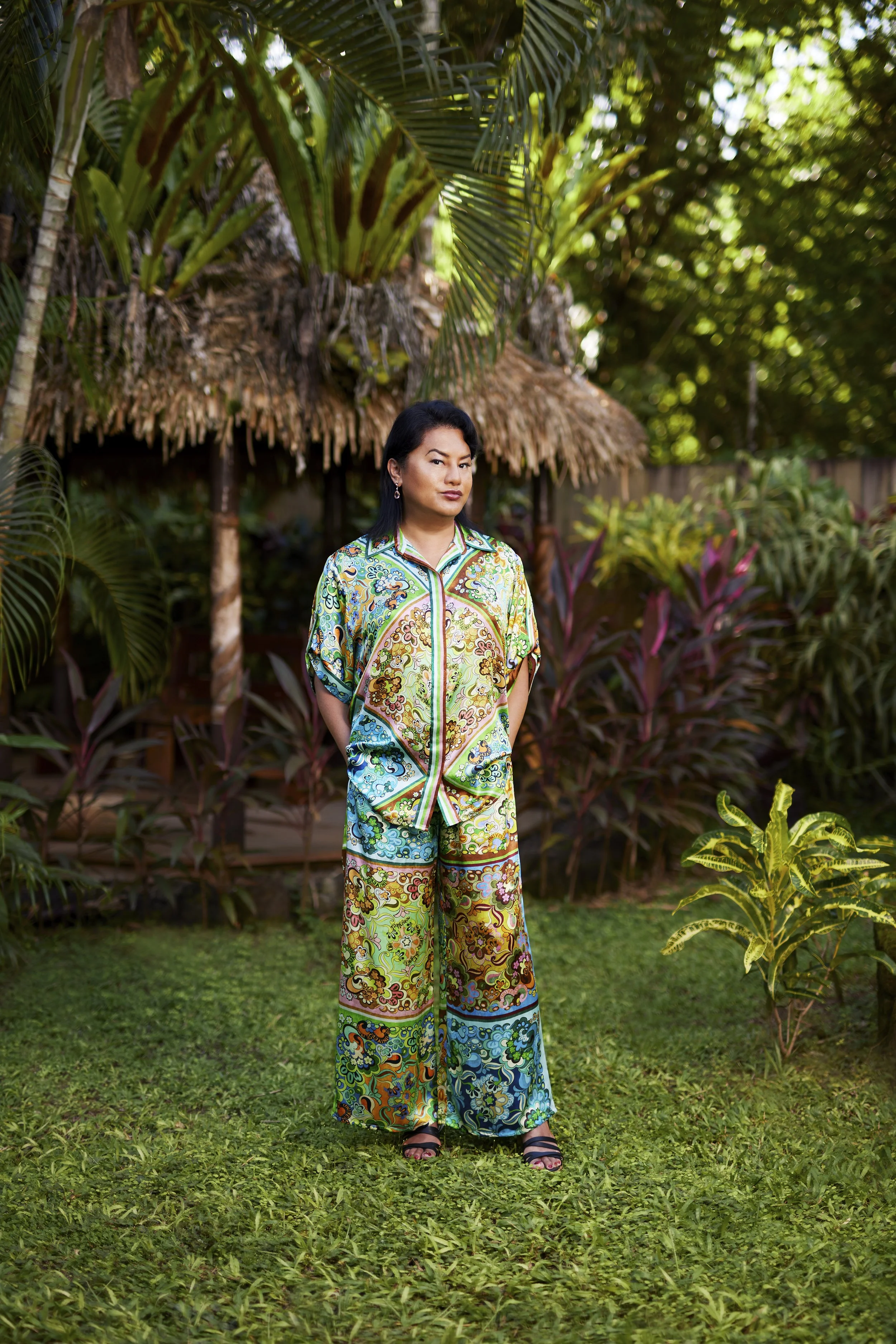
Yuki Kihara portrait by Ralph Brown
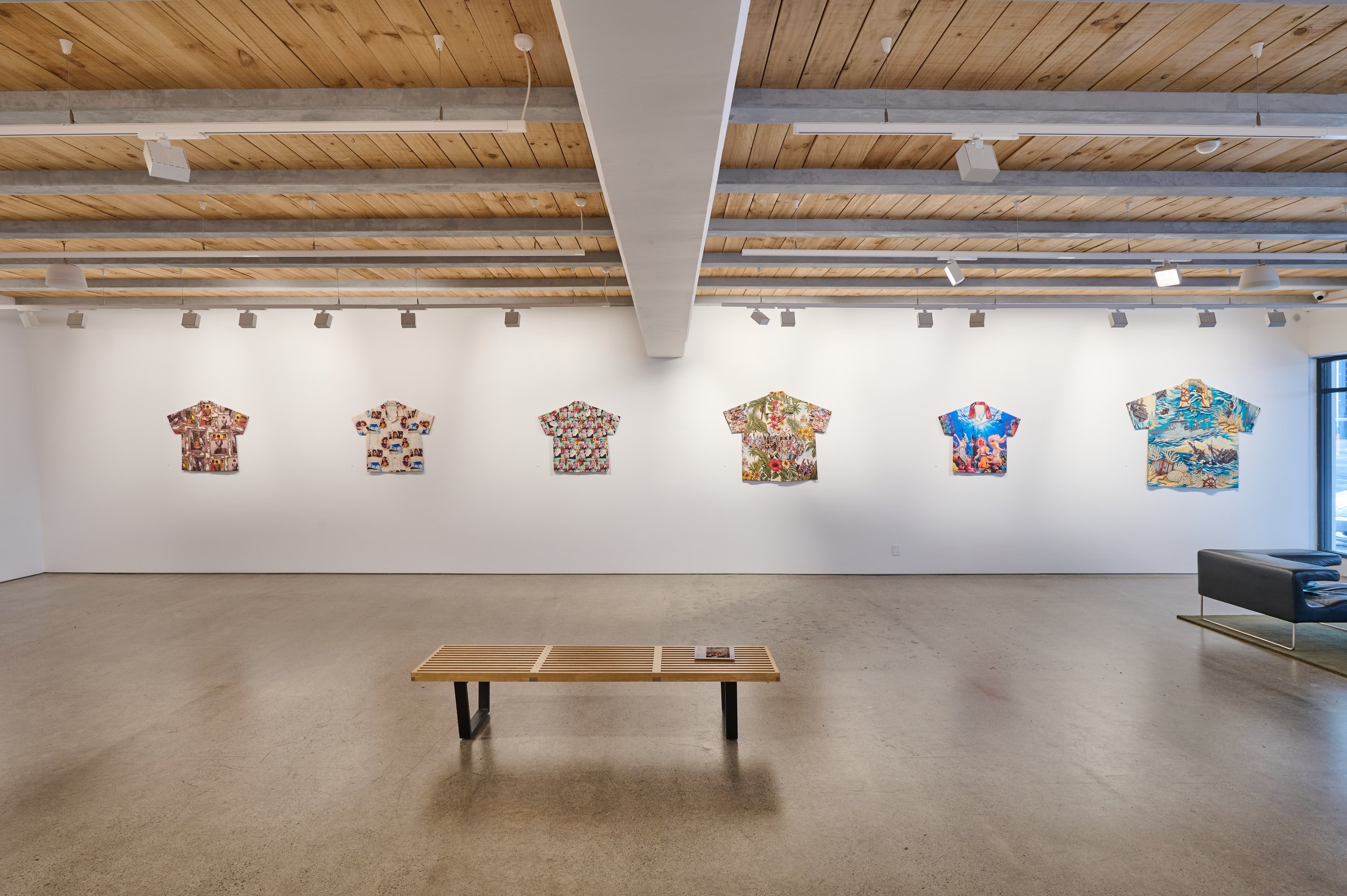
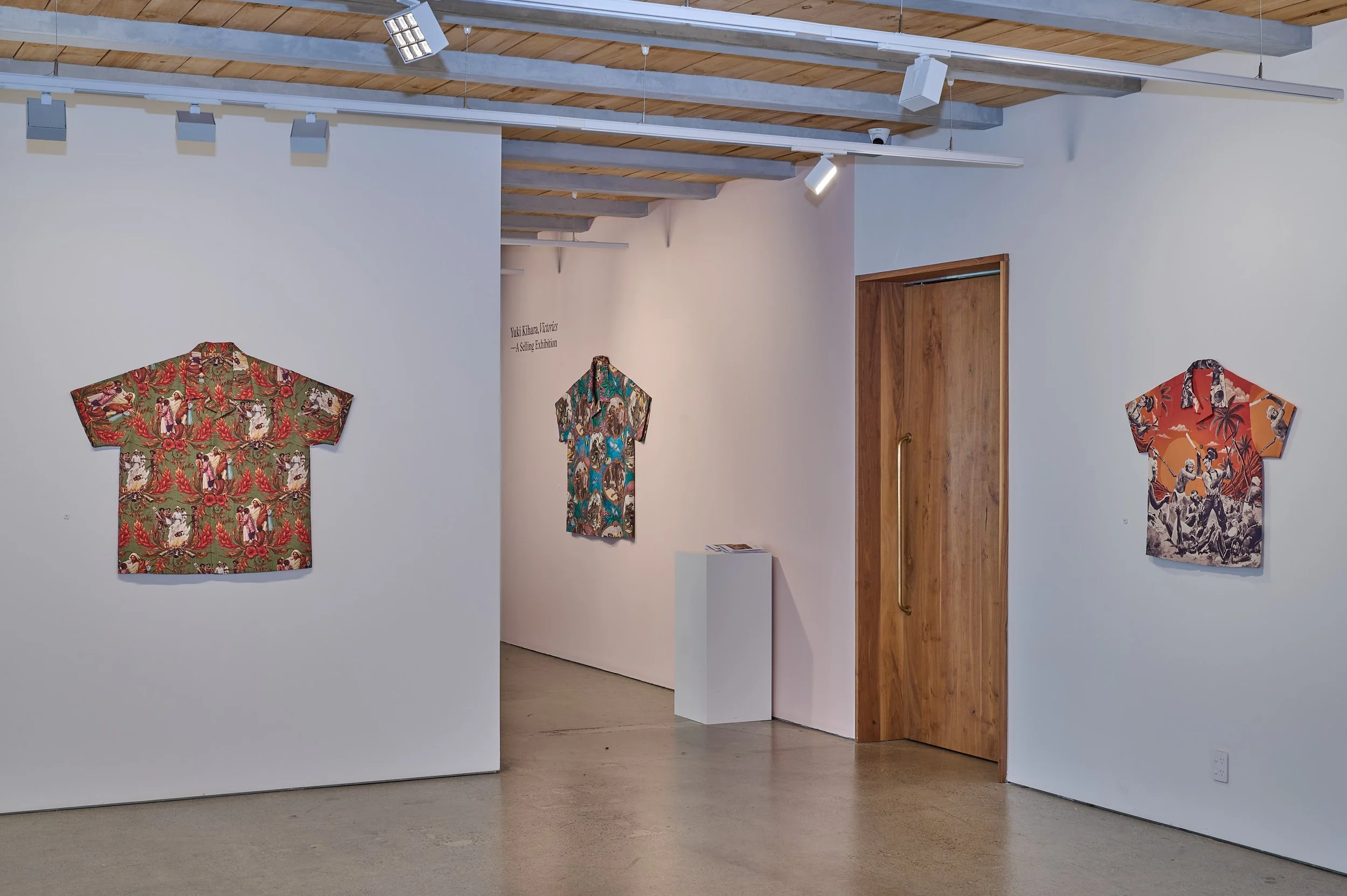
Victories brings together fifteen new works by Kihara, alongside selected photographs from her series Aoteaʻula. Across both bodies of work, Kihara examines borders, geographic, cultural and historical, and the colonial systems that create and police them. Drawing on more than two decades of archival research, she transforms familiar Pacific forms into sites of historical reckoning: the Hawaiian shirt, or as Kihara more broadly frames it the Tiki Shirt, becomes a carrier of Indigenous resistance, while the ʻula, a Sāmoan garland of welcome and friendship, assumes the sombre presence of a funerary wreath.
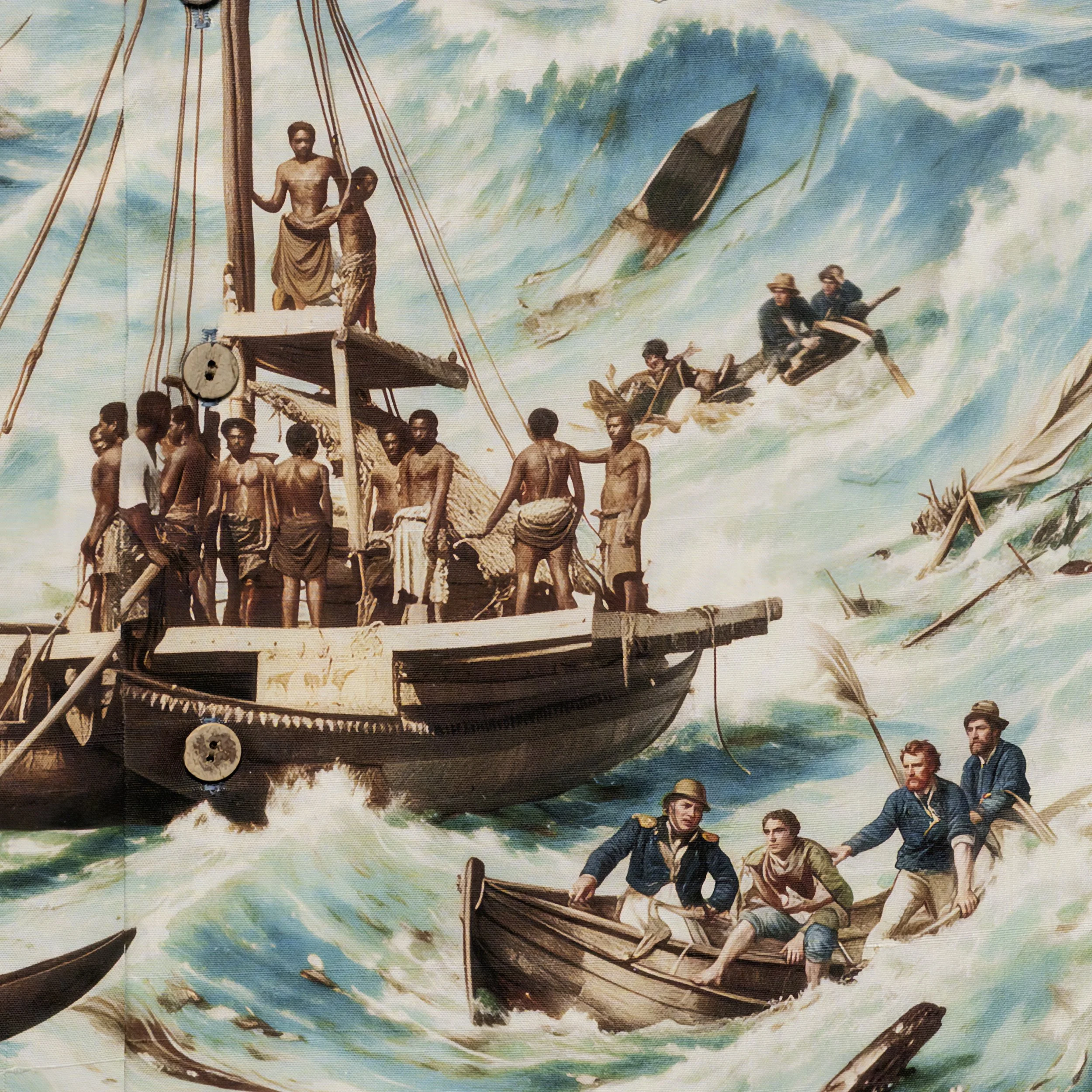
Custom-designed and printed on high-end Dupion silk, Kihara's shirts incorporate images of colonial expeditions overturned: explorers halted, ships wrecked and imperial ambition exposed in defeat. These historic images are juxtaposed with more recent events and examples of militourism within the Pacific. Kihara has also turned this lens on her own practice, using imagery of the artist dressed as artist Paul Gauguin and biologist Charles Darwin taken from her 2025 Darwin in Paradise Camp exhibition, which in turn built upon her 2022 Venice Biennale presentation Paradise Camp. In each instance Kihara reminds us that the colonial project is anything but historic.
Featured Highlights

1. Yuki Kihara, ‘Natives of New Hebrides claim victory against French cutter Petrel' [formally ‘The French cutter Petrel attacked by natives of the New Hebrides’], 2026, dition 1/3 + 2AP, 1200 x 1490mm (approx.).
PRICE $11,000
(All works are available in three different sizes across the edition)

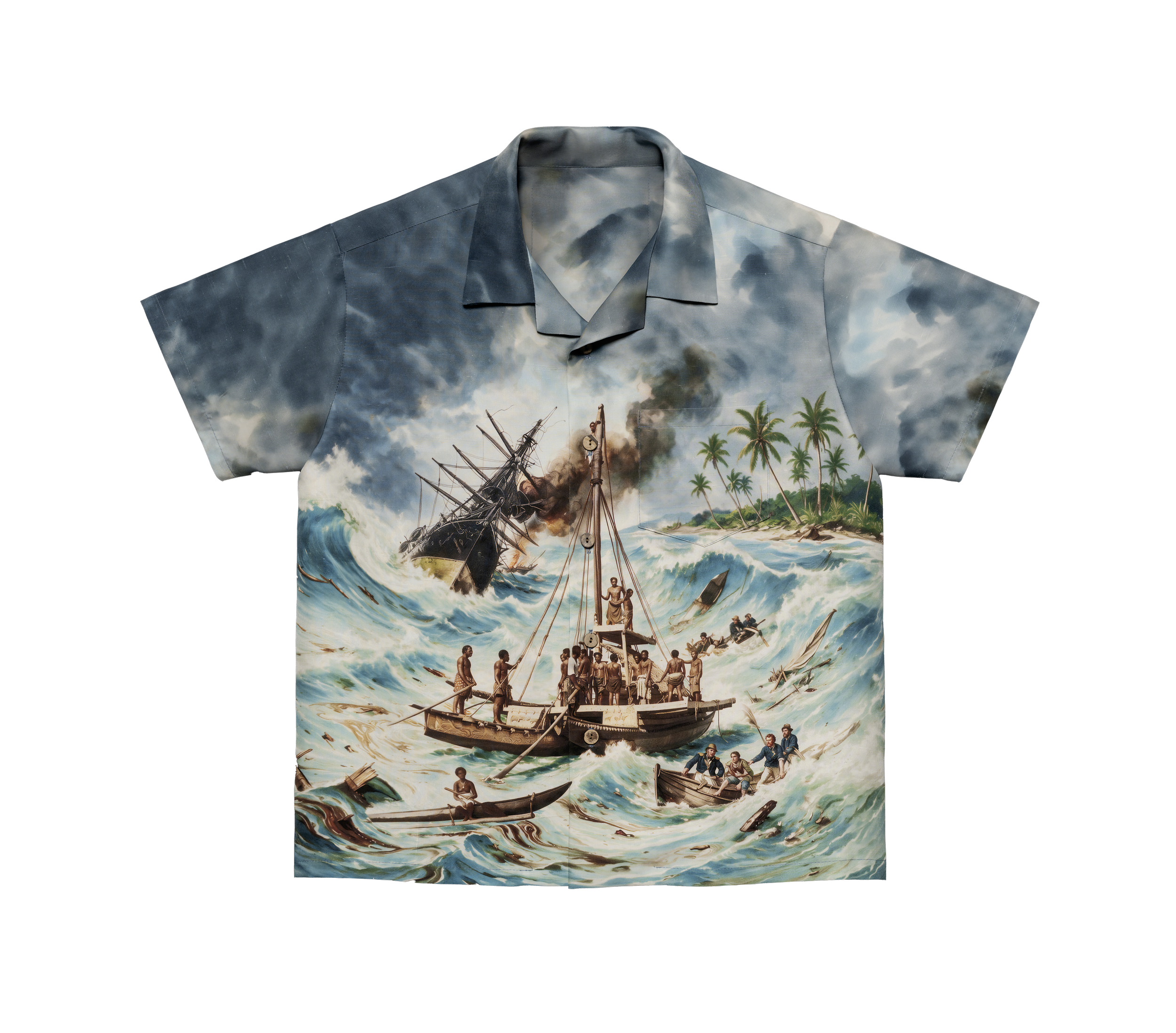
9. Yuki Kihara, ‘Empire collapsing’, 2026, digital print on dupion silk with coconut-shell buttons; constructed shirt; custom CNC-cut acrylic hanger, Edition 1/3 + 2AP, 760 x 910mm (approx.).
PRICE $7,000
(All works are available in three different sizes across the edition)
Kihara's Aoteaʻula photographs add a further layer to this story. Depicting garlands made from Aotearoa's native flora and fauna, these photographs are memorials. Their beauty is tempered by the story of twenty-seven unnamed men from the New Hebrides, now Vanuatu, who were taken to Aotearoa in 1870 and set to work in flax mills in Auckland. The ʻula here commemorate these men, reopening a shameful and neglected chapter of ‘blackbirding’ , or indentured labour, a form of slavery, in Aotearoa's colonial history.
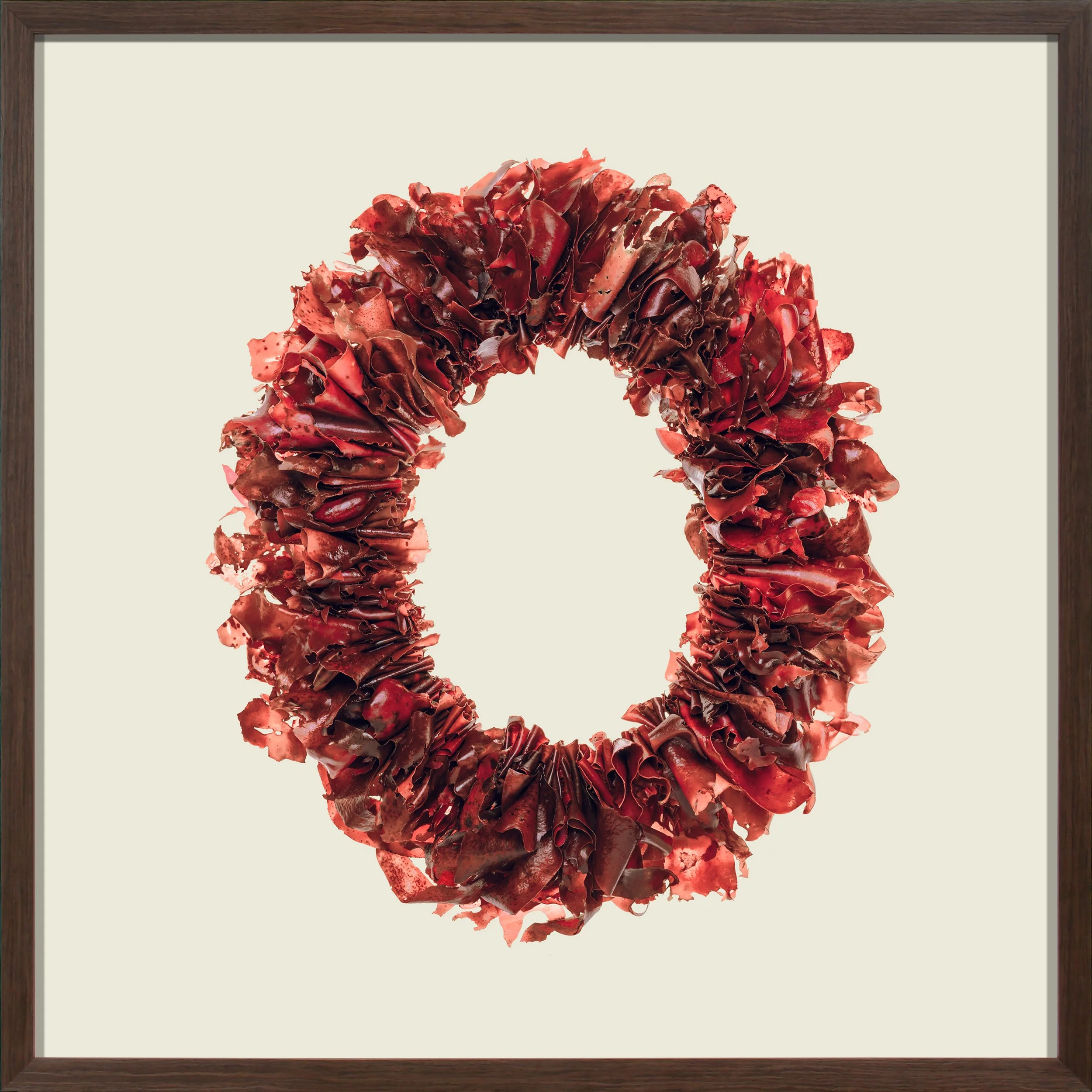
16. Yuki Kihara, ‘Aotea'ula Eit (Psaromenia Berggrenii), 2023, pigment print on Hahnemühle fine art paper, edition 2/7, 843 x 843 x 38mm.
PRICE $7,500

16. Yuki Kihara, Aotea'ula Eitin (Kahukōwhai / Vanessa Itea) , 2025, pigment print on Hahnemühle fine art paper, edition 1/7, 843 x 843 x 38 mm.
PRICE $7,500

20. Yuki Kihara, Aotea'ula Twantefo (Puawhānanga / Clematis Paniculata), 2026, pigment print on Hahnemühle fine art paper, edition 1/7, 843 x 843 x 38mm. PRICE $7,500
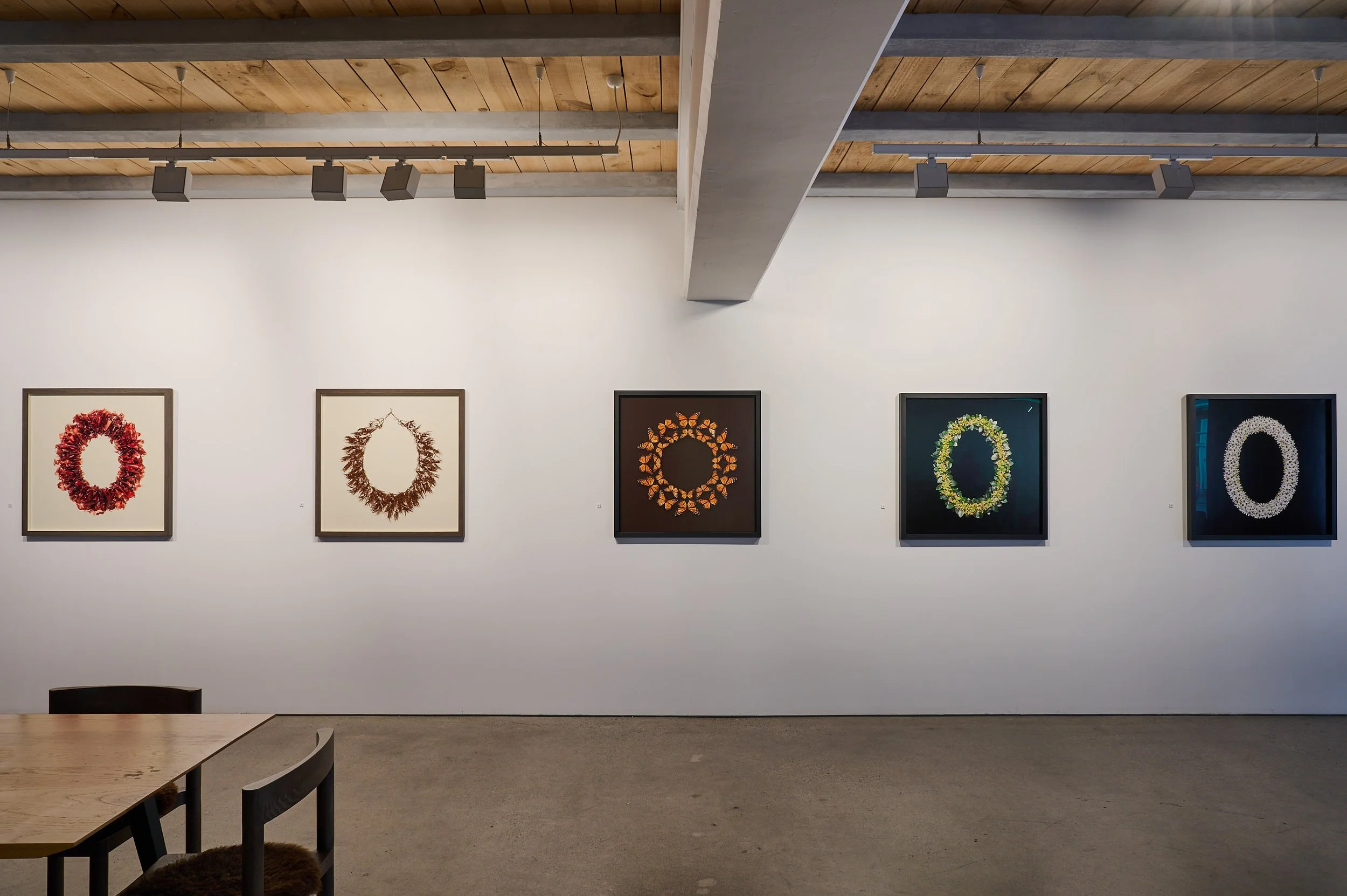
Installation at Webb’s Wellington.
The complete series numbers twenty-seven works, one for each man. Titled sequentially in Bislama, from Wan to Twanteseven, the photographs acknowledge names that will inevitably remain unknown. Bislama, a creole language using Oceanic language patterns based off colonial vocabularies, is used here as another act of reclamation. This attention to detail in the titling of these works is fundamental to Kihara's practice.
Across both series featured in this exhibition, Kihara asks us to rethink our preconceived notions and the inherited knowledge found in our archives. This is contested terrain. Retitled colonial images shift from accounts of catastrophe to declarations of Indigenous agency. Natural specimens recall how the botanical surveys of European voyages opened Pacific lands to extractive agriculture, combining both blackbirding and the displacement of native ecologies by 'colonising' plants, animals and people. By identifying and redefining the captions, classifications and silences found in our conventional histories, Kihara suggests we can reveal who created historical authority and who continues to benefit from it today.
Presented here on Marion Street, which runs parallel to Wellington's iconic Cuba Street and is dotted with vintage stores in which Hawaiian shirts circulate as desirable commodities, the exhibition addresses the contemporary presence of this colonial legacy. Neither simply clothing nor conventional pictures, Kihara's silk shirts occupy a space between art object, artefact and souvenir; while her ʻula, similarly, slip in meaning between welcome and mourning, beauty and loss. Victories suggests we might look beneath seductive surfaces and recognise the power relations lurking below, and how, if we continue to question the human, cultural and ecological costs obscured by fantasies of the Pacific, pattern and adornment can be reconfigured to carry histories of resistance, remembrance and survival.
Webb's is a New Zealand auction house with specialist departments across art, jewellery, watches, wine, motoring and collectables. Our team can advise on valuations and the best way to bring your items to market, whether you are selling a single work or a whole collection. Each auction is open to bidders in the room, online and by phone, with catalogues published ahead of every sale. To find out how we can help, get in touch with the department.
Victories, Yuki Kihara.
A Selling Exhibition at Webb's Wellington Gallery
Launch Event
Saturday 26 September, 12.30pm
Artist Talk
Saturday 26 September, 1 pm
On View
22.09.26—26.11.26
23 Marion Street, Te Aro, Wellington 6011
Contact
Sophie Thorn
Wellington | Specialist, Art
[email protected]
+64 22 080 8405