
John B Turner: A Life Behind the Lens
Webb's brings to auction The John B. Turner Collection of Photography and Books, the photographer, writer, educator and PhotoForum co-founder known as New Zealand's "photo-guru". Ahead of the auction, we spoke to him about his career, his collecting and his library.
The personal collection of John B Turner: rare photographs, historic prints and an extensive library from one of New Zealand's most influential photographic figures.
Photographer, writer, editor, publisher and educator John B Turner (b. 1943) has shaped contemporary New Zealand photography since the 1960s.
Webb's is proud to present The John B. Turner Collection of Photography and Books; the personal collection of the photographer, writer, editor, publisher and educator, and one of the most influential figures in the development of contemporary New Zealand photography. Lecturer at Elam School of Fine Arts from 1971 and co-founder of PhotoForum in 1973, Turner earned his reputation as the country's "photo-guru."
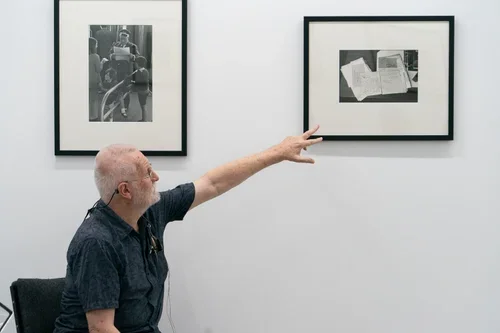
The auction offers photographs by Turner alongside works by Ans Westra, William J Harding, Peter Peryer, Robin Morrison, John S. Daley, Mac Miller and others, both framed and unframed. Complementing them is Turner's extensive personal book library of more than 800 lots, spanning photography, New Zealand art, Māori culture and history, exhibition catalogues, and historical and documentary photography. Ahead of the auction we spoke to John about his impressive career and collection.
INTERVIEW
Webb’s: Many of the photographs in this collection were made by people you taught, published or exhibited. How did you come to own them, and do any have a particularly special story attached to how they came to you?
John B Turner: I'm not a typical collector choosing pictures only for my own pleasure and edification, but rather one seeking significant and usually overlooked images with historical links and values that speak of their time and maker. My first international purchase, in 1969, was Edward Weston's Civilian Defense, 1942, a reprint by his son Cole of naked Charis Wilson wearing a gas mask in 1942 (the one that hooked Peter Peryer on photography when he saw it). But I had already purchased or been gifted images from a few practitioners I got to admire in camera club and professional photography circles, some of whom I had helped to print their own images to better express their thoughts and feelings. I loved the darkroom magic of black and white printing and became a professional photographic printer for the Dominion newspaper when my job as a press photographer for South Pacific Photos under Dave Sache became redundant during a recession.
My interest in history, photography and art paralleled my own development as an independent practitioner and writer. After a stint as a mural printer at the National Publicity Studios, I became the photographer for the Dominion Museum in Wellington in the mid-1960s. Surrounded by thousands of magnificent and neglected historical glass negatives, I devoted much of my spare time to cleaning and printing them for exhibitions and publications and writing about them. The Museum showed no interest in promoting its collection through posters or even postcards, but I curated several exhibitions, including Māori in Focus and Nineteenth Century New Zealand Photographs for Palmerston North and New Plymouth galleries, respectively.
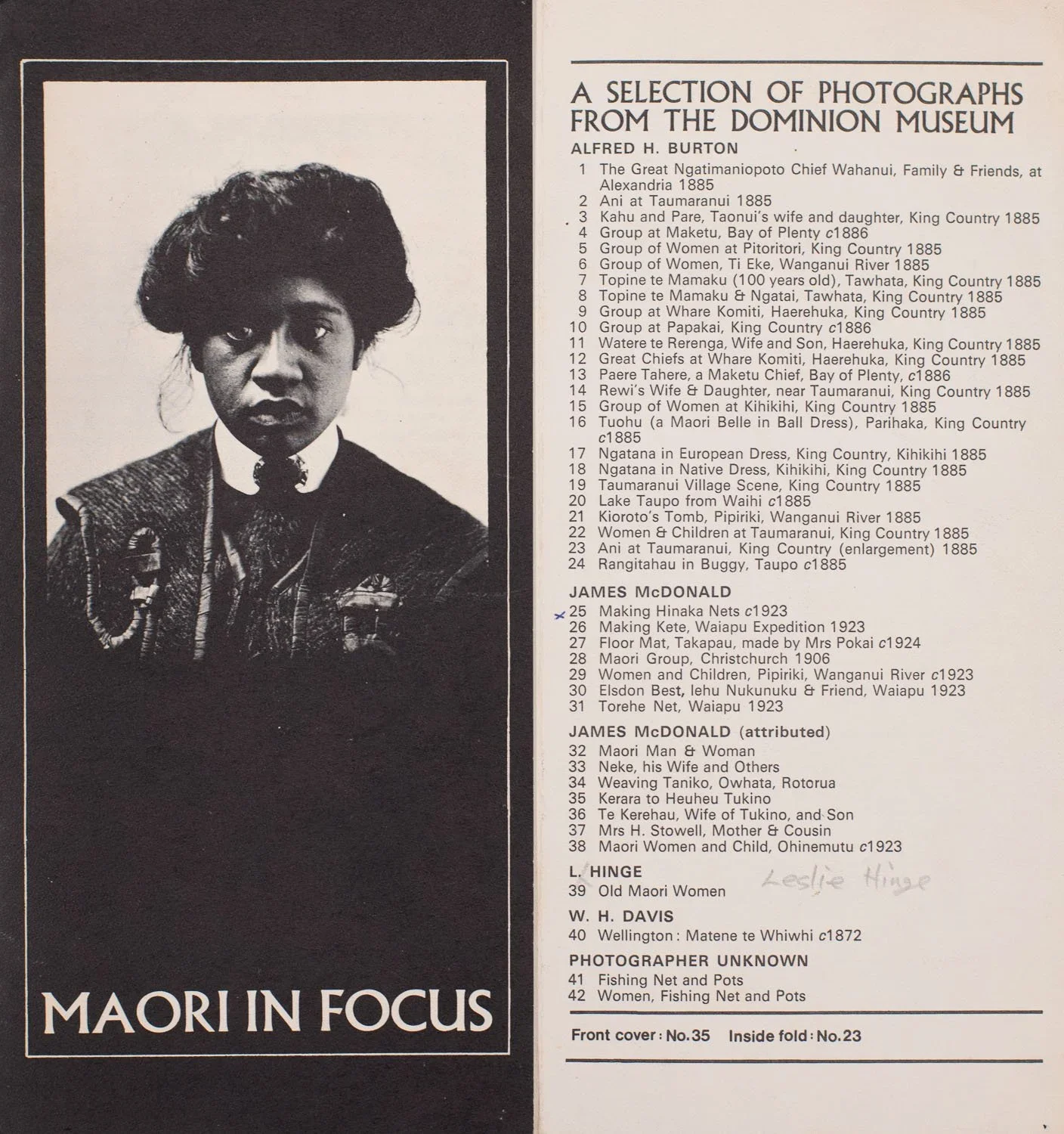
Māori in Focus (1970) exhibition
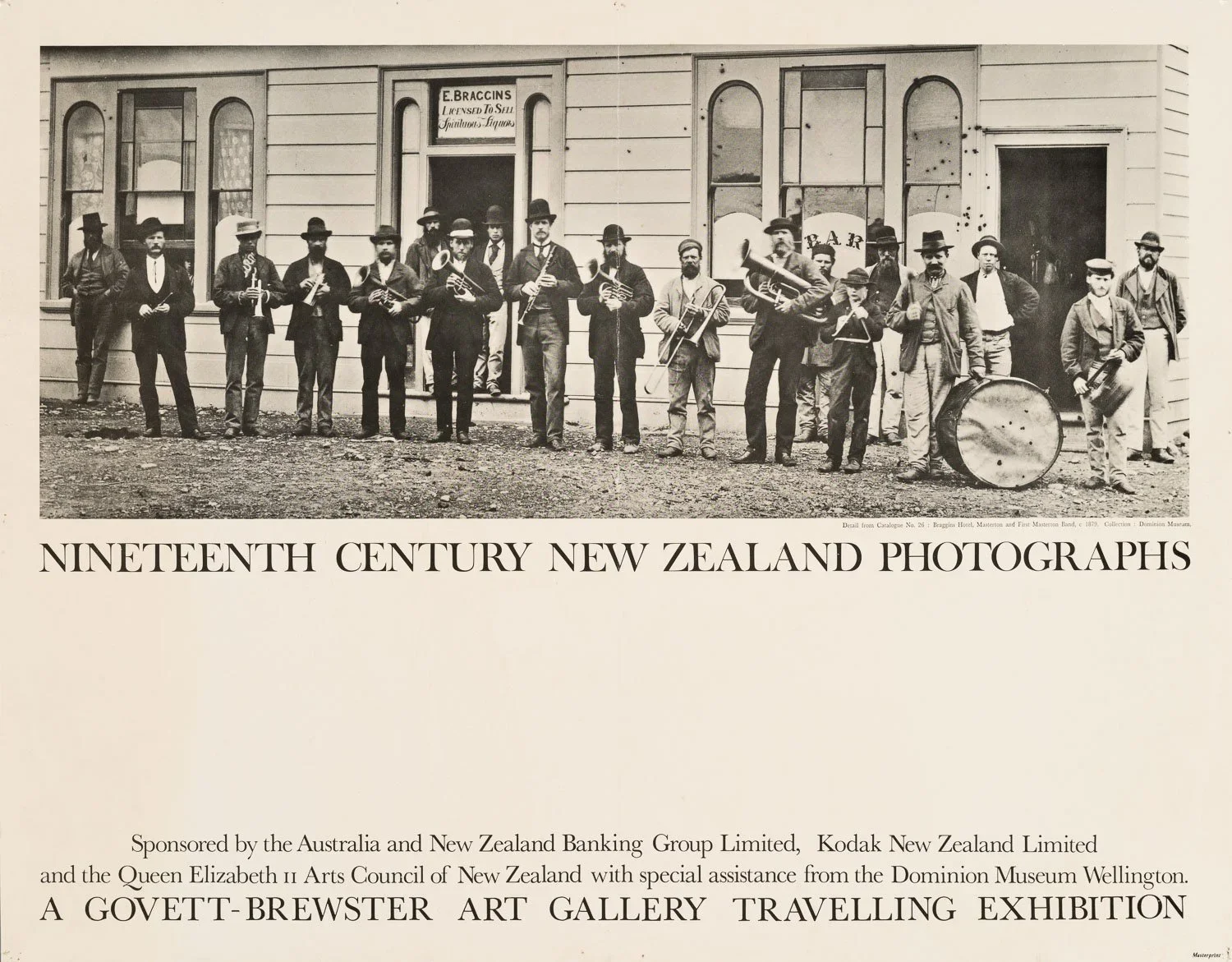
Nineteenth Century New Zealand Photographs exhibition
I met John Johns, the outstanding Forest Service photographer, and made some mural prints under his supervision at the National Publicity Studios. He was one of a handful of perfectionists I met and learned from, and I encouraged him to exhibit his favourite works in the slowly growing art scene. Barry Clothier and I had a joint exhibition in Wellington in 1965. John Daley and Allan McDonald were among the younger photographers I met in Wellington, along with Ans Westra, whom I also encouraged to exhibit her work outside of the camera clubs. And just before I moved to Auckland I met John Fields, Gary Baigent, Richard Collins and Tom Hutchins, who later invited me to apply for the Elam School of Fine Arts lectureship shortly after Max Oettli became the first technical instructor there.
Your own early works are among the rarest in the sale. What subject matter were you most interested in during the 1960s?
Personally, my major interest is in recording aspects of daily life, private and public, with the potential of historical relevance for future generations. No matter how objective I tried to be, in time the works accumulate as a kind of photo biography. I was an angry young man in need of expressing dislikes as well as likes. I saw Johnsonville as a typical unsophisticated small town—an ugly town with ugly commercial trimmings on show. I had lived there until I was five, and lived nearby in the new suburb of Paparangi, which I also photographed before we moved to Auckland in 1971 and I became a teacher.
Inspired by the work of Eugène Atget, Walker Evans, Dorothea Lange, Paul Strand, Edward Weston and many others, I photographed my working class family home in Waiwhetu, Lower Hutt; my fellow apprentices and journeymen at the Government Printing Office (where I worked from 1960 to 1966), as well as some aspects of Wellington including a strip club, and my 'Beer Garden Wall' series of a strange mural of a Swiss chalet scene, painted by David Larnach, as it was slowly covered up by builders. Nature, conservation and anti-war activities were also of interest. Only a smattering of images from these series or sets have ever been exhibited or published, so they are all rather rare. My hope of seeing them presented as full, coherent sets, as James Gilberd did with my 1960s Johnsonville series for the new public library in 2019, has been dashed by age, health, finances and other priorities. As Edward Weston discovered with his war-time nudes, I find that my ironic and critical intention is generally taken as nostalgia. Tellingly, the Johnsonville Library showed no interest in acquiring them as the intended historical record.
You've said that "we should be photographing things that are important to us." Looking across the collection, which photographs best show that principle, whether yours or someone else's?
My portrait of Mal and Freda Turner, my adoptive parents, was triggered by seeing The Photographer's Eye exhibition at the National Art Gallery, which reminded me that I had made reasonably good portraits of others but not of the most important people in my life. I saw them as a typical New Zealand working class couple in a state house, and returned there to photograph the home my brother, sister and I had lived in with a long stream of foster kids over the years. I have never exhibited the variant portrait of my parents laughing during the experience of being taken so seriously, but together they provide a strong reminder of editorial control.
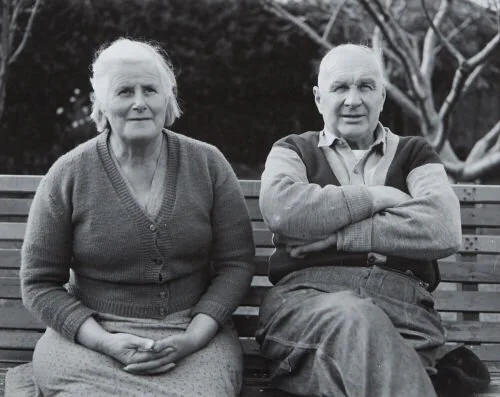
Lot 14. John B Turner, Mal and Freda Turner, Waiwhetu, Lower Hutt, 1968, gelatin silver print, 231 x 185mm. EST. $300—$500.
Working at the Dominion Museum and curating Nineteenth Century New Zealand Photographs in 1970 gave you a deep feel for the country's photographic heritage. How did that experience shape your interest in historical figures such as William J Harding?
My interest was there already. Harding is one of the most important NZ photographers deserving of exhibitions and books. His photographs are often raw, because he was working with the slow wet plate process under difficult conditions. But they are revelatory: colonial soldiers inside the bush, a tightrope walker crossing the river, Māori waiting outside the land office, and a partially blurred hui with colonial officials, all deserving of a mural print so every detail can be studied. Harding was a follower of Emanuel Swedenborg, who preached the idea that people all have guardian angels. He struggled financially and seldom processed his prints to prevent fading. To get closer to what his best preserved prints look like, I made some gold-toned printing-out paper (POP) prints from his negatives preserved by the Turnbull Library, among my favourites.
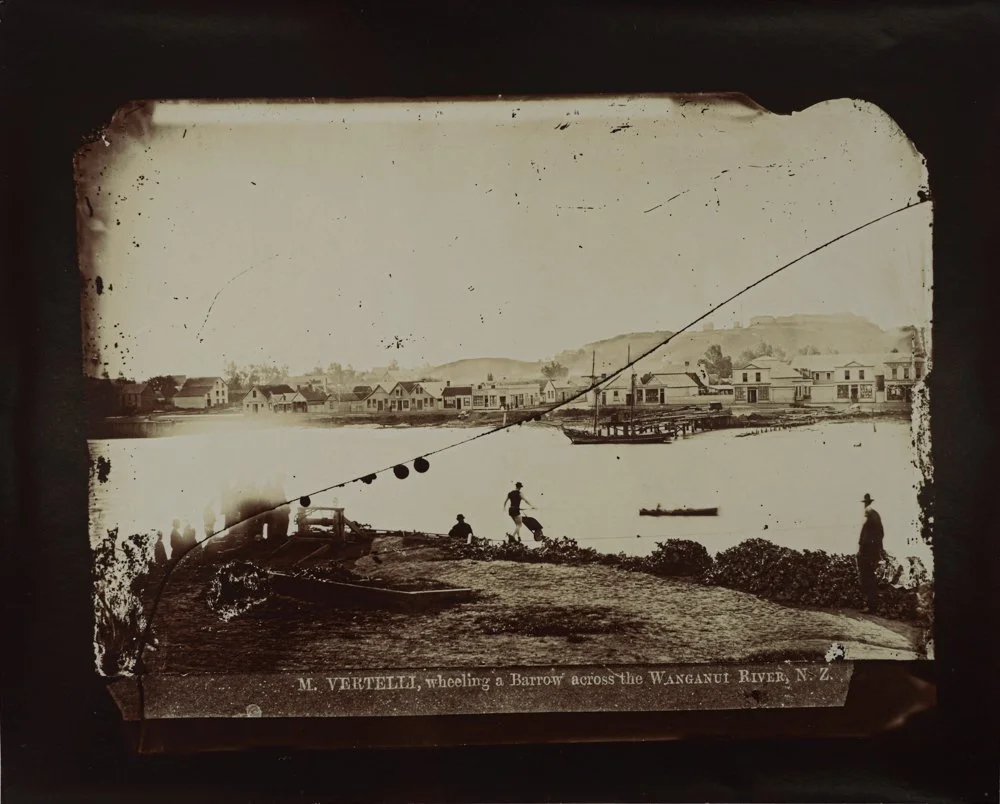
Lot 70. William J. Harding, Wheeling a Barrow Across the Wanganui River, NZ, gold toned photographic print, 250 x 200mm. EST. $400—$600.
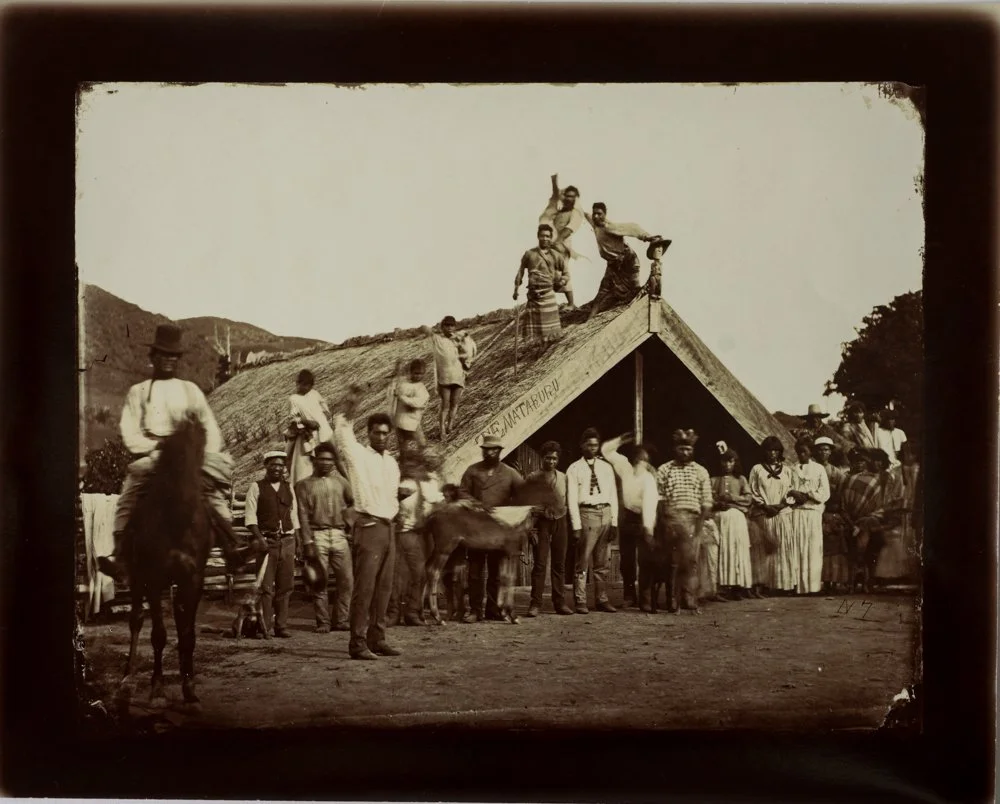
Lot 75. William J. Harding, Te Mataruru Marae, c1880s, gold toned photographic print, 250 x 200mm.
EST. $400—$600.
The collection includes American photographers Joseph D Jachna and Michael A Smith. How did you come to know their work, and why did it matter to you, and perhaps to your students, to have original prints by them in New Zealand?
Morrie and his wife Lynn were the most generous hosts for our family of four on our world tour during my first sabbatical leave in 1979–80. He was also a teacher and writer whose family had escaped the Nazi murder of Greek Jews. He introduced me to key photographers, curators and editors in California with some interest in learning what was going on in New Zealand photography. They included Van Deren Coke, who disparaged New Zealand as a minor socialist outpost (for which others criticised him loudly). Later on, Van Deren replaced British-born Bill Jay as my chosen overseas photo historian to tour NZ on a Fulbright lecture circuit, with his wife Joan (also a photo historian) during the 1989 sesquicentennial of the invention of photography. He proved to be a superb lecturer as well as an art critic and curator, and his provocation led me to prioritise research on Eric Lee Johnson and to accept his offer to study with Bill Jay at Arizona State University in Tempe on my second sabbatical in 1991.
I admired the work of Joseph Jachna and featured his Door County series in an issue of PhotoForum to provoke and challenge NZ photographers to take their own work to new levels. But I didn't meet him until we got to Chicago in 1980 and also met his teachers, Harry Callahan and Aaron Siskind. That's when we first met Michael A Smith, who was keen to visit NZ and gave me two prints as a reminder.
My advice to young artists is to make contact with their living heroes and see what might develop. Henri Cartier-Bresson and W Eugene Smith did not answer my letters, but other famous photographers, curators and critics did, to enrich my life. Some students and talented photographers become fast friends after receiving serious criticism, or unexpected praise, that inspires them to take their vision of the world more seriously.
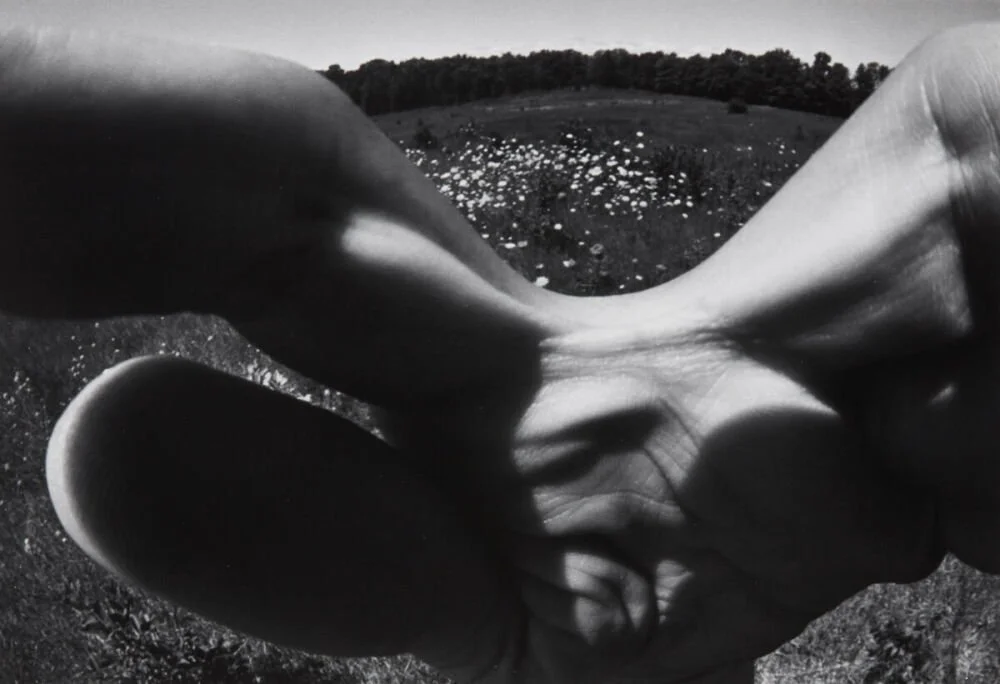
Lot 321. Joseph D Jachna, Door County Landscape, Wisconsin, USA, 1970, gelatin silver print, 93 x 134mm.
EST. $500—$1,000.
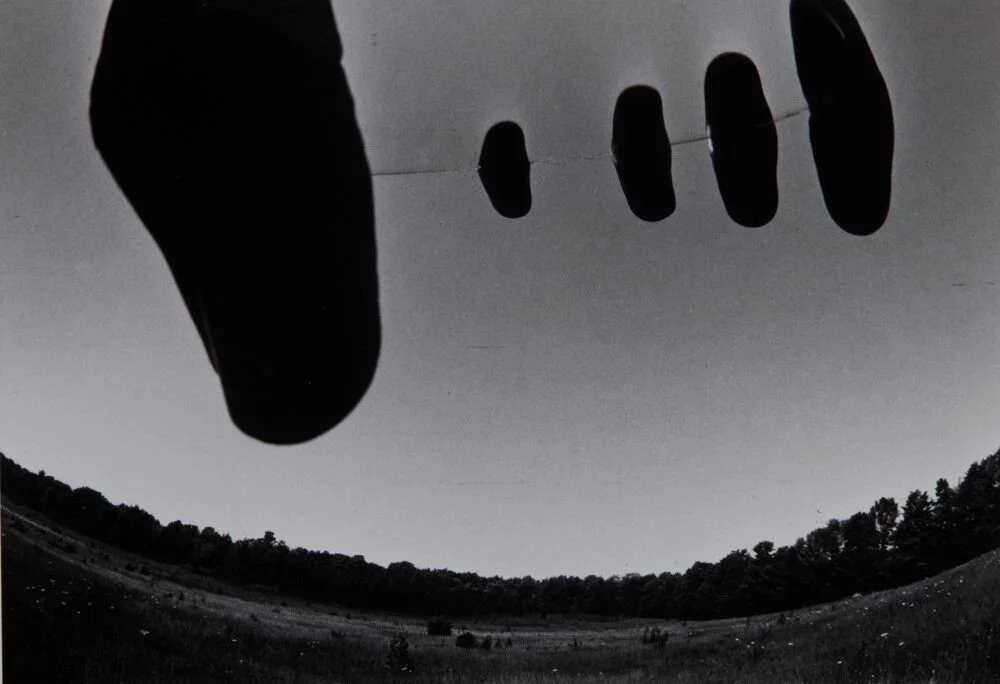
Lot 321. Joseph D Jachna, Door County Landscape, Wisconsin, USA, 1970, gelatin silver print, 127 x 187mm.
EST. $500—$1,000.
You have long argued for the importance of the original print. Why does it matter in an age when photographs are mostly seen on screens?
Reproductions, no matter how accurate, provide a kind of artificial intelligence when it comes to comparing them to an original object seen with its specific history and context etched into its 'itness'. Some monumentally groundbreaking images are tiny in scale, just as some large art works can be largely vacuous. A small vintage contact print studied under a magnifying glass can reveal more than the pixels of the electronic illusions we are bombarded with today. Which makes it all the more difficult to establish the authenticity of photographic images.
How did visiting and eventually living in China shape your collecting, and what should buyers know about the work of Fang Su, Wang Qing and the Chinese historical photographs?
I first visited China in 2007 with the object of seeing something of the country Tom Hutchins had photographed during his four-month visit in 1956, after years of working to reconstruct his internationally relevant essay and promote it. I met Fang Su, a distinguished art teacher from Wuhan, and also Wang Qing, then a talented but little-known photographer, at the Pingyao International Photography Festival, where I have presented half a dozen exhibitions of New Zealand photography since 2011, including the debut of Tom Hutchins’ China work in 2016, when Phoebe Li and I collaborated on the Chinese in New Zealand exhibition and book later re-presented for a New Zealand audience by the Auckland War Memorial Museum.
Fang Su sought my outsider's critical opinion of his work for his large book, and I helped Wang Qing place her essay on Turpan's Muslim community in the New York Times, which cemented her reputation in China. I purchased a few prints to help her and sold some in Auckland, but could not find buyers for Fang Su's exquisite digital prints, probably because he is unknown overseas and shares the same name as many younger photographers with online portfolios.
While I have met several hundred talented photographers in New Zealand over the years, I have found thousands of outstanding independent-minded practitioners in China deserving of recognition. But while China has leapfrogged ahead in telecommunications, trains and other transport, it lags behind much of the West in educated middle-class people who appreciate photographs as a serious means of personal expression. China today has many remarkable new museums but hardly any specialist curators in photography. It's difficult to see how the best private galleries that ask for high international prices will encourage potential collectors from the growing middle classes who are just starting to appreciate the medium as art. That is one reason why so many photographers in China hunger to test their work in the international art scene. And why the rest of the world needs to take more notice of photography from China.
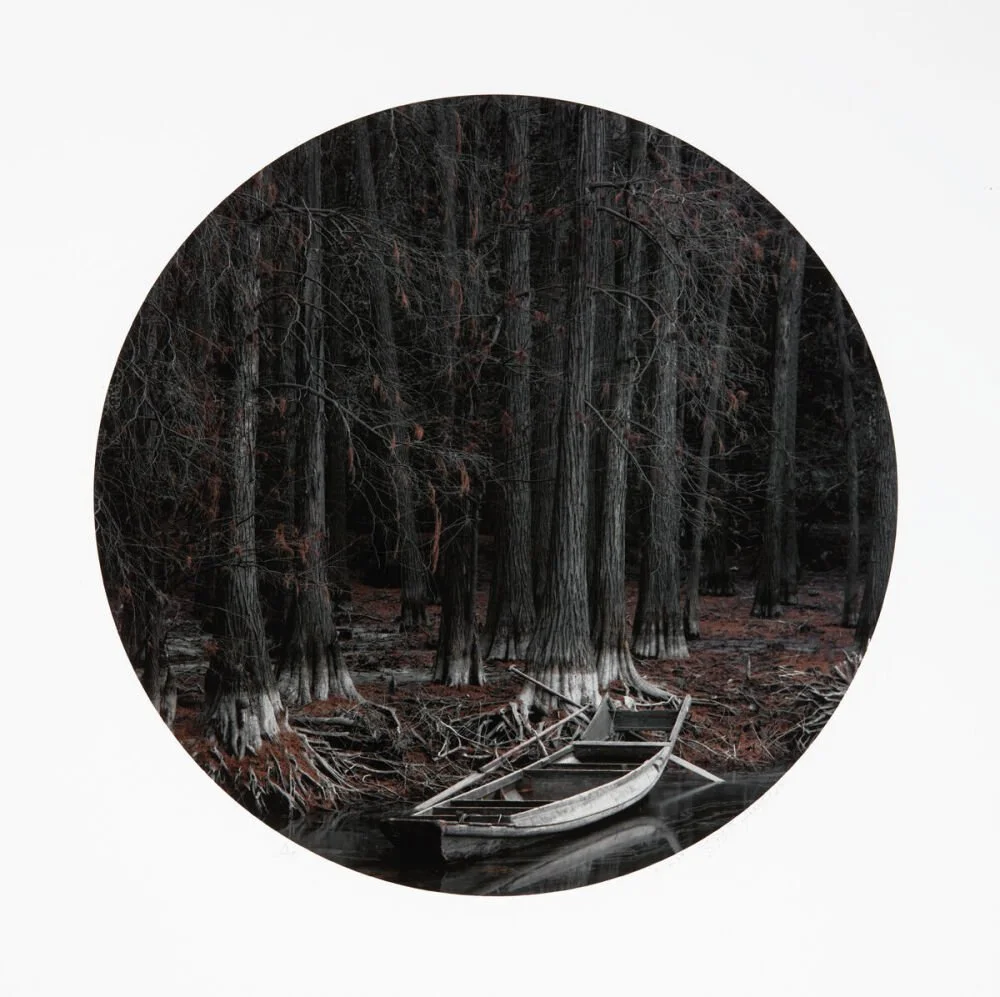
Lot 311. Fang Su, East Lake, China, 2015, inkjet print, 275 x 275mm. EST. $500—$800.
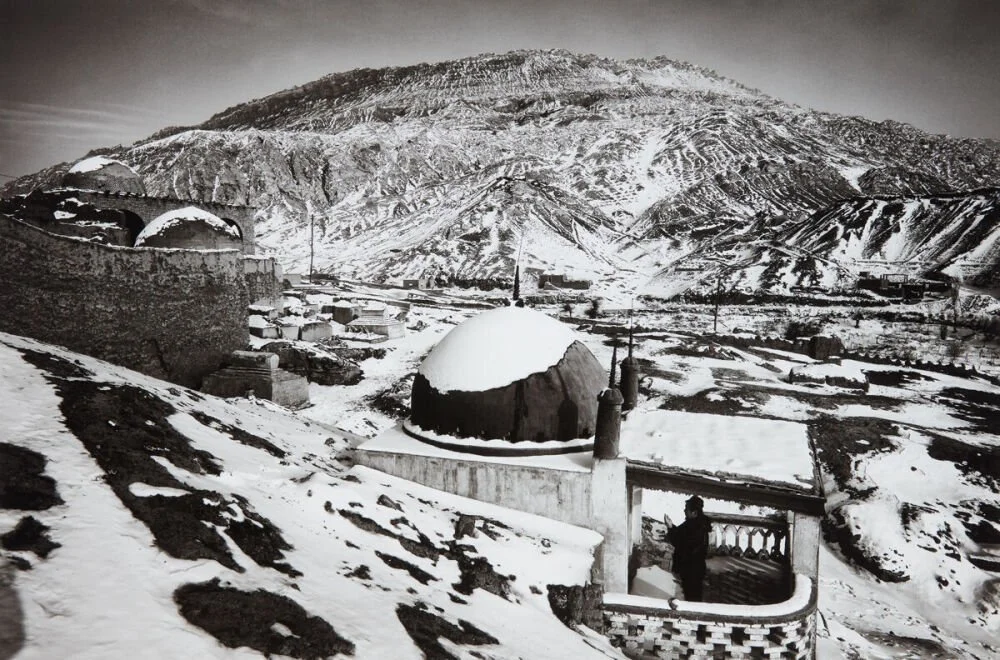
Lot 201. Wang Qing,Turpan, Xinjang province China, 2012, 260 x 390mm. EST. $500—$800.
Books and Publications
Your library was once described as second to none in New Zealand, and you were known for lending books and sharing knowledge freely. Which books were most borrowed or influential in the 1970s?
Dave Heath's A Dialogue with Solitude was particularly useful for John Daley, I think. The work of Julia Margaret Cameron, Dorothea Lange, Walker Evans, and The Daybooks of Edward Weston edited by Nancy Newhall—as well as every book by Weston—was popular, as I found when I persuaded Alan Preston, the founder of Unity Books, to stock the first Aperture monograph on Weston. Ansel Adams, Bill Brandt, Minor White, Harry Callahan, Paul Caponigro and Jacques-Henri Lartigue were among the favourites, as was Josef Sudek. Henri Cartier-Bresson was a top favourite along with André Kertész and Brassaï (Glenn Busch's major influence), alongside Diane Arbus, of course, and Bruce Davidson, Lee Friedlander, Garry Winogrand, Duane Michals, Danny Lyon and Larry Clark — the list goes on. Influenced by Creative Camera magazine and others, PhotoForum ran book reviews as a way of introducing our readers to the work of a range of photographers worth emulating.
The library covers photography, New Zealand art, Māori culture and history, regional studies and institutional histories. How did your interest in photography develop out of the histories?
I can't speak for others, but my teenage passion was the movies, when I wrote to stars and directors. I was also a keen reader. Dostoevsky, Dale Carnegie's How to Win Friends and Influence People, Janet Frame's novels and Maurice Shadbolt's short stories all influenced me. Dick Scott's picture history Inheritors of a Dream became important because he saw photographers as important witnesses to history in the making. Albert Wendt gave me good advice about writing when he told me: "Read everything from comics to the classics," and in some ways, especially to do with photography, that's what I've done. Magazines in particular, much as the internet is today, have been a vital means of bringing the world to my doorstep.
Webb's Single Owner Collections span Fine New Zealand Art, Asian Art, Collectors' Cars, Motorcycles & Automobilia, Decorative Arts, Fine Jewels, Watches and Luxury Accessories. Our experience and expertise in this field are unrivalled. Contact our specialists for a complimentary appraisal, to discuss your auction needs or should you require a valuation.
8—15 October
The Personal Collection of John B Turner
—Online Auction
Online Auction
8—15 October
Bidding Closes
Thursday 15 October, from 8pm
Contact
Tina Tian | Administrator
[email protected]
+64 22 342 5610