
In Conversation with Terry Stringer, Founder of ‘The Group’
Sculptor Terry Stringer founded The Group in 1981, a weekly gathering of artists drawing from the live model. Webb's Art Online auction (9–14 October) has a number of lots created by members of The Group. Lily McCowan, Specialist, Art Online, speaks with Stringer about the collective's history, its members, and how the figure continues to feature in his sculpture.
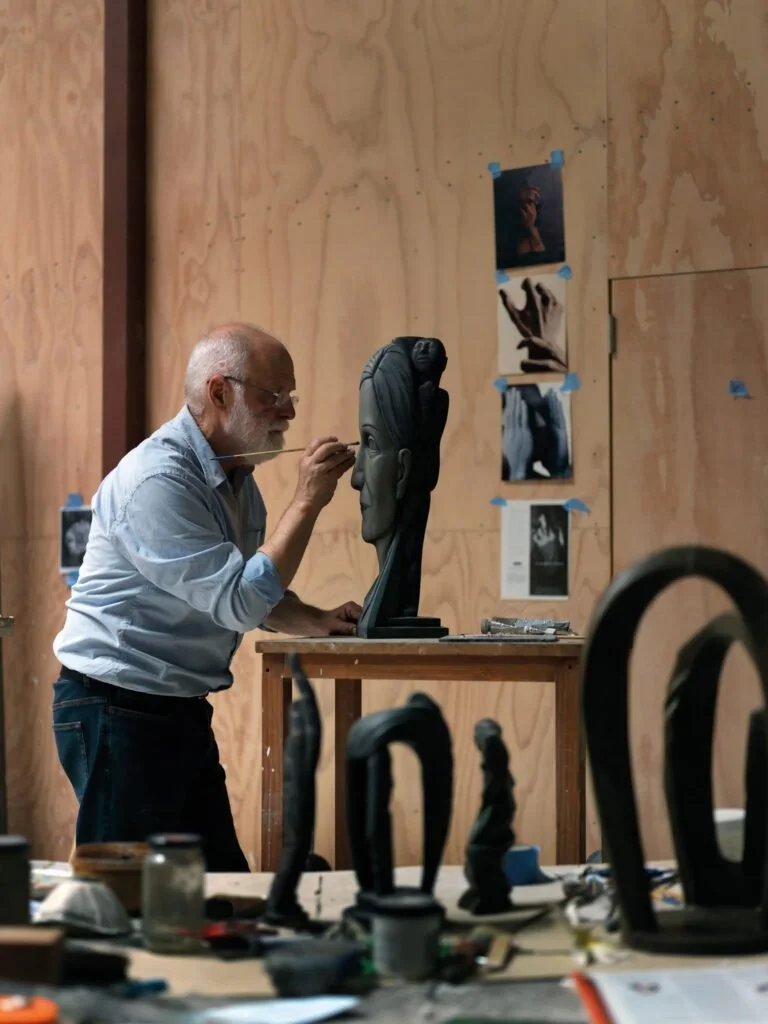
Photo by Jane Ussher MNZM, commissioned for Stringer: The Art of Terry Stringer (2026) edited by Linda Tyler, published by Massey University Press
Better known as a sculptor, Terry Stringer founded an informal collective of social and professional artists who would gather regularly to draw or paint from live models. In the catalogue for the Art Online auction (9–14 October), Webb's is offering a selection of works by some of the artists from this troupe that came to be known as 'The Group'. Lily McCowan, Specialist, Art Online, spoke to Terry Stringer about the group's history, its members, and the place of the figure in his own practice.
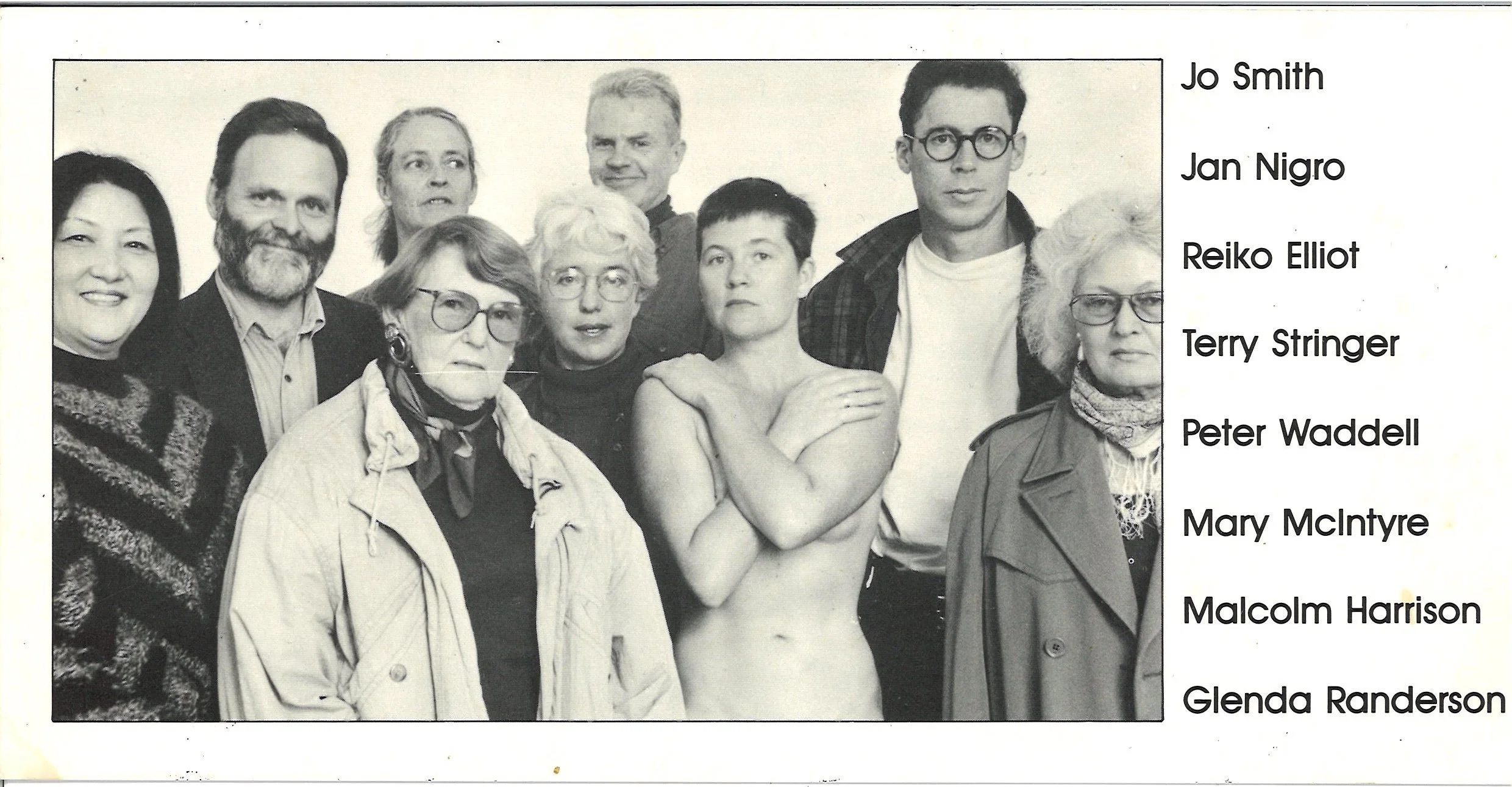
Founded by Stringer in late 1981, The Group met weekly to draw untutored from the model. Early members included Jan Nigro, Mary McIntyre, Glenda Randerson, Jo Smith, Margaret Lawler-Bartlett and Sylvia Siddell, although the roster is much larger. Unlike many life classes, silence was discouraged in favour of robust debate and animated friendships, and the sessions moved from Stringer's Mount Eden living room to a Queen Street gallery, an Epsom ballroom and a Ponsonby community centre.
Their emphasis was on the human form, painted from live models, something fairly progressive at a time when the nude was not a common subject in New Zealand. As The Group member John Andrew notes in the 2010 documentary Under the Skin, landscape occupied the working lives of many noted artists "whereas the nude hasn't". For Nigro, the nude offered a way to look "beyond the skin" at the social, sexual and psychological complexities of the sitter.
In this conversation for Webb's, Stringer reflects on the blend of friendship and discipline that sustained the group, the collaborations and joint exhibitions that followed, and the divergent paths its members took, from Randerson's portraiture to McIntyre's use of photography. He also explains how years of drawing the figure inform what has become his mainstay: sculpture.
Within the catalogue for October 2026's Art Online, Webb's is offering artworks by The Group members Mary McIntyre, Reiko Elliott, Jo Smith, Jan Nigro, Glenda Randerson and Terry Stringer himself.
INTERVIEW
Lily McCowan: Where did The Group begin, and where did it meet?
Terry Stringer: It might have begun in my living room on Mount Eden Road in the 1980s. I know we did draw there for a while, but it's been in so many venues over the years, with so many different people involved. For a long time, one of the members was very good about letting us use various spaces he was occupying: the Customhouse, and then his gallery on Queen Street, where the theatre is now.
Who were the core members of The Group? Art Online includes works by Mary McIntyre, Rayko Elliott, Jo Smith, Jan Nigro, Glenda Randerson and yourself, but I hear there were other people too.
I think you've got the core there… the people who saw it right through every incarnation, particularly Jan, who had the ability to focus and produce something she considered a finished work from The Group. Most of us were there for a mixture of reasons, including the friendship and the chatter, which was important to some of us, and also the practice of drawing the figure. It really does take 5,000 hours [or so] to become a master able to draw the figure.
New Zealand art is well known for landscape, and the nude was still uncommon around the time you started The Group. Why does the nude, and the figure more broadly, matter to you and your work?
New Zealand didn't really want to see the nude in its exhibitions for quite some time, but it's the great challenge for a subject to work from. The thing about drawing the figure, whether the nude, the portrait or the clothed figure, is that every mark you make is very telling, and so it's a very expressive subject to work with. A landscape can be taken in a lot of directions; it can become more abstract or more real. With the figure, we're very attuned to judging exactly what the artist has done, and I think that is the great challenge in mastering what you want to do when you draw.
What friendships came out of The Group? Did you collaborate outside the sketching sessions?
Yes, there would have been various combinations of collaboration and exhibiting together, and maybe a little bit of working together. I know Mary McIntyre and I made joint works. The Group, in its various incarnations and under its various titles, also had its own little exhibitions. It was the ‘Wednesday Group’; it was called ‘The Tuataras’ once, believe it or not. But basically, it was a group of friends who liked to hear each other's opinions and news, and we discussed the exhibitions that were on at the time, rather like a book club might.
Or perhaps like an art collectors' group?
That too, yes. Certainly interested in what other artists were doing, current practice.
What is the legacy of The Group that you would like to communicate to younger generations, and where have its members' practices gone?
Well, I suppose the work has gone off in lots of different directions. Some of the artists have stayed strongly with figures related to our group practice. Glenda Randerson has pursued a practice of portrait work, concentrating on people she finds interesting to have a portrait of. Jan had the skill to turn everything she touched into a serious work. She would take what was obviously a pose set by a model and, as she's done in this work, make it into an artwork. She's done a rubbing of some kind to make an interesting texture here; she always talked about texture as something she sought. You've got Jo Smith doing one of her very bold, strong study works. She worked large and quite bold. And Mary McIntyre, with her sharp eye for detail and for picking things up, and using photographs as well as her direct drawing. This is her take on a little wedding that happened at Waiheke, and Jan is standing there as an important figure, with other things happening around her. So you've also got a piece of mine.
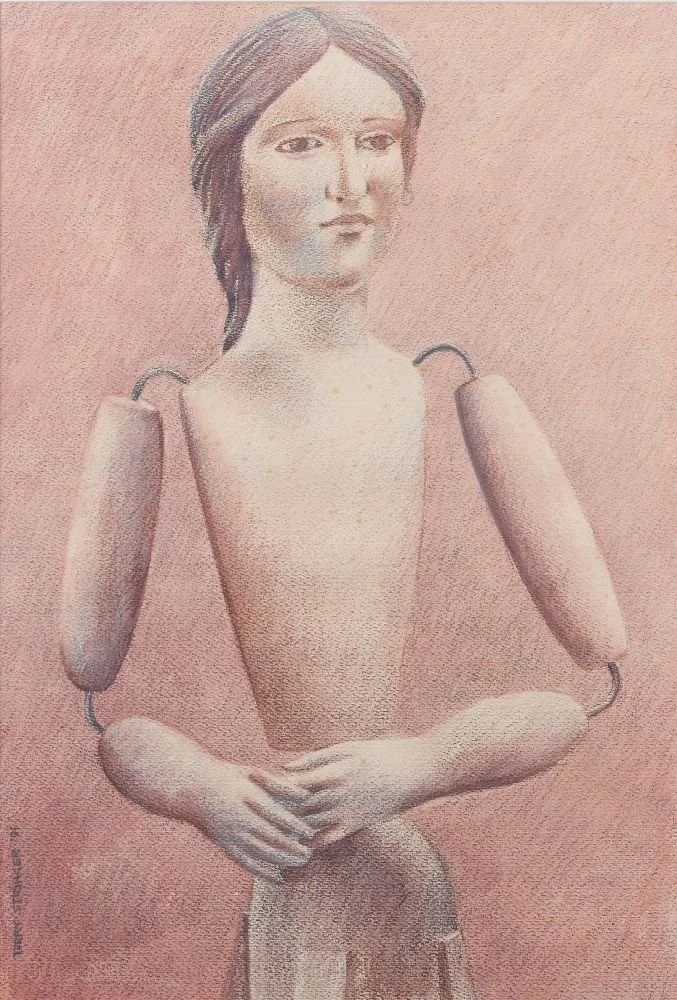
Lot 4. Terry Stringer, untitled, 1991, pastel on paper, 550 x 375mm
EST. $500—$800
Should we talk about your own work in the sale? I was always interested in the juxtaposition of Jan Nigro's work using one of your dolls, and then another doll work of yours here.
Indeed. This hints at my susceptibility to picking up objects and inspirational things to draw. This is something I did at one period: turning a study work into a finished drawing. It's a little crib figure, a Neapolitan figure that would have been dressed in cloth and put into a Christmas pageant crib back in the 19th century. Jan has drawn a jointed doll, because both of these show my interest in collecting pieces that have joints and functions. It's also not clothed, because it's the actual working body that interests me.
How does life drawing lead into your sculpture? Is the body the jumping-off point?
TS: It's the body, and it's the endless drawing of the figure that gives me the background knowledge to create the shapes I want to make my sculpture into. So the jumping-off point is the knowledge and the experience, and knowing what I want from the figure. Sometimes it's a modelled pose; sometimes it's an object I've taken into the sculpture. But the life drawing was a wealth of experience that I could draw on.
Did any of the drawings you did in the group turn out to be sculptures?
No. It can't have been very often, because nothing really comes to mind. The drawings would hint at what I wanted, and sometimes I would set a pose that I could use in a sculpture, but really the sculpture was its own thing. I didn't like to use a real model, except for portraits, because they take over the work, as they have done with Jan. It's the model that really owns the work, whereas I wanted the figure to be something I was imposing my ideas onto, so I didn't give it its own identity.
And just a last question: Any anecdotes that capture the spirit of The Group?
Well, there are people who, when they do life drawing, want to do it in total silence and concentration, and I'm afraid our group tended to be more a group of friends who needed the opportunity to share their lives, so we did tend to talk a little. We had members who joined The Group and then found that it wasn't really their group. That might give you a picture of The Group. For artists who are normally on their own in their studio, a wonderful thing to do each week.
A selection of work from ‘The Group,’ from the Art Online October Auction.
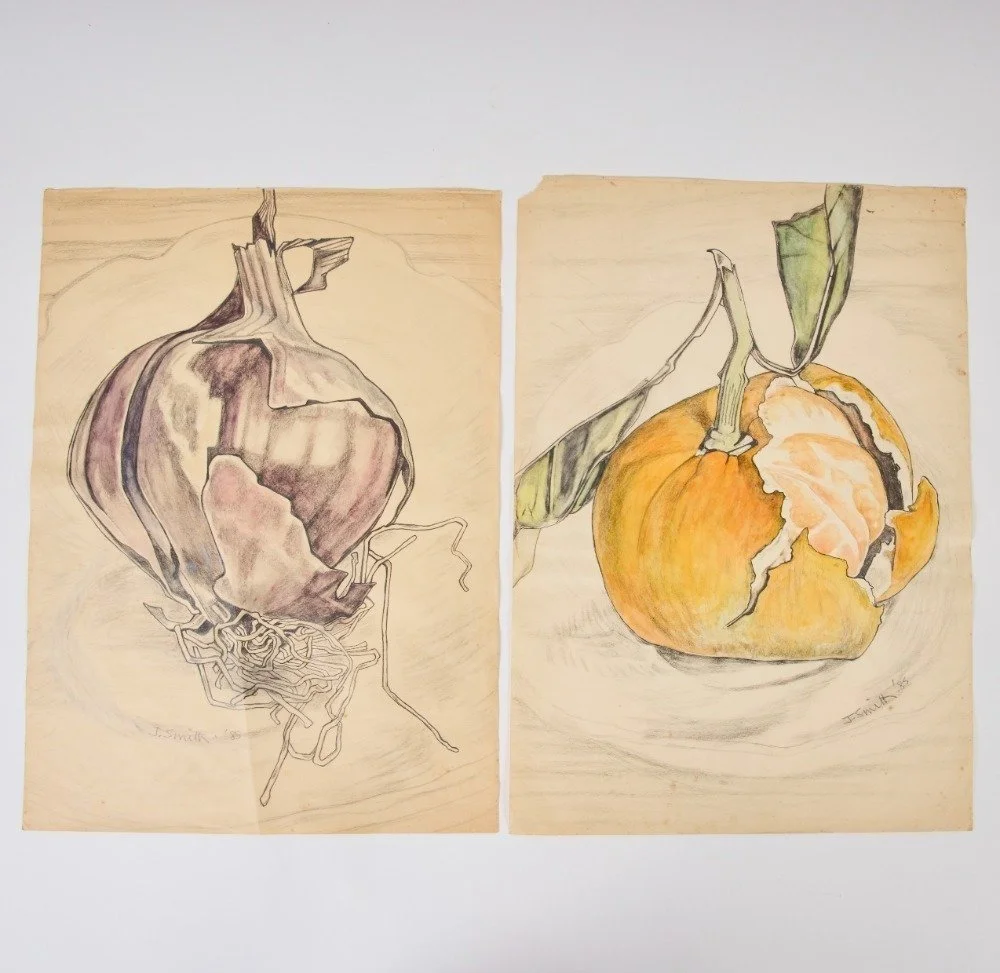
Lot 86. Jo Smith, Two Drawings, 1985, graphite and coloured pencil on paper, 575 x 420mm.
EST. $100—$200
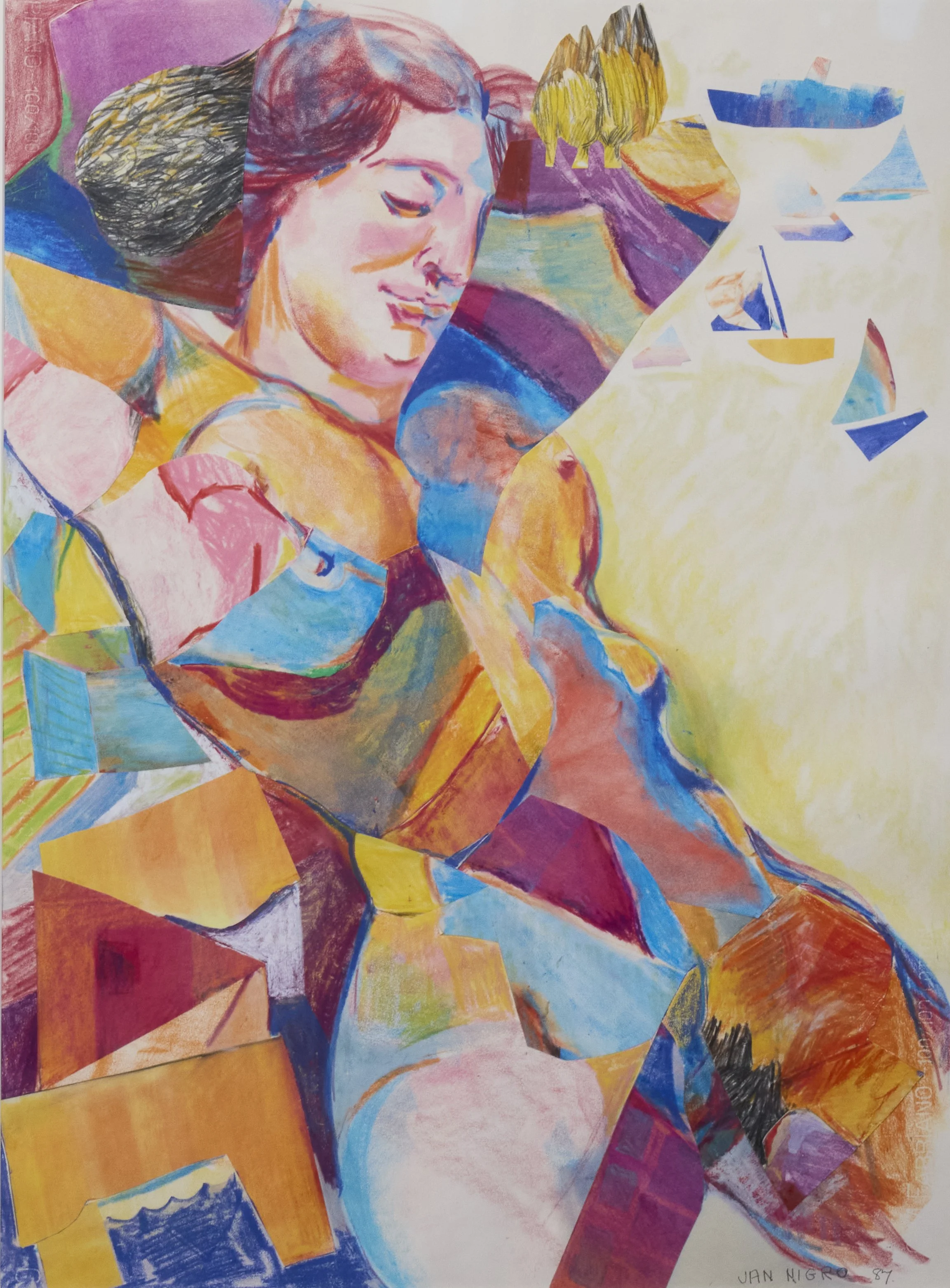
Lot 27. Jan Nigro , untitled , 1987, pastel on paper, 740 x 550mm.
EST. $800—$1,650
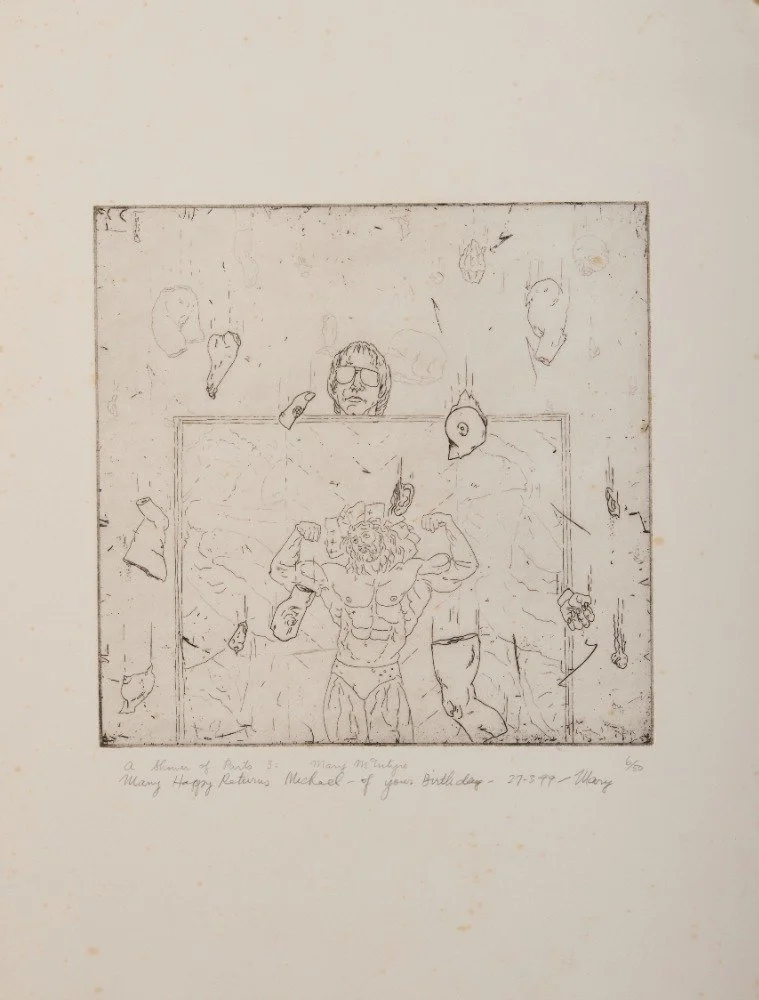
Lot 98. Mary McIntyre, A Shower of Parts 3, 1999, etching, 465 x 380mm.
EST. $200—$400
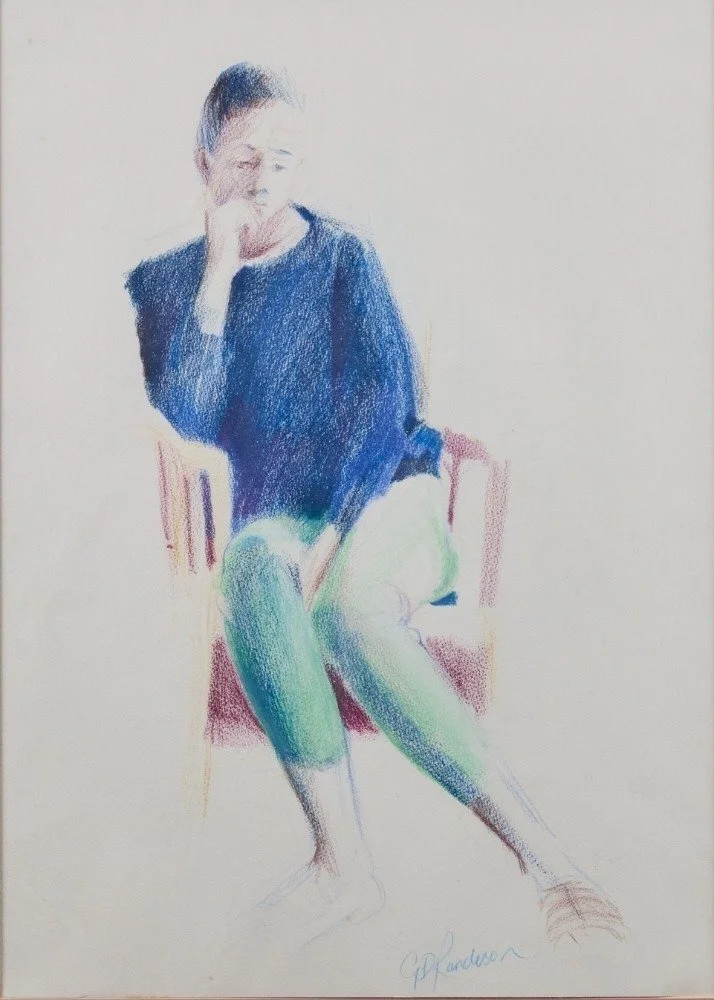
Lot 84. Glenda Randerson, untitled , coloured pencil on paper, 495 x 355mm.
EST. $300—$400
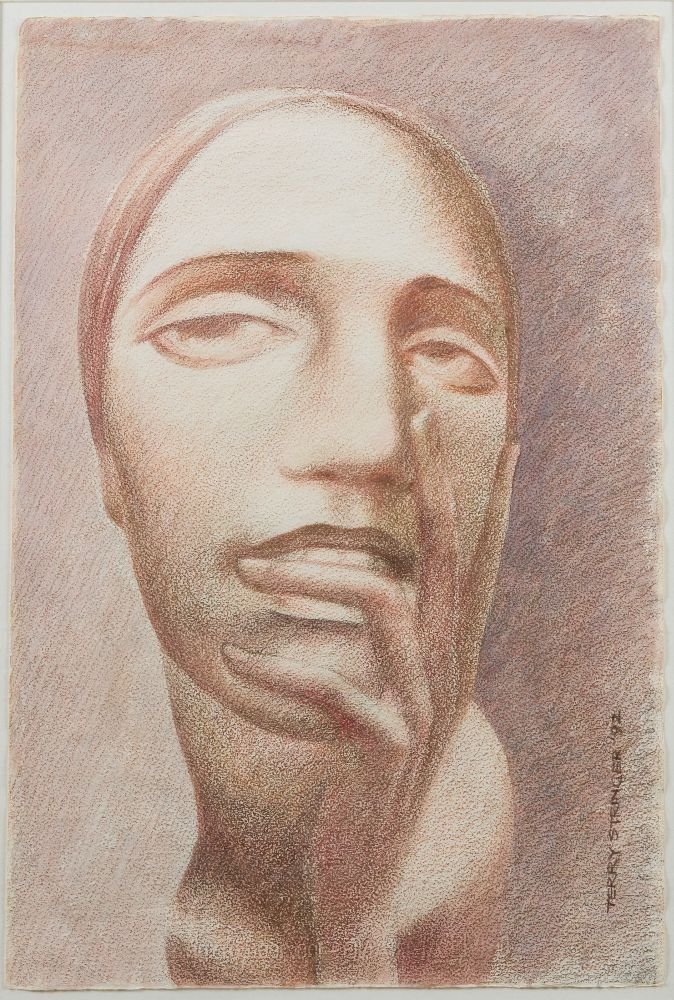
Lot 95. Terry Stringer, untitled , 1992, pastel on paper, 565 x 380mm.
EST. $600—$1000
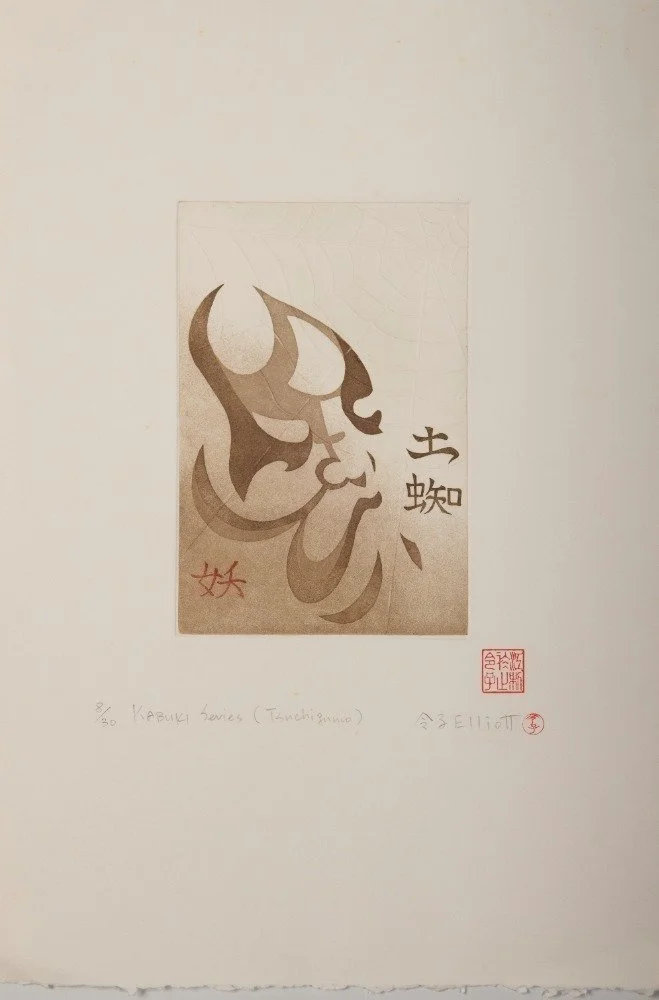
Lot 104. Reiko Elliot , Tsuchisumo (from the Kabuki series), intaglio print, 575 x 380mm.
EST. $100—$200
Art Online
Online Auction | 9–14 October
Art Online offers an accessible opportunity to begin or expand an art collection, presenting a broad selection of works at a variety of approachable price points. Each auction brings together artworks spanning all mediums and eras, from historic to contemporary prints, paintings, drawings, sculptures and more. This makes it an ideal entry point for new collectors and a rewarding browse for seasoned buyers. Designed for flexibility and ease, bidding takes place online, with viewings available by appointment at our Auckland gallery. Art Online encourages discovery, confidence, and considered collecting, offering the freedom to engage with art on your own terms.
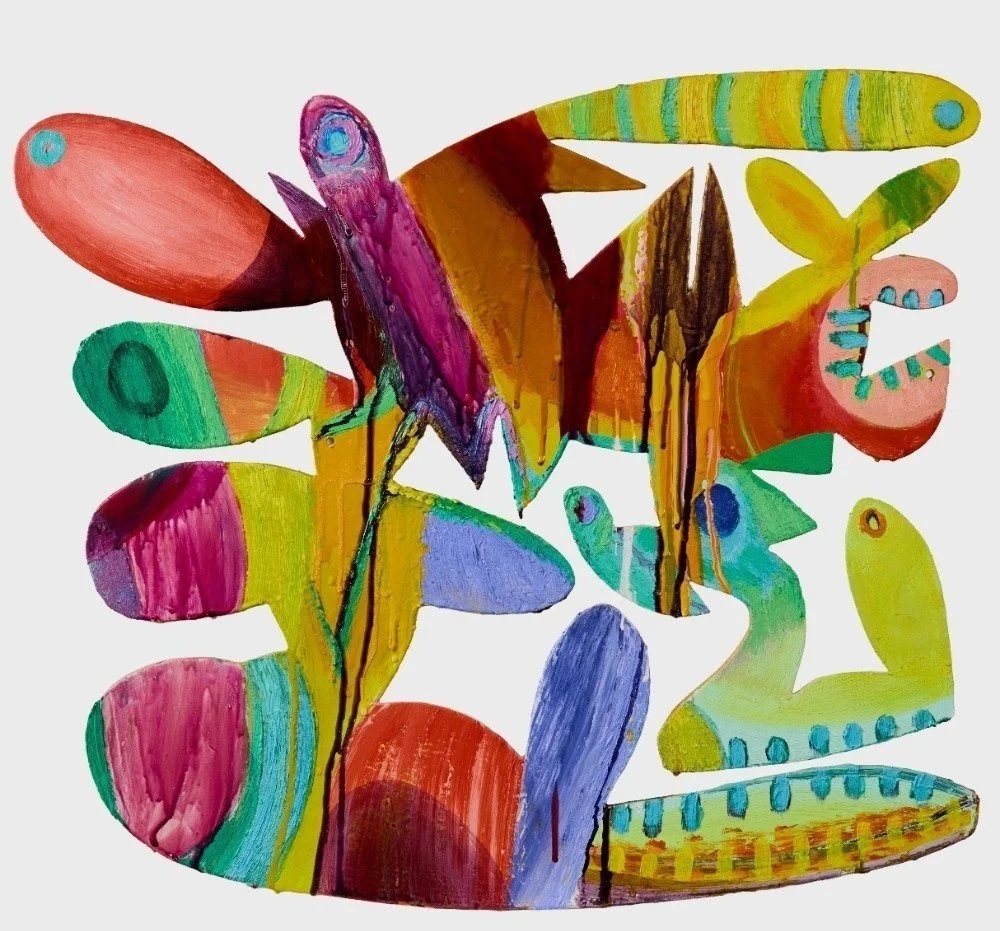
Lot 12. Robert McLeod untitled 2000 oil on wood signed and dated 520 x 600mm.
EST. $1,000—$2,000
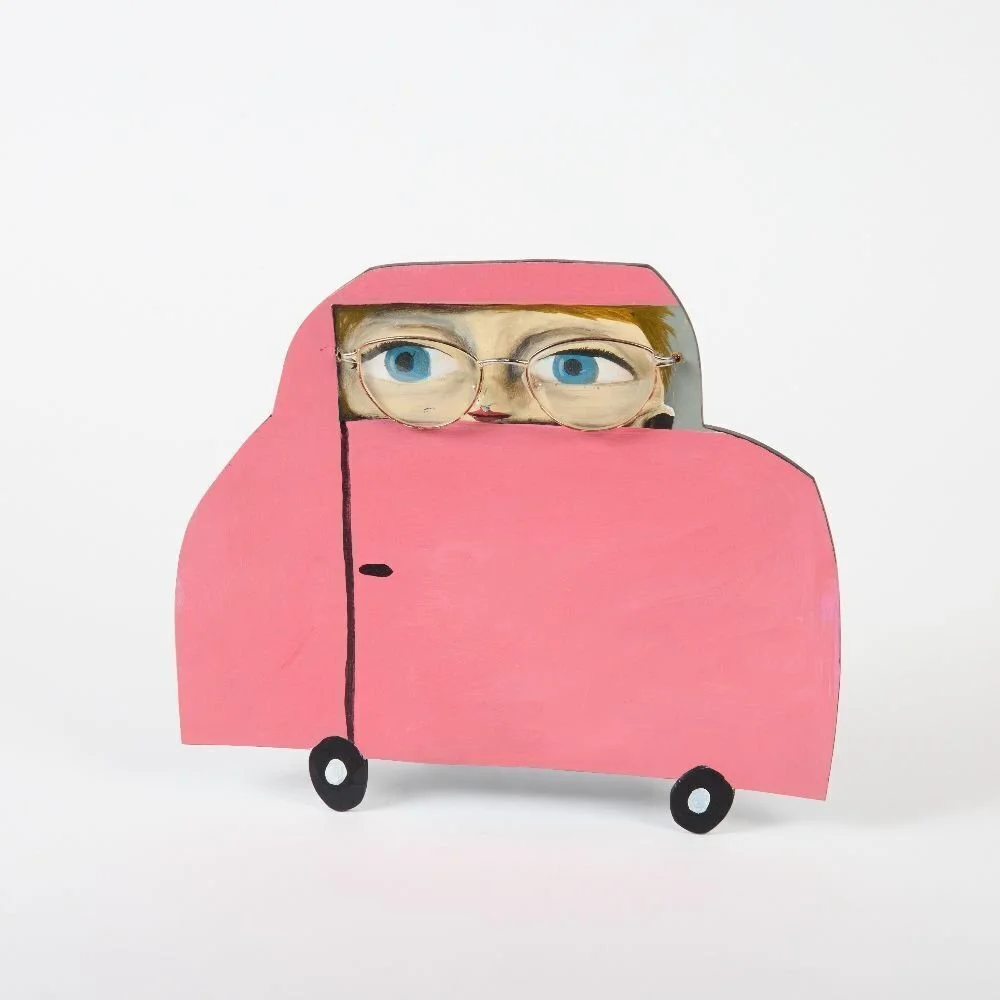
Lot 21. Robyn Gibson, Untitled (pink car) , c2014 acrylic, lacquer and found glasses on wood, 265 x 225mm.
EST. $400—$800
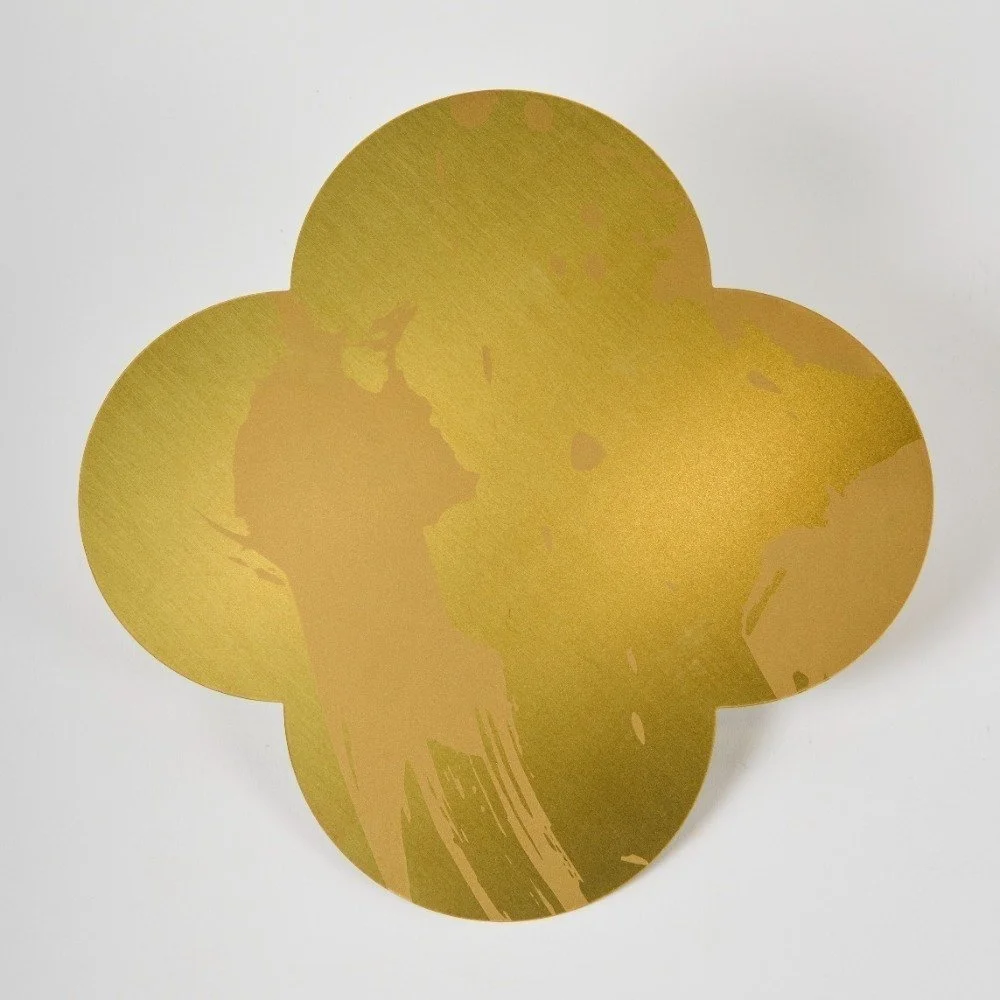
Lot 59. Max Gimblett, Remembrance , 2015, Hand-screenprinted brass quatrefoil, 250 x 250mm.
EST. $1,800—$3,000
9—14 October
Art Online
—Online Auction
On View & View By Appointment | 9—14 October
33a Normanby Road, Mount Eden, Auckland
webbs.co.nz
Contact
Lily McCowan
Specialist, Art Online
[email protected]
+64 22 068 4932