
After more than a decade caring for a university art collection, Sophie Thorn has joined Webb’s Wellington as Art Specialist. She talks about close looking, provenance, first purchases at auction and why caring for art is often about small, consistent habits.
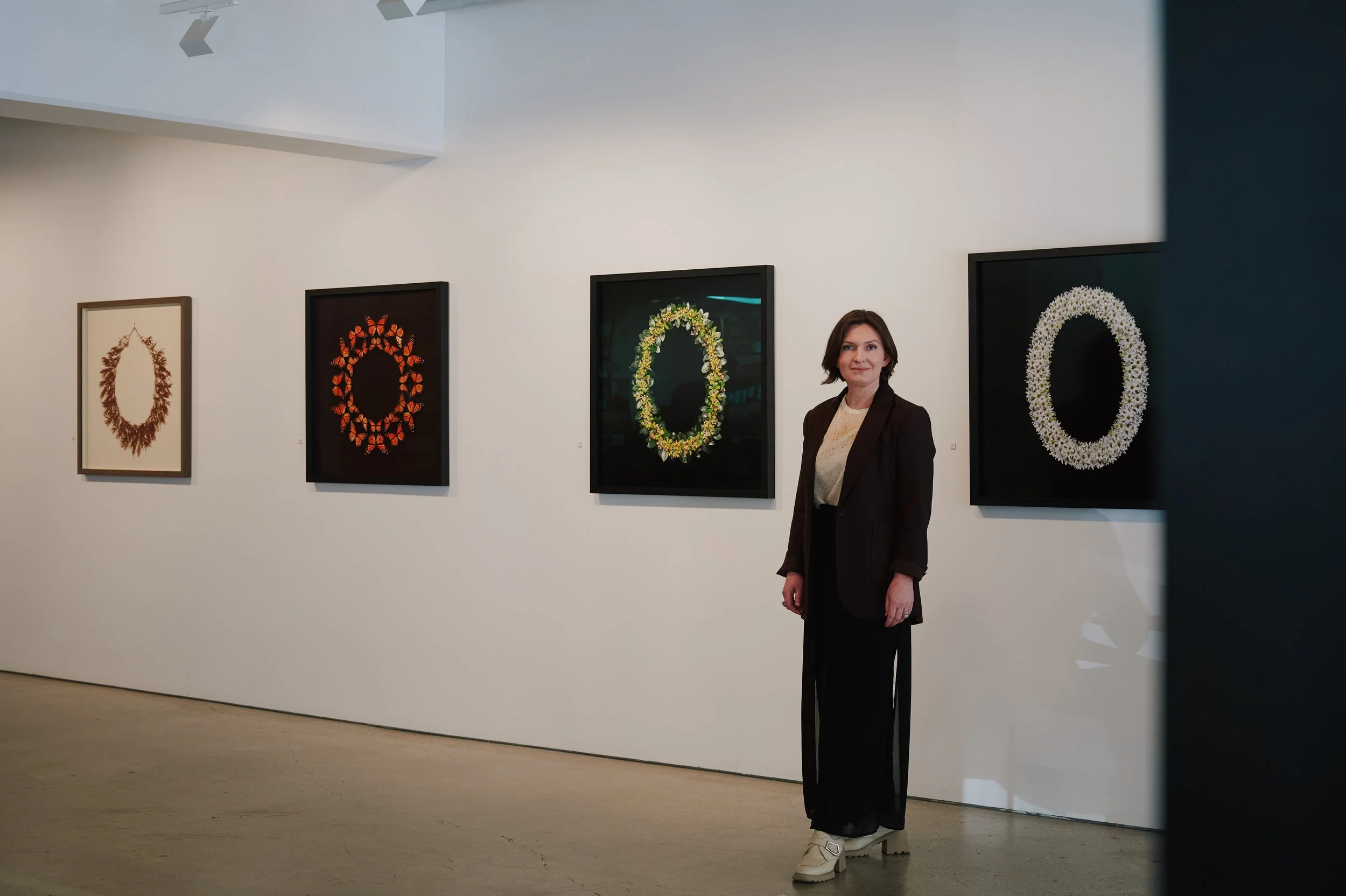
From whale vertebrae to Colin McCahon, Sophie Thorn has built a career on paying close attention to the object in front of her. We speak to Webb’s new Art Specialist in Wellington about collections, curating and life on the other side of the gallery wall.
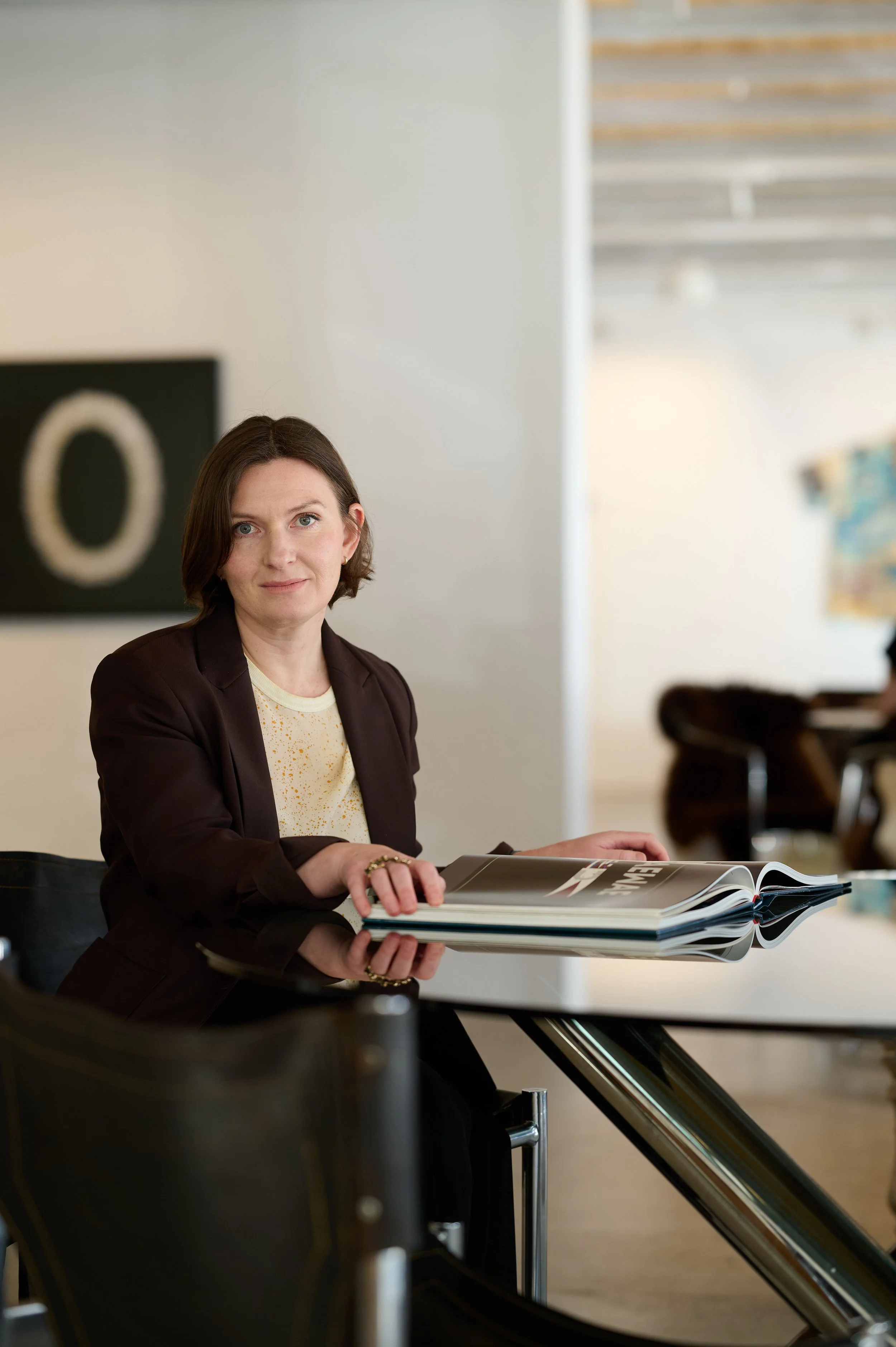
Sophie Thorn at Webb’s Wellington. Photo by Adrian Vercoe.
Sophie Thorn joined Webb’s Wellington after more than a decade at Te Pātaka Toi Adam Art Gallery, where she cared for Ngā Puhipuhi o Te Herenga Waka (the Victoria University of Wellington Art Collection) and spent 16 months as Acting Director. Her career began as a collection technician at Canterbury Museum and later took in heritage materials science.
Webb’s: Welcome to Webb’s, Sophie, and congratulations! What drew you from the public gallery to the auction house, and what excites you about the role?
Sophie Thorn: Thank you! What appealed to me was the opportunity to approach art from a different perspective. In a public gallery, particularly one like the Adam, you’re thinking about how works might be understood and shared through exhibitions, research and the collection. At an auction house, you encounter another part of their lives: the people who have lived with them, the stories they’ve accumulated, and where they might go next.
I’m excited by that combination of close looking, research and conversation. There’s the pleasure of discovering something unexpected, but also of helping someone find a work they really connect with. For me, it’s a change of context rather than a change in what interests me about art.
Your path into the art world has been unusual: from making dust covers for blue whale vertebrae at Canterbury Museum to studying metallurgy in Prague. How has that hands-on, scientific grounding shaped the way you look at and assess works of art?
Making dust covers for whale vertebrae might seem a long way from looking at a painting, but both start with paying attention to the object in front of you! That practical experience encourages you to look carefully before making assumptions. Art history was my first love and what I studied at university. I went back to study Heritage Materials Science and ended up doing metallurgy at the Chemical Institute of Technology while studying art conservation after working as an art gallery registrar.
Though I wouldn’t describe myself as a scientist, I do think a bit of scientific grounding adds another set of questions: what is this made of, how was it put together, and how has it changed over time? A surface, a support or an old repair can tell you something that isn’t immediately apparent from the image alone. I like bringing those observations into conversation with art history. Understanding how something was made doesn’t diminish its mystery; it often makes it more interesting.
Your projects have ranged from Colin McCahon’s Gate III to a Charles Spencer cyanotype. Which New Zealand artists, works or periods do you keep returning to, and why?
I’m drawn to works that reward returning to them, where spending more time looking changes what you notice. Gate III offers that on an extraordinary scale, while a cyanotype captures a moment in time and can draw you into something much smaller and more intimate. Both are thrilling in their own way. I wouldn’t necessarily confine my interest to one period or medium. I wrote my master’s on a short video work by French artist Sophie Calle that I saw at the 2007 Venice Biennale. That year she was also the representative for France and had the entire French Pavilion full of her work. Sometimes it’s the ambitious, familiar work that holds your attention; sometimes it’s a quieter object that opens up an unexpected line of enquiry.
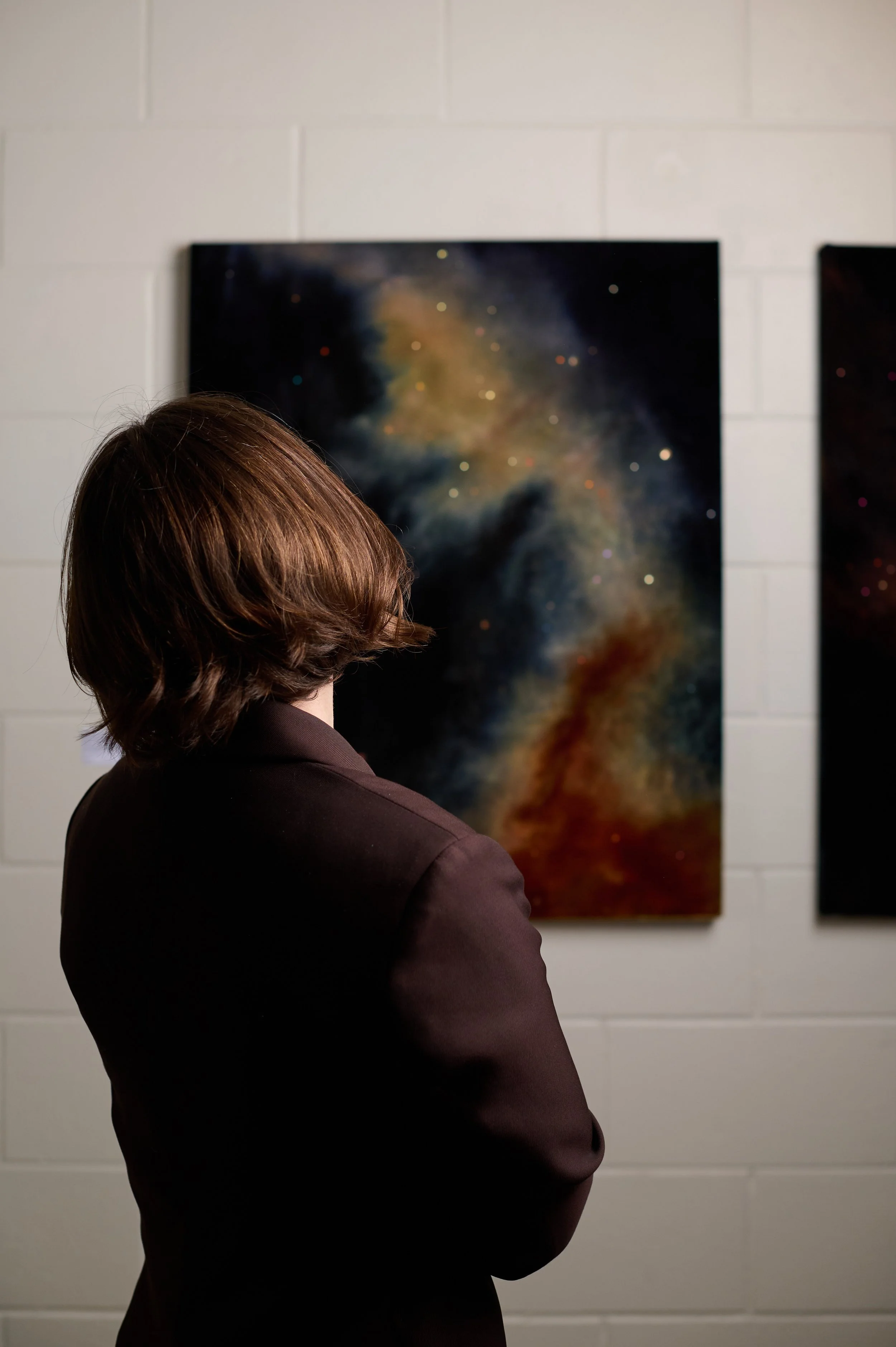
Do you collect art yourself, and what advice would you give someone making their first purchase at auction?
I have a little collection forming. My husband and I like to purchase a piece each year for our wedding anniversary. He has similar tastes to me, luckily!
For a first purchase, I’d encourage people to spend time looking and asking questions. If you can, see the work in person: scale, surface and colour can feel quite different from an image online. Ask about its condition and history, make sure you understand the auction terms and the full cost, and decide on a comfortable limit beforehand.
Above all, give yourself time to work out what interests you. You don’t need to have a fully formed collection, or know everything, before you begin. Buy what you like, but buy the best version you can afford.
You also hold a Diploma in Law and Collections Management from the London Institute of Art Law. What led you to study art law, and how do questions of provenance, title and ethics play out on the secondary market?
Working with collections brings you into contact with questions that looking closely at an object alone can’t answer. “Who owns this?” is sometimes a more complicated question than you might imagine. Studying art law rounded out my role caring for an art collection, alongside the practical, art-historical and curatorial aspects of my work.
On the secondary market, it’s important to distinguish between the history of a work and the seller’s right to sell it. Provenance helps us understand its journey, while title concerns legal ownership. That means asking questions, looking carefully at the available documentation and being transparent about what is known, and what isn’t. Good due diligence is an essential part of responsible art transactions.
For me, ethics means being prepared to look beyond whether a transaction is legally possible and ask whether it is appropriate. Those enquiries aren’t separate from appreciating an artwork; they’re part of understanding it.
At the Adam, you described hanging works across the university campus as “curating in the wild”. What did that teach you about how art lives in everyday spaces, and what advice would you give collectors on hanging and caring for the works they own?
Aha! I have just been reflecting on this phrase as I am working on an essay for a book I am editing with Professor Susan Ballard. This book, Field Guide to Ngā Puhipuhi o Te Herenga Waka, is due to be published next year and is about the university art collection. “Curating in the wild” was a way of acknowledging that a university campus isn’t a controlled gallery environment. People encounter works on their way to a lecture, in an office or while waiting for someone. I like the idea that art can become part of someone’s daily landscape without them having set out to look at it.
It also makes you think about the relationship between a work and its surroundings. For collectors, I’d suggest starting with where you’ll actually spend time with a work, rather than simply finding an empty wall. Consider the sightlines, the furniture and what’s hanging nearby. There isn’t one arrangement that works for every home.
Then balance that enjoyment with the needs of the object. Keep conditions as stable as possible, avoid direct sunlight and positions close to heaters or fireplaces, and seek advice on framing and installation where needed. If you notice a change in condition, ask a conservator rather than attempting a repair yourself. Caring for art is often about thoughtful placement and small, consistent habits.
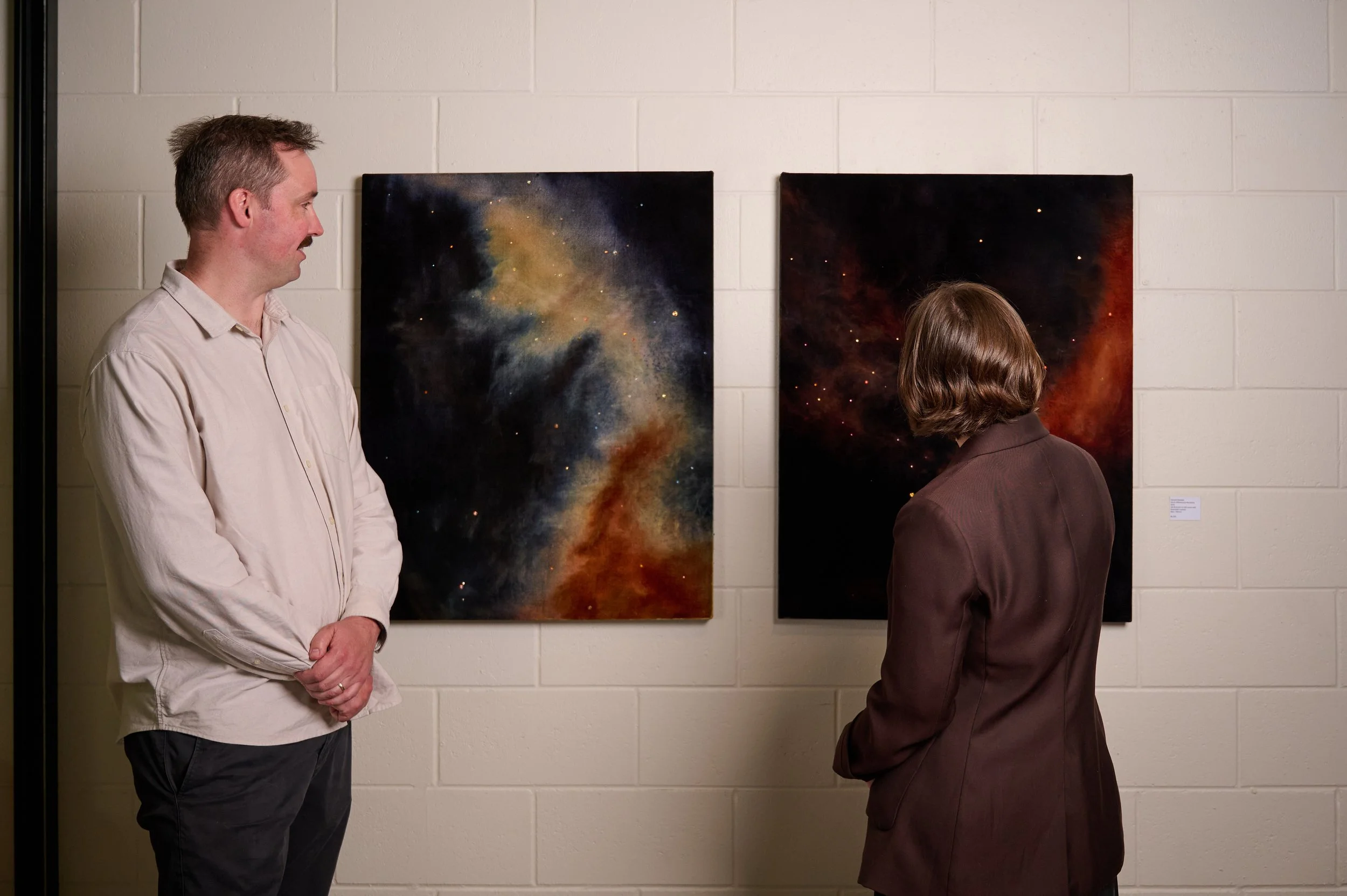
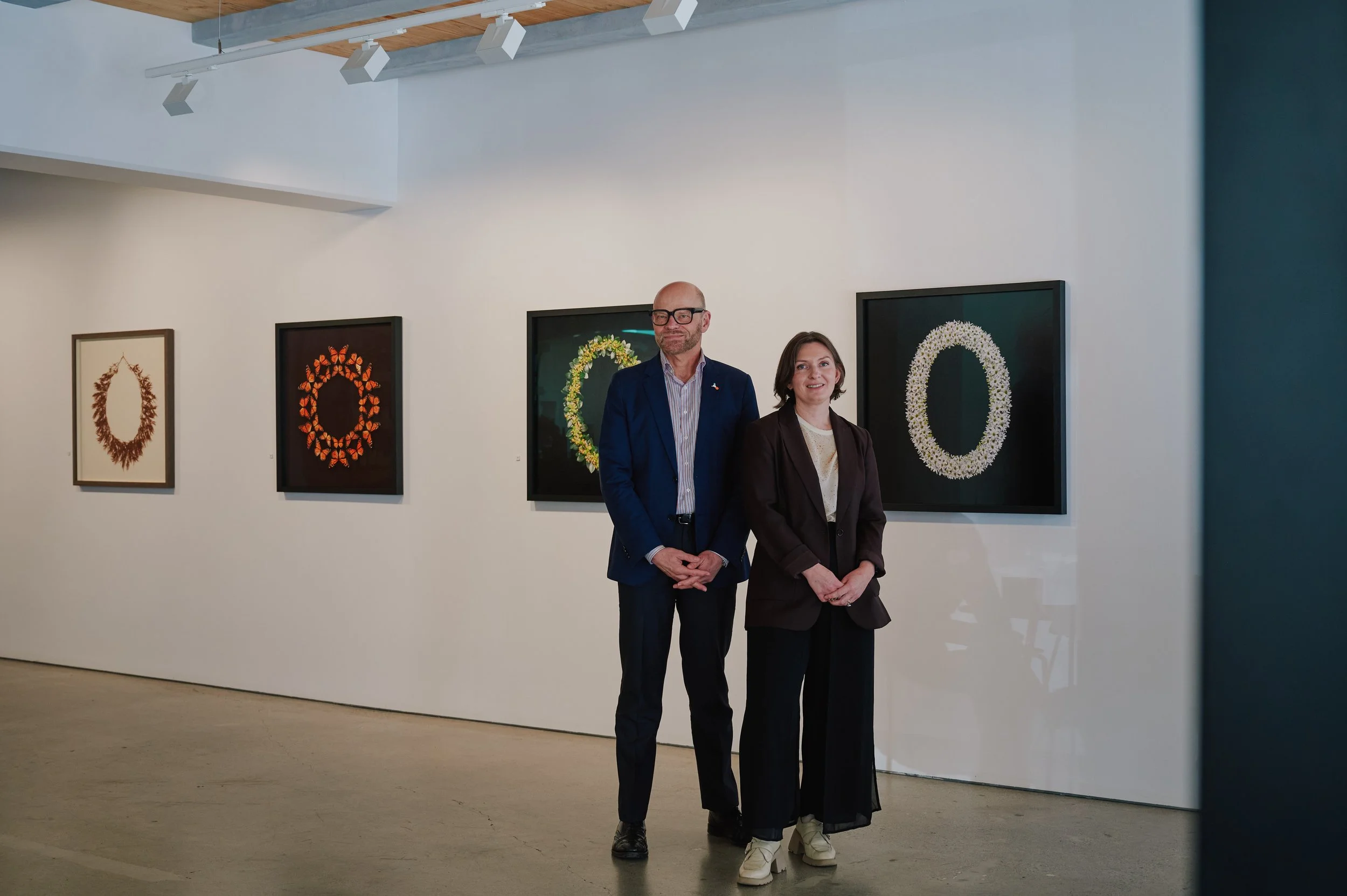
Wellington Business Manager Tom Mapplebeck and Sophie Thorn with Hannah Boswell’s Genie (Westerlund Revisited) and Djinn (Westerlund Revisited) 2026. Photo by Adrian Vercoe
Your final exhibition as Acting Director, Vaiei Tupuna, placed contemporary tapa from across Moana Nui a Kiwa alongside sampler books of tapa collected on Cook’s voyages, with the emphasis on Indigenous knowledge rather than first contact. What did that project teach you about presenting and caring for works like these, and how might private collectors approach that responsibility?
One of the things I would emphasise is the importance of listening. The exhibition brought contemporary practice into conversation with historic collections, recognising tapa as a living artform with knowledge and relationships extending across generations, not simply as material from the past.
For me, that raises an important distinction between caring for the physical object and caring for the knowledge systems connected to it. Both matter. Understanding a work involves more than identifying its materials or deciding how to display it; it means making room for the knowledge of its makers and the people connected to its history.
For private collectors, I’d encourage that same curiosity and willingness to seek guidance. Learn as much as you can about the trajectories that the work belongs to, keep its documentation together, and ask about any expectations around handling, display or reproduction. It’s important not to assume that one approach applies to every work. I’d think of collecting as accepting a responsibility to carry those histories forward, rather than simply acquiring something to hang on a wall.
Wellington has a distinctive art history, from Peter McLeavey’s gallery on Cuba Street to the city’s university and national collections. How would you describe Wellington’s art scene today, and what role do you see Webb’s Wellington gallery playing within it?
I’d describe it as a scene where the conversations matter as much as the exhibitions. What I value is the possibility of moving between different kinds of spaces and encountering different ways of thinking about art. I’d like to see people remain curious across those boundaries, whether they usually visit public galleries, follow contemporary artists or collect.
I see the gallery as another point of entry into that conversation. The combination of selling exhibitions, auction previews and talks creates opportunities to spend time with works, ask questions and discover something unfamiliar.
My hope is that people feel welcome to come in whether they’re experienced collectors or simply interested in looking. Having Normanby Fine Wines in-store is also a bonus! You don’t need to arrive knowing what you want to buy, or intending to buy anything. Helping people build confidence in looking and talking about art is a meaningful contribution in itself.
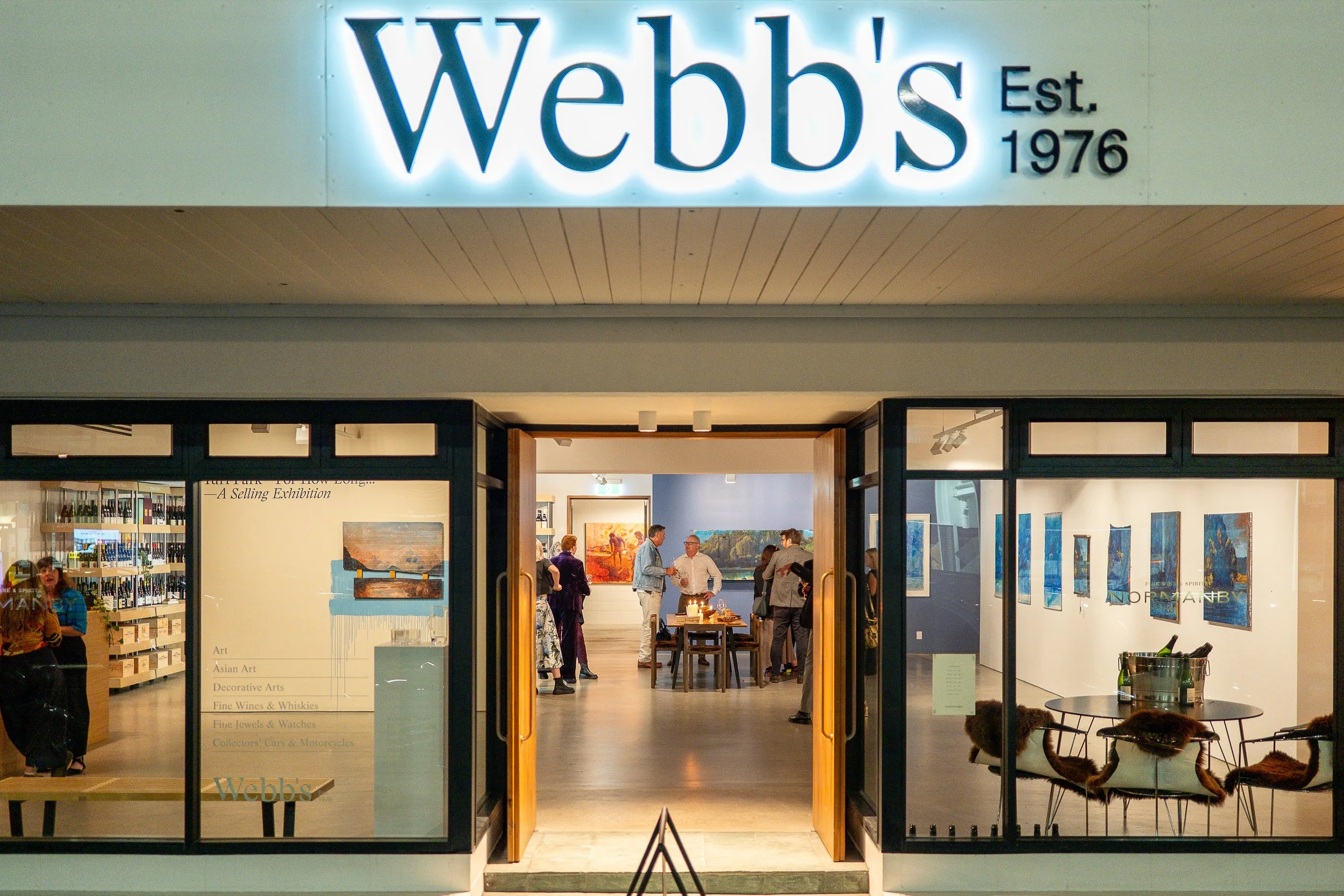
Webb’s Art department offers New Zealand and international works throughout the year across our Works of Art, Select and Art Online auction series. Our specialists in Auckland and Wellington welcome consignments of paintings, works on paper, photography and sculpture, and offer complimentary, no-obligation appraisals.
The Wellington gallery at 23 Marion Street, Te Aro, hosts auction previews, selling exhibitions and talks throughout the year, and is open to experienced collectors and first-time visitors alike. To arrange an appraisal in Wellington, contact Sophie Thorn or a member of the Art department.
Contact
Auckland
Emily Gardener
Director of Art
[email protected]
+64 22 595 5610
Wellington
Mark Hutchins-Pond
Senior Specialist, Art
[email protected]
+64 22 095 5610
Christchurch
Sean Duxfield
Specialist, Art
[email protected]
+64 21 053 6504