
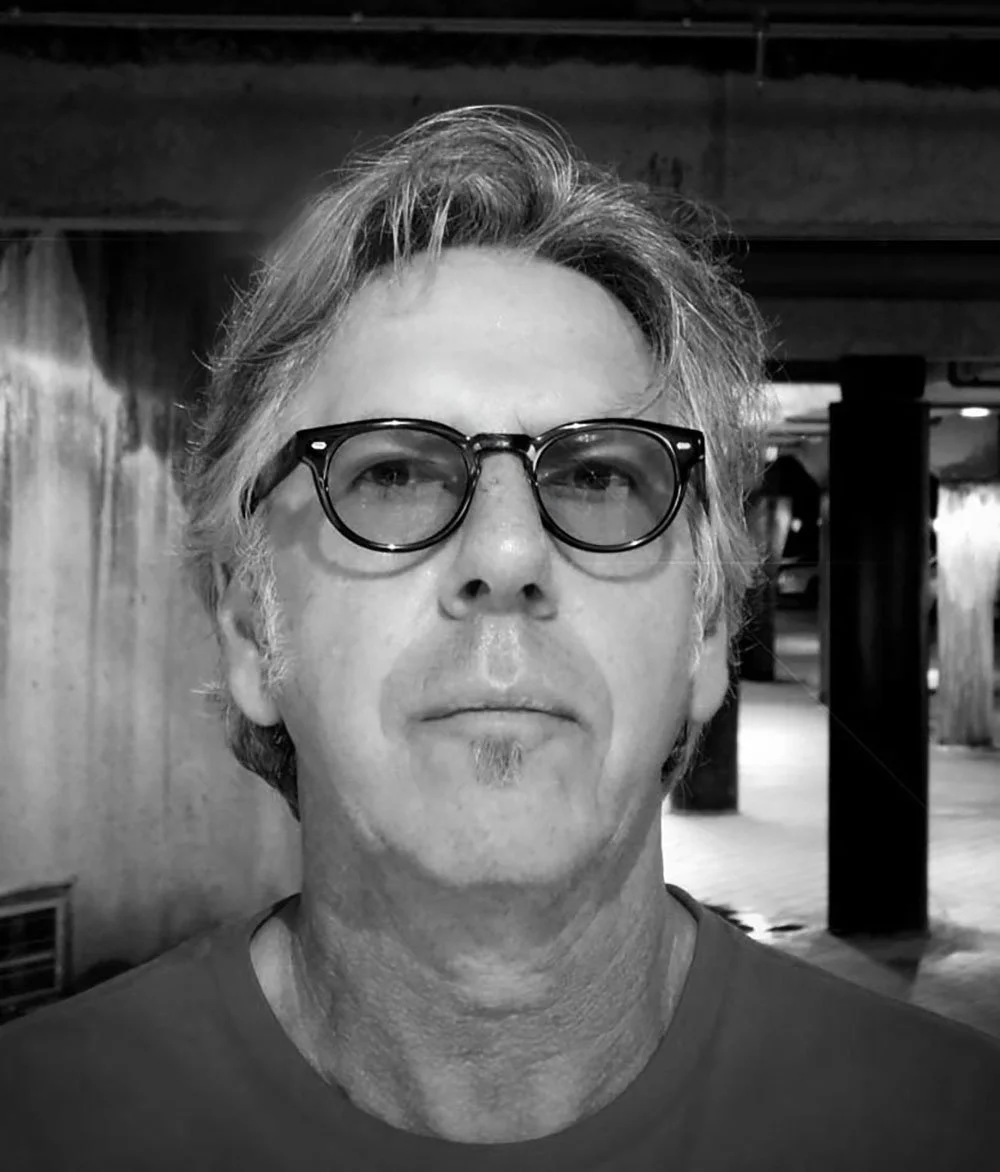
Paul Hartigan
It is with deep sadness that we acknowledge the passing of New Zealand artist Paul Hartigan (b. 1953, New Plymouth). Hartigan was one of New Zealand’s foremost contemporary artists in a variety of media and became well known for his innovative use of neon and his fusion of pop, abstraction, and light-based media.
A graduate of the Elam School of Fine Arts (1973), he emerged in the 1970s as part of the generation bridging experimental photography, printmaking, and conceptual practice. By the 1980s, he had become a pioneer of neon art in Aotearoa, pushing the medium beyond the purely functional into sculptural forms that drew inspiration from calligraphy, surrealism, automatic writing, and more.
His Colony (2004), a sprawling 5 × 10 metre orange-red neon installation embedded across the curved, concrete façade of the University of Auckland’s Engineering Building, epitomises his command of scale and rhythm. The work’s squiggle-like, pulsating forms echo organic, liquid ripples, in electric hues—an apt, architectural modification that hints at usages and academic subjects that take place within.
Equally playful and vibrant installations—such as Nebula Orion (2001, Christchurch) and Whipping the Wind (1988, Wellington)—continue to bring colour and joy to public spaces all across Aotearoa.
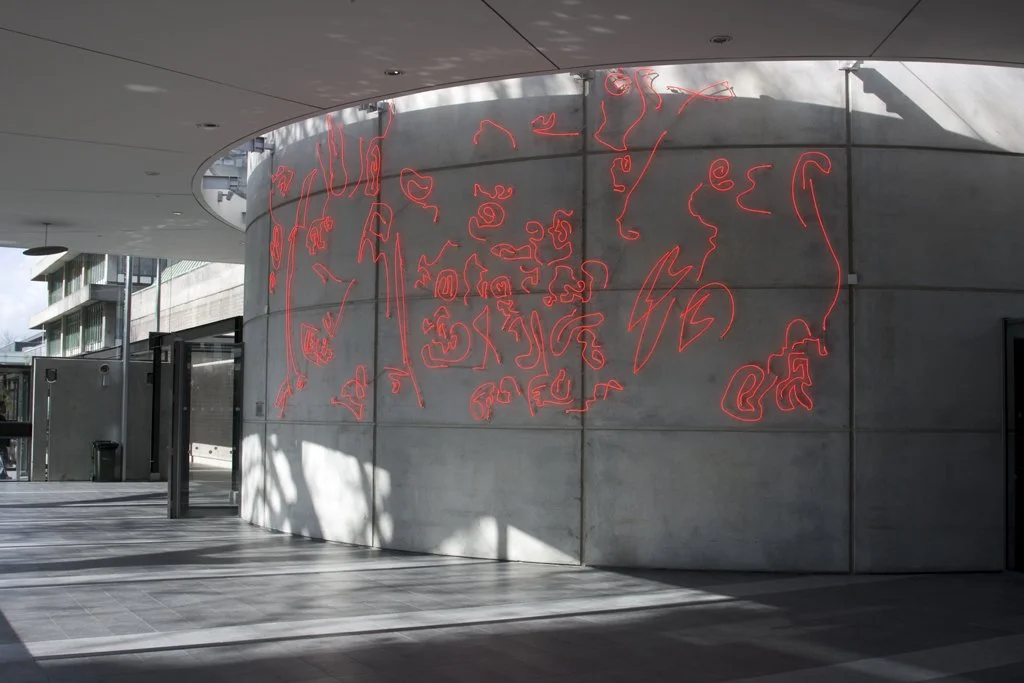
Colony, a neon installation by Paul Hartigan, at the University of Auckland, engineering building.
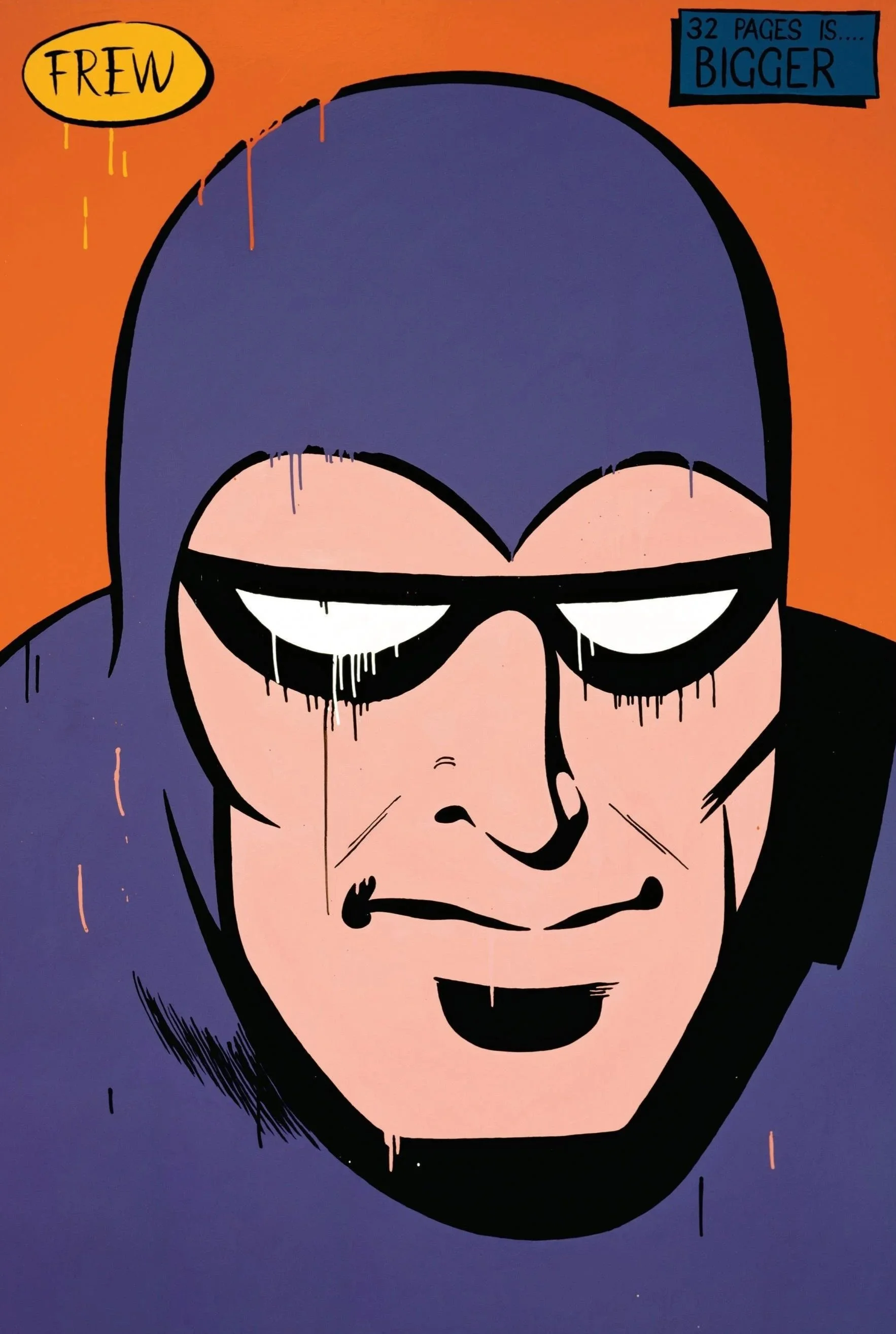
Paul Hartigan, The Phantom (1973)
Hartigan’s early fascination with pop culture and its inroads into Pop Art led him to paint and silkscreen icons from Americana, including his now renowned, drippy painting of the Phantom (1973), a head-and-shoulders portrait of the 1930s comic strip character of the same name by Lee Falk.
Hartigan’s 70s and 80s adoption of popular themes (advertising, tattooing, Americana) anticipated later developments in New Zealand pop and postmodern art with an uncanny precision and an early knack for navigating its commercial and artistic possibilities.
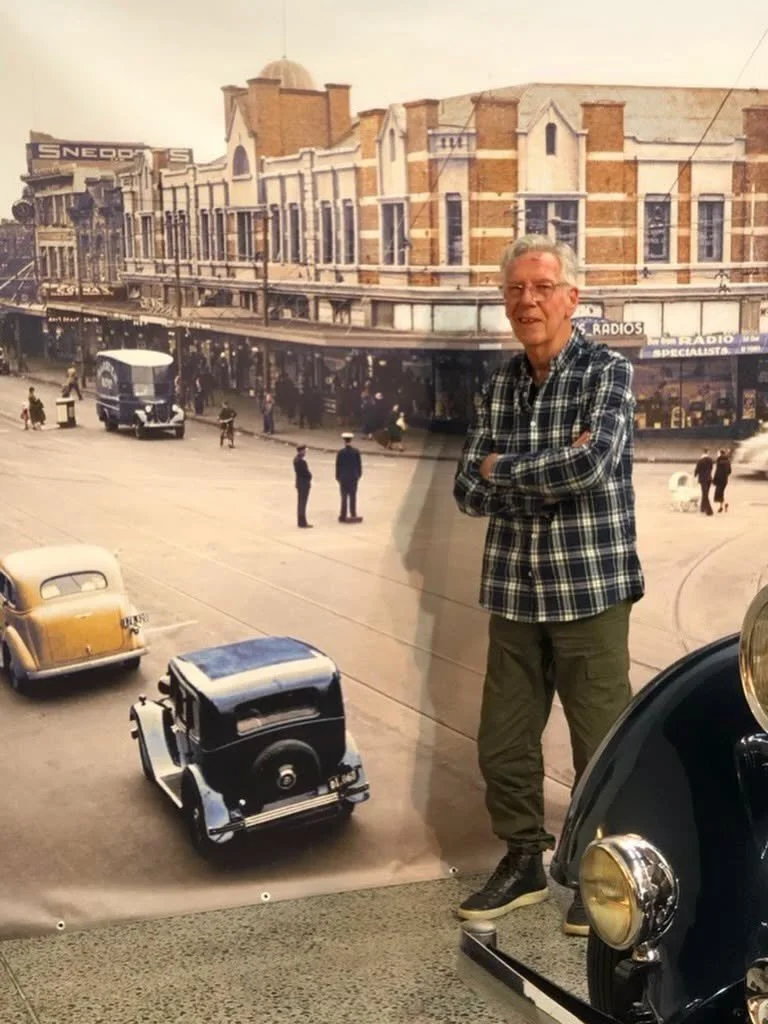
Paul at Webb’s (2020)
Hartigan once remarked in an interview, “Light and illumination are key elements in all that I do - light is my artistic manifesto, my raison d'être.” (Scoop, 2013). Through this unwavering dedication, he has, in the words of one critic, “elevated neon to its rightful status as art” in New Zealand’s visual culture.
Hartigan was a tireless supporter of Webb’s– and we recall The Metaphors, an exhibition of his chalice-like sculptures presented at our Wellington Gallery in October 2025. He was a regular at cultural events, and always happy to share advice and conversation with those fortunate enough to be around him. Our condolences go to his family, friends and those whose lives continue to be brightened by his inimitable oeuvre.