
The Layered Symbolism Of Ayesha Green
Few contemporary painters wield symbolism as deftly as Ayesha Green (Ngāti Kahungunu, Kāi Tahu). Writer Madeleine Harvey explores the layered references in Mother and the Still Life series, and what they reveal about power, faith and identity.
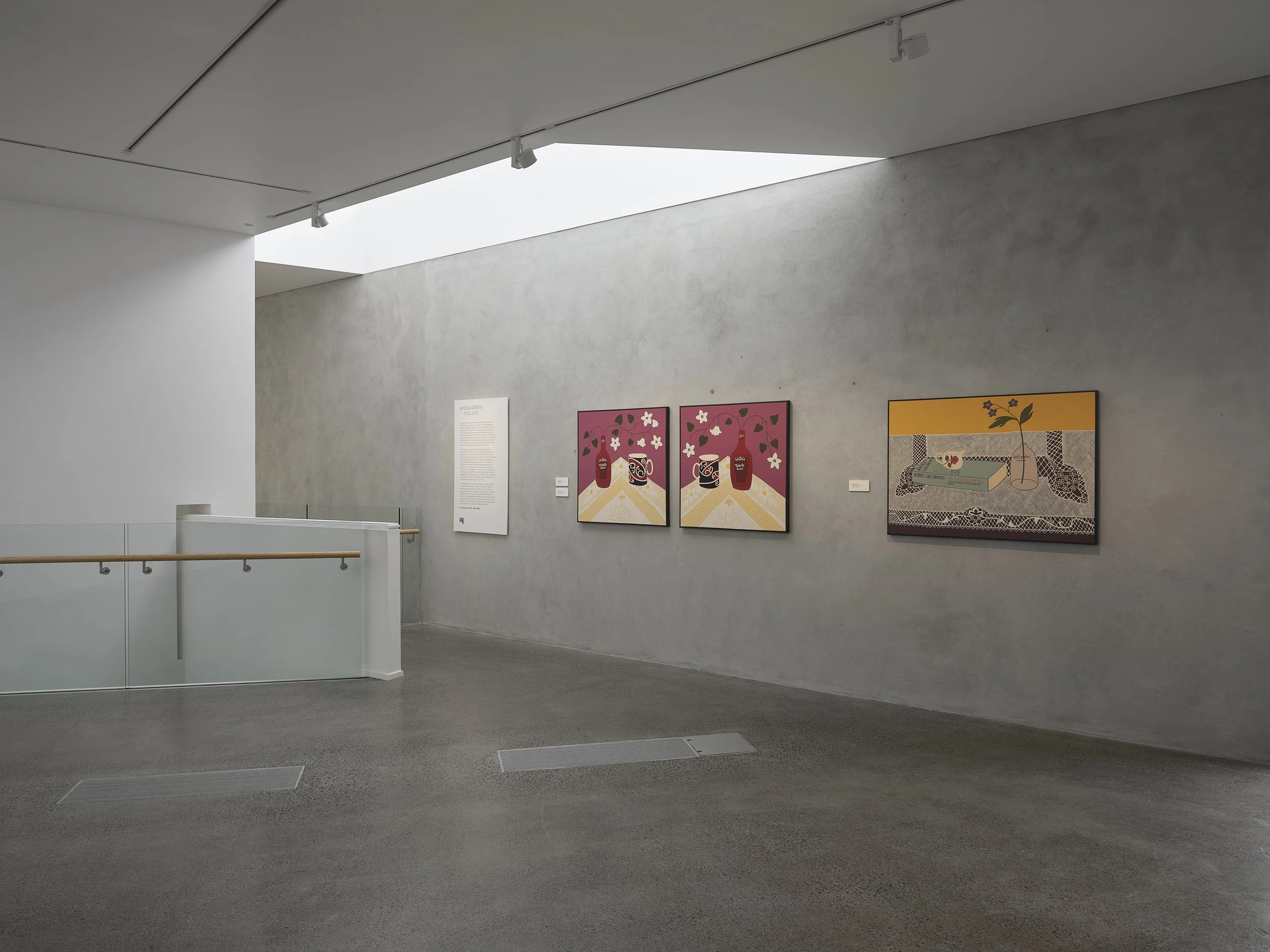
Installation view of Ayesha Green: Still Life at Te Uru Contemporary Gallery, 2023. Photo by Sam Harnett
Through crowns, halos and a bottle of tomato sauce, Green interrogates value, power and identity with a distinctly Aotearoa vocabulary. Writer Madeleine Harvey unpacks the recurring symbols in Green's practice, from Renaissance altarpieces to a Wattie's tomato sauce bottle.
Few contemporary painters wrangle the art of symbolism quite as potently as Ayesha Green (Ngāti Kahungunu, Kāi Tahu).
Her paintings are rendered using a recognisable visual language, whereby illustrative subjects occupy flattened compositional planes and are strategically placed, just so.
Monarchs and divinities are among the most laden symbols she employs. Two crowns, each decadently circled by a golden aureole, adorn the figures in Mother. We are all too familiar with the pious duo who dominated Western art for centuries: a blue-cloaked Mary holding an infant, yet worldly, Christ. Green's mother and child are framed against a marigold background, recalling the gilded gold of dazzling Gothic and Renaissance altarpieces.
However, there is, always, an iceberg effect with Green's works. Her scenes are appealing in both their approachability and the reward they offer to those who linger, look closely and peel back the complex narrative layers they contain. While luminous halos can be expected in the religious paintings she is referencing, it is not always that Mary and Christ are also adorned with intricate, bejewelled crowns. Mother was created for To the Best of My Knowledge (Te Whare Toi o Heretaunga Hastings Art Gallery, 2021), an exhibition that focused on Hukarere Girls' College (Hawke's Bay) to interrogate the history of native schooling in Aotearoa.
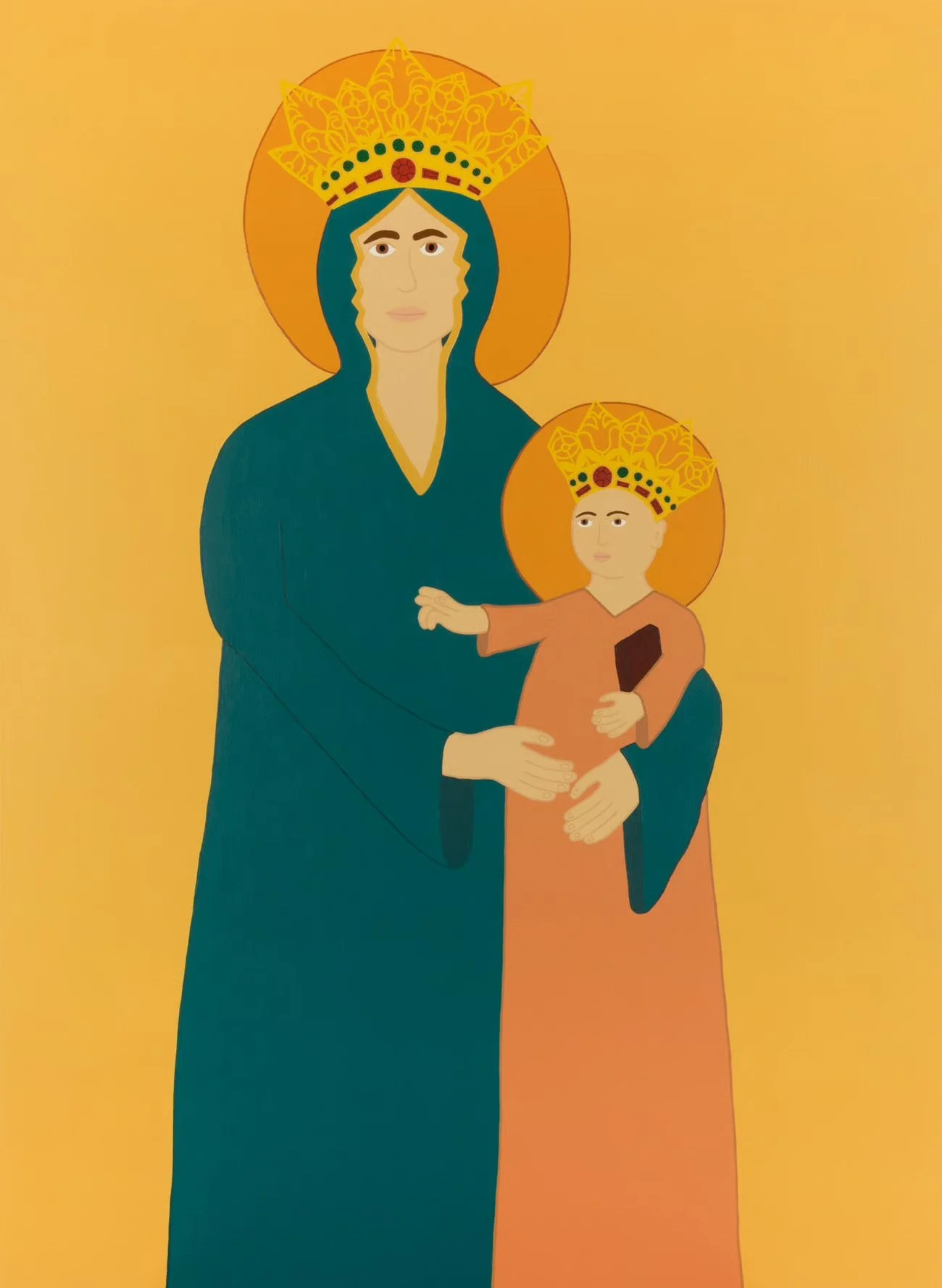
Lot 4. Ayesha Green, Mother, 2021, acrylic on canvas, 1270 x 1700mm.
EST. $15,000—$20,000
Price Realised incl. BP. $23,900
The inclusion of the crown within this body of work undoubtedly carries the heavy weight of our colonial past. Adopting the Mary and Christ arrangement, Green flags the role of missionaries in perpetuating the assimilation tactics of the colonial government. Conceptions of the monarchy and the church, as intertwined institutions associated with authority and divinity, are reflected for us to ponder.
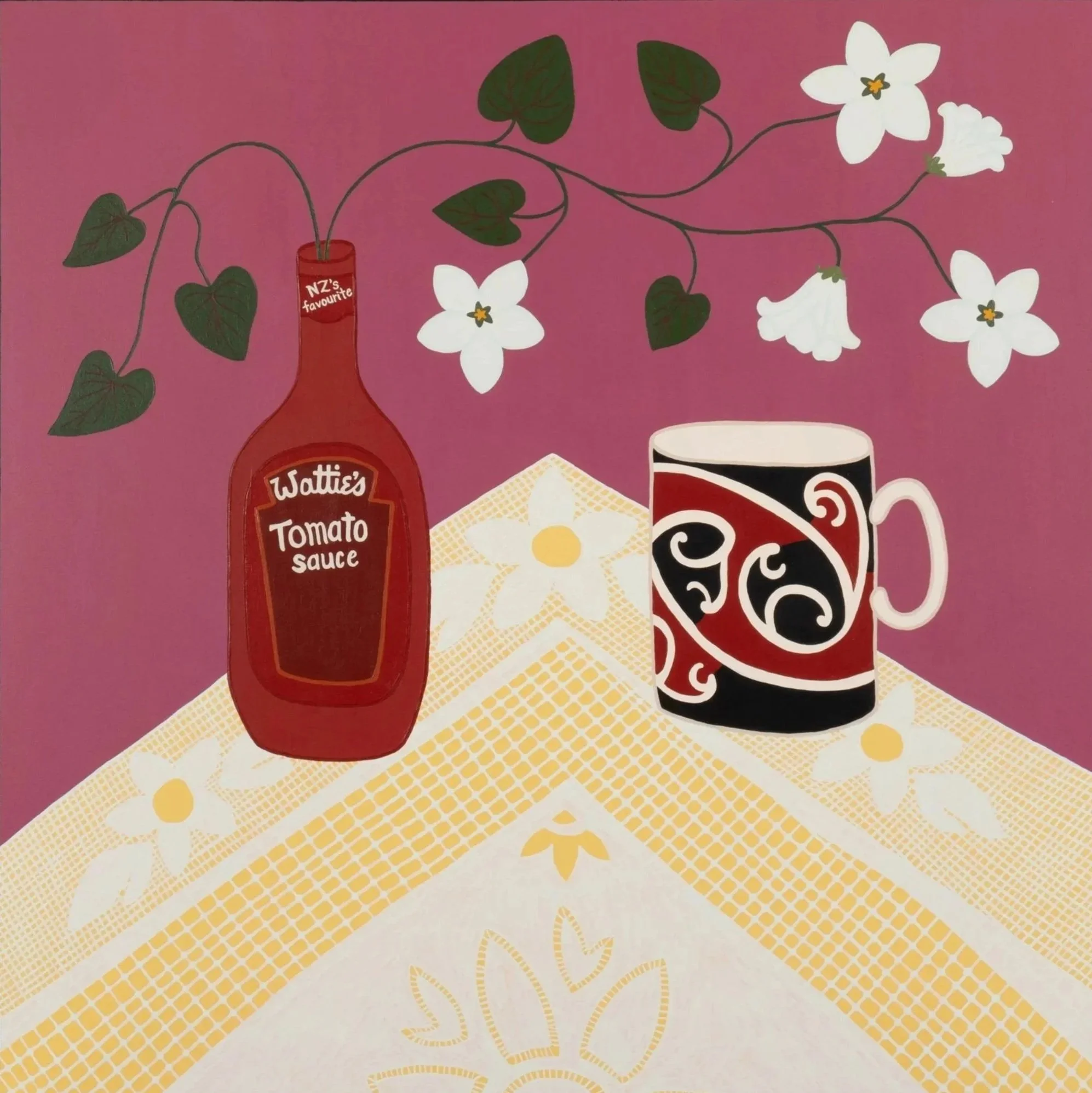
Lot 5. Ayesha Green, Calystegia Tuguriorum (2), 2022, acrylic on canvas, 900 x 900mm.
EST. $8,000—$10,000
Price Realised incl. BP. $8,962.5
Leaning on recognition and accessibility, Green taps into potent visual references to challenge presumptions about value, power, and identity. This is a mode of painting sharpened by deep knowledge of media, fine art and cultural heritage, developed during extensive tertiary studies across these fields.
Green's art historical vernacular is especially resonant in her Still Life paintings, made during her Parehuia-McCahon House artist residency (2022). These reimagine the titled genre, commonly associated with the abundant arrangements of fruit, flowers and ephemera that frequent seventeenth-century European painting.
Calystegia Tuguriorum (2), as one of a mirrored pair, elevates a recognisable bottle of Wattie's Tomato Sauce alongside a ceramic kōwhaiwhai-patterned mug. The former stands in for a vase, holding a clipping of the native (and scientifically titled) pōuwhiwhi plant. Poised upon a fragment of lace, the staging recalls a domestic tablescape and grounds the objects within an everyday environment.
The effect is deliberately restrained and familiar. In localising the genre so specifically, Green draws our attention to the objects' nature as markers of national identity and commodification, further complicated when considering the adoption of a traditional Māori motif on a mass-produced good. Including the native pōuwhiwhi juxtaposes the commercial goods with the environments they come from and are positioned to represent.
Such are the emblems that Green cleverly poses and demands we consider, through a meticulous iconography that is distinctly hers.
Text by Madeleine Harvey
Featured Auction Highlights
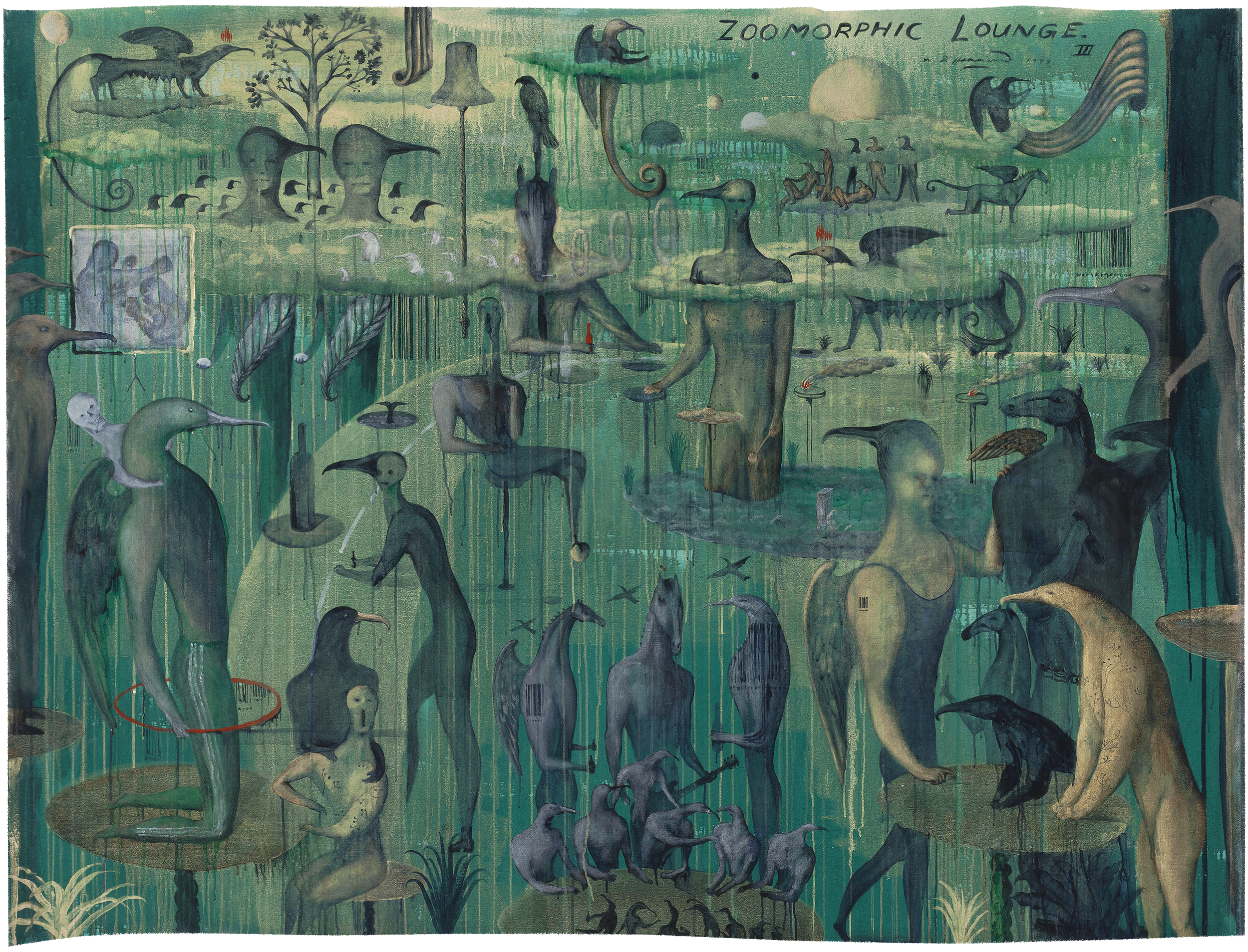
Lot 58. Bill Hammond, Zoomorphic Lounge III, 1999, acrylic on hessian canvas, 1620 x 2145mm.
EST. $1,400,000—$1,800,000.
Price Realised incl. BP. $1,652,737
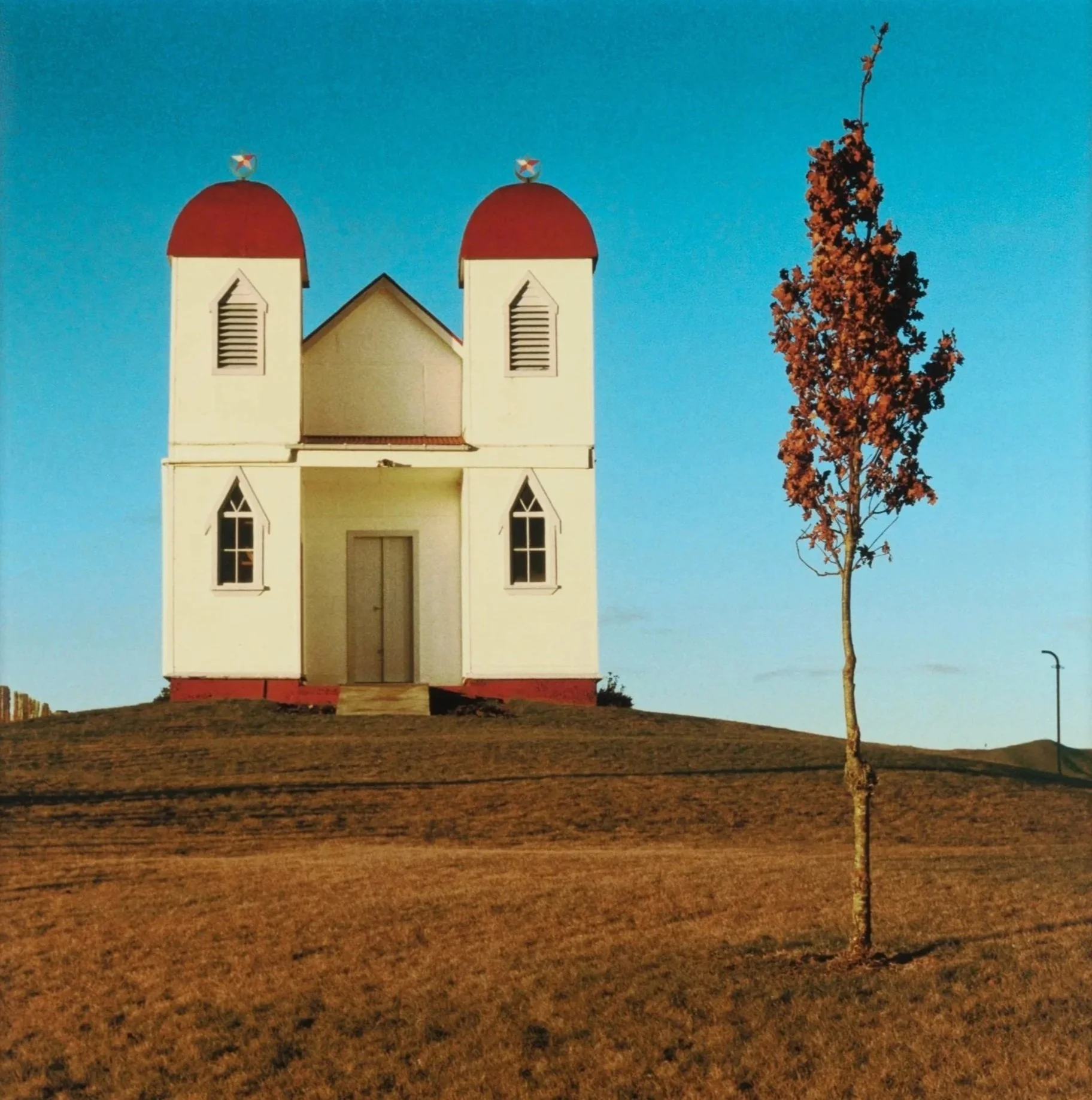
Lot 84. Ans Westra, Ratana Church, Raetihi, 2005, 950 x 950mm.
EST. $8,500—$11,000
Price Realised incl. BP. $13,145
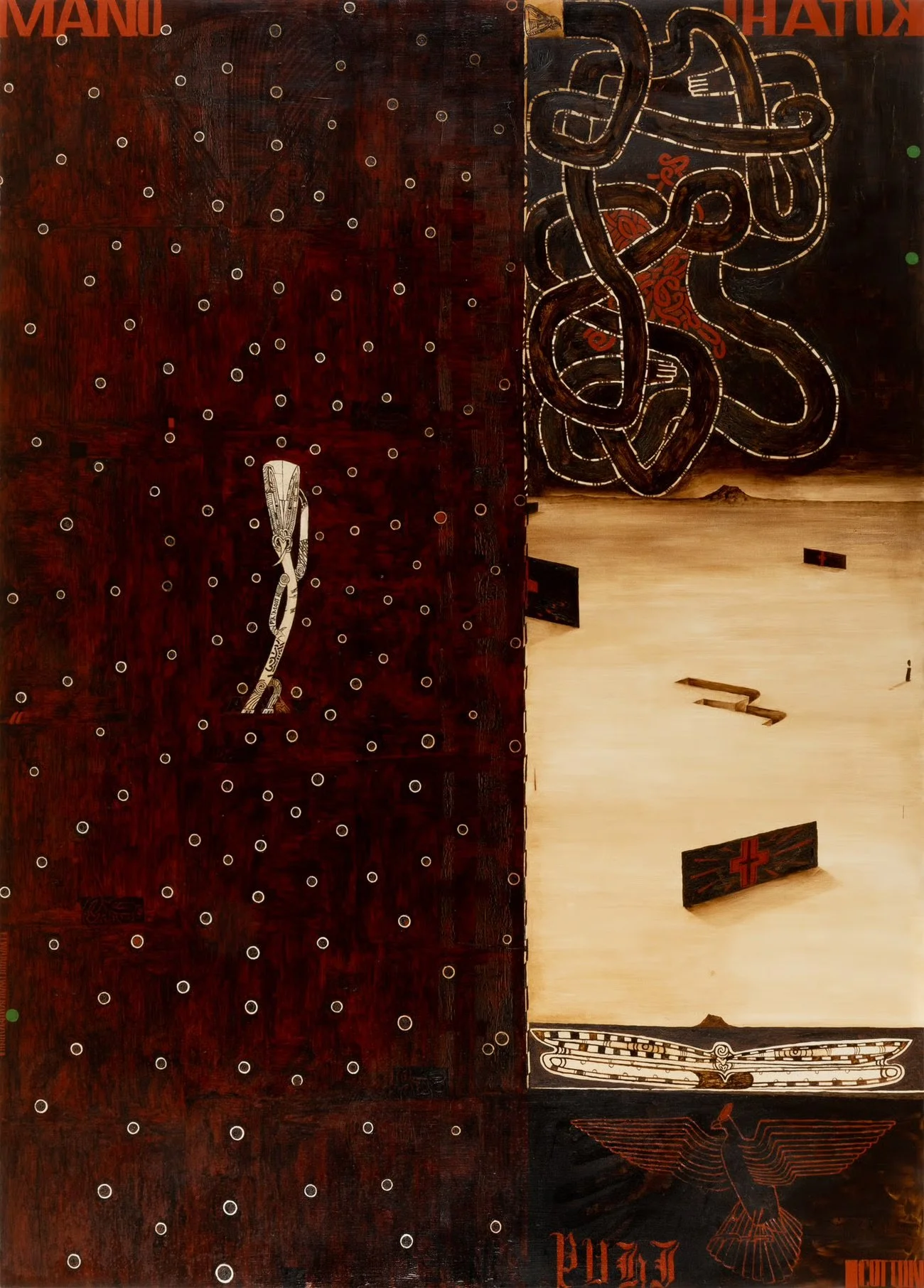
Lot 50. Shane Cotton, Ahi, 1996, oil on canvas, 2800 x 1800mm.
EST. $140,000—$180,000
Price Realised incl. BP. $149,375
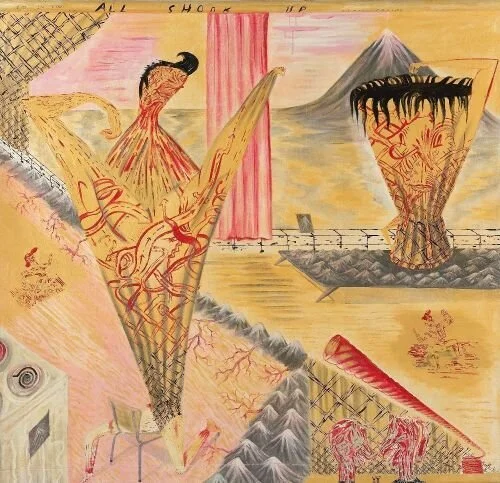
Lot 57. Bill Hammond, All Shook Up, 1985, acrylic on canvas, 1700 x 1700mm.
EST. $85,000—$100,000
Price Realised incl. BP. $89,625
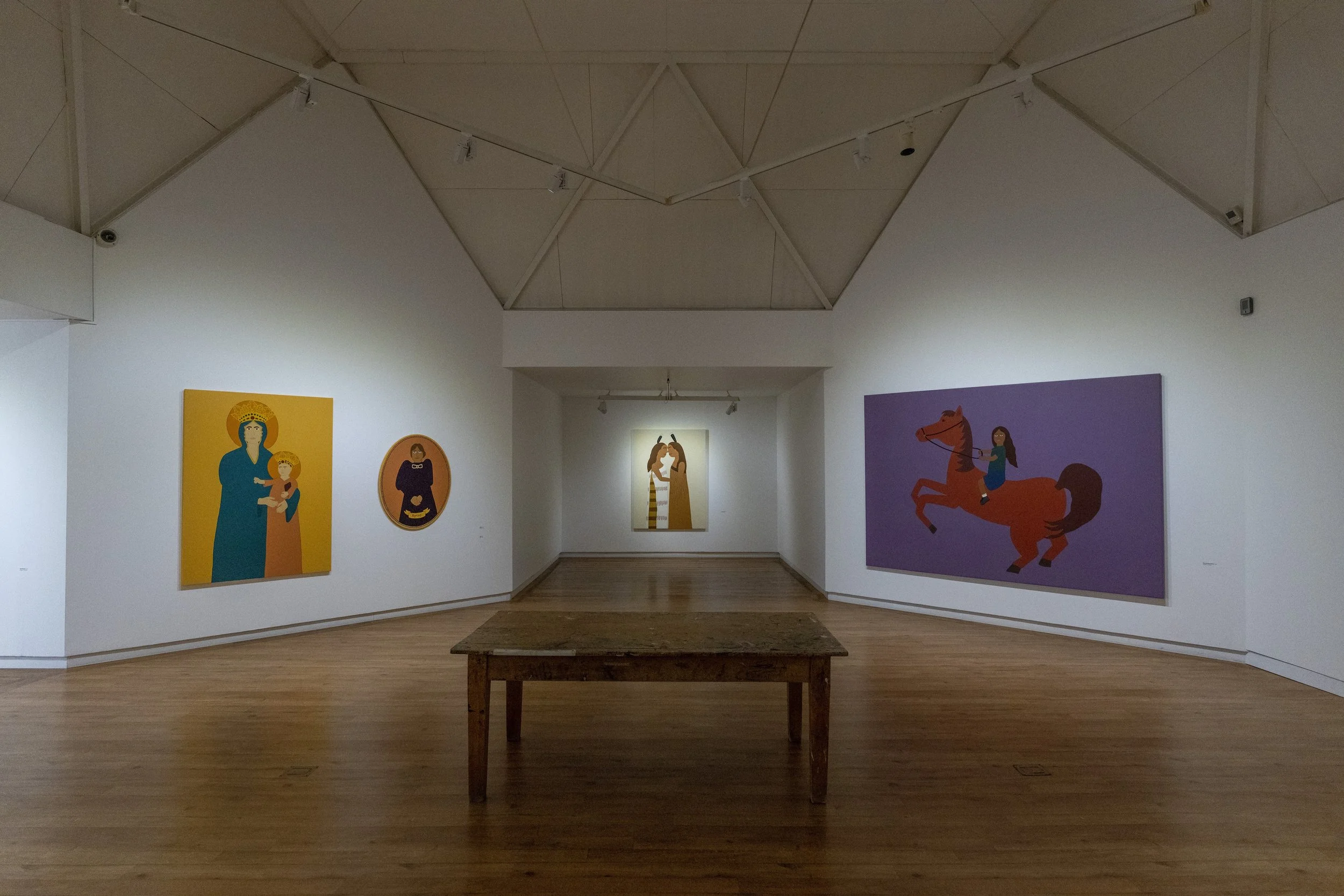
Installation view of Ayesha Green: To the Best of My Knowledge at Hastings City Art Gallery, 2021. Photo by John Cowpland
Webb's Art department curates and presents significant sales of historical and contemporary New Zealand and international art throughout the year, including single-owner collections, and our flagship Works of Art auctions. Our specialists work closely with private collectors, institutions and estates to research, catalogue and present works with the care and context they deserve, and we welcome enquiries about consigning artworks or entire collections for future sales.
Single Owner Live Auction | 28.07.26
Zoomorphic Lounge: A Private Collection of Modern and Contemporary Art
Nationwide Tour
This tour has concluded
Wellington
Launch | Wed 15 July
Viewing | 15—18 July
23 Marion Street, Te Aro
Auckland
Launch | Tues 21 July
Viewing | 21—28 July
Live Auction | Tues 28 July, 6.30pm
33a Normanby Road, Mount Eden
Christchurch
Launch | Thurs 9 July
Viewing | 7—9 July
249 Moorhouse Ave, Sydenham
View all articles & videos here